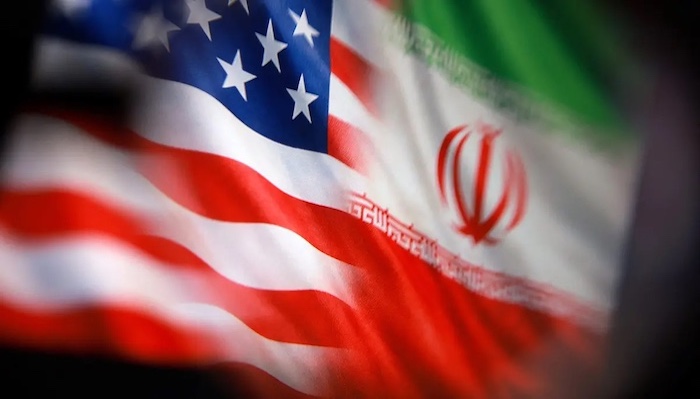
The United States has declared that it can maintain its naval blockade of Iran indefinitely and is prepared to intensify economic pressure on Tehran as efforts to revive a ceasefire agreement continue to stall and global energy supplies tighten.
US Defence Secretary Pete Hegseth said the American military had both the capability and the resources to sustain a long-term naval presence in the region in order to enforce the blockade, which Washington says is designed to restrict Iran’s economic activity and military capabilities.
Speaking to reporters during an official trip to Panama, Hegseth said the US Navy could continue the operation for as long as necessary.
“Indefinitely the United States Navy can maintain a blockade like that because we’ll rotate ships in and out, as we have, and we’ll continue to,” he said.
His remarks were reinforced by US Treasury Secretary Scott Bessent, who signalled that the Trump administration was preparing a new round of economic measures against Iran.
“Watch this space for more announcements coming next week because we are going to apply measures like have never been seen in the history of economic isolation on a country,” Bessent said during an interview on Newsmax’s Rob Schmitt Tonight.
The latest statements come as a tentative ceasefire arrangement reached in June has effectively collapsed. Negotiations aimed at ending the conflict have failed to produce a lasting settlement, while Iran has attempted to increase pressure on Washington by restricting access to the Strait of Hormuz.
Iranian forces have reportedly targeted vessels attempting to transit the strategic waterway, through which roughly one-fifth of global oil and liquefied natural gas shipments passed before the war began in February. The attacks have heightened fears of a broader regional conflict and increased concern about the security of global energy supplies.
Tensions escalated further after two vessels belonging to the Abu Dhabi National Oil Company were attacked while passing through the strait on Thursday evening. The United Arab Emirates condemned the incident and accused Iran of carrying out the attack, according to the state news agency WAM.
President Donald Trump is facing growing domestic pressure to bring the conflict to an end. The war has become increasingly unpopular among American voters, while persistently high fuel prices have affected consumer sentiment and could complicate Republican prospects in the November midterm elections.
Trump has repeatedly claimed that the United States has “total control” over the Strait of Hormuz, an assertion Iranian officials have strongly rejected.
Tehran has insisted that normal commercial shipping through the waterway will not resume until its demands are met. Iranian officials have called for the removal of economic sanctions and the release of frozen Iranian assets as conditions for reopening the strait.
Shipping data indicate a dramatic decline in maritime traffic through the strategic passage. Only eight vessels reportedly transited the strait on Tuesday, compared with a recent 10-day average of about 12 vessels and pre-war levels of between 130 and 140 vessels per day.
The United States briefly lifted restrictions on Iranian shipping and port activity for one month in mid-June but later reinstated the blockade after negotiations failed to progress. The renewed restrictions have further reduced Iran’s access to hard currency earnings and compounded losses resulting from wartime strikes on its energy infrastructure.
Washington had previously indicated that the blockade could be eased if Iran and Oman, which share opposite shores of the strait, reached an agreement to restore commercial shipping routes.
Although President Trump has repeatedly threatened additional military strikes and vowed to “hit Iran hard,” his administration has so far avoided deploying ground troops, seizing strategic islands or attacking desalination facilities. Earlier this week, Trump suggested that economic pressure rather than expanded military action would remain the primary tool of US policy.
The administration has continued to tighten sanctions against Iran and against individuals and entities accused of helping Tehran acquire weapons. Despite the intensified pressure campaign, Iran has not returned to formal negotiations with Washington.
The economic consequences of the conflict are increasingly being felt beyond the Middle East. The International Energy Agency said on Wednesday that global oil supply is now expected to decline by 4.3 million barrels per day this year, representing about 4% of global supply. The revised forecast is significantly higher than the agency’s estimate of a 3.7 million-barrel-per-day decline issued only a month earlier.
Oil prices fell by more than 2% on Thursday after several days of gains, as traders focused on signs of weakening global demand and a sharp rise in US crude inventories. However, reports that Yemen’s Iran-backed Houthi movement had launched drone attacks targeting a Saudi Aramco refinery renewed concerns about a wider regional war and unsettled energy markets.
Economists have warned that a prolonged conflict could significantly slow global economic growth and push some countries toward recession if energy prices remain elevated and supply disruptions persist.
Asked whether declaring a ceasefire in April had been a mistake, Hegseth declined to comment. The April truce had halted an intense bombing campaign against Iran in exchange for negotiations that ultimately failed to produce a settlement.
“I’m never going to comment on that. We’re doing exactly what we need to, to ensure that Iran never has a nuclear weapon,” Hegseth said.
The collapse of the ceasefire effort, combined with tightening energy supplies and escalating economic pressure, has left the confrontation between Washington and Tehran entering an increasingly uncertain and volatile phase with significant implications for regional stability and the global economy.