The Federal Government is planning to engage 4,000 social media influencers to publicise infrastructure projects delivered under the administration of President Bola Ahmed Tinubu, Minister of Works David Umahi has disclosed.
Umahi made the disclosure in Abuja while receiving a report from the National Association of Nigerian Students (NANS) on its inspection of federal road projects across Kano, Jigawa, Kaduna and Sokoto states.
The minister said the proposed influencer network would help the government communicate its infrastructure projects and other achievements directly to Nigerians, particularly young people who rely heavily on social media for information.
According to Umahi, the government needs to strengthen its presence on social media platforms to communicate its perspective on the projects being executed across the country.
“We have to fight this social media war. We have to launch 4,000 social media influencers to tell our stories,” he said.
The minister said Nigerians should be adequately informed about projects and programmes being implemented by the Tinubu administration.
His comments come ahead of the 2027 general elections, when political parties and candidates are expected to intensify their use of social media and other digital platforms to communicate with voters.
Umahi also said the Federal Government would consider constructing pedestrian bridges around university campuses in response to concerns raised by NANS during its inspection of federal projects.
He commended the students’ body for undertaking an independent inspection of federal infrastructure and assessing how the projects affect communities and road users.
According to him, direct feedback from students and other citizens could assist the government in identifying infrastructure challenges and improving project implementation.
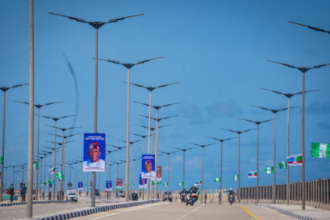
The minister further disclosed that 105 kilometres of pavement currently under construction on the Lagos-Calabar Coastal Highway is expected to be completed by November.
He, however, expressed concern over alleged vandalism along sections of the highway, accusing some individuals of damaging infrastructure and removing safety installations.
Umahi urged Nigerians to protect public infrastructure and support efforts to monitor government projects.
The Lagos-Calabar Coastal Highway has remained the subject of public debate, particularly over its environmental implications, alignment and possible impact on flooding in Lagos.
The Federal Ministry of Environment has previously conducted public-display exercises for environmental and social impact assessment reports covering sections one and two of the project, spanning the first 104 kilometres.
Concerns about the highway intensified following flooding in parts of Lagos, with some stakeholders calling for an independent assessment of whether aspects of the highway’s alignment, construction or drainage system contributed to the flooding.
The Federal Government has rejected claims that the coastal highway caused flooding in Lagos.
Umahi has maintained that the highway was designed with flood mitigation in mind and that drainage infrastructure was incorporated into the project to facilitate the movement of stormwater from surrounding areas.
The minister’s latest comments therefore combine the government’s infrastructure communication strategy with its appeal for public cooperation in protecting federal projects.
As the government prepares to expand its digital communication efforts, the proposed network of 4,000 influencers is expected to focus on communicating information about infrastructure projects and other government programmes to Nigerians, especially younger audiences.