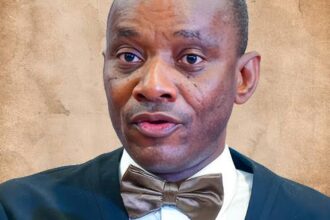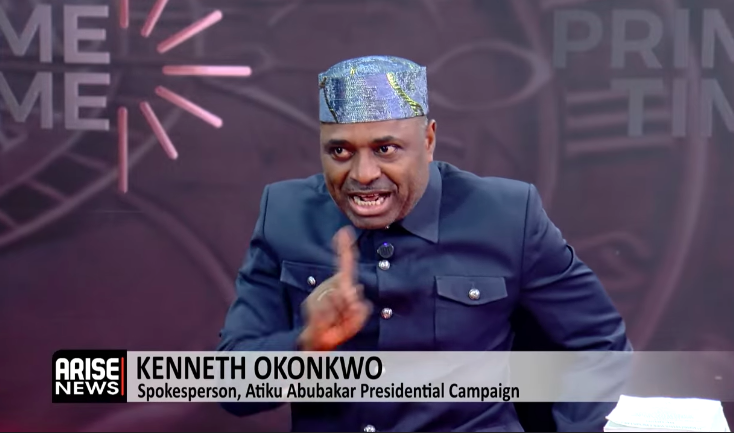
Kenneth Okonkwo, spokesperson for the Atiku Abubakar Presidential Campaign, has accused President Bola Tinubu and the National Assembly of failing to fulfil their constitutional responsibilities over the President’s prolonged absence from Nigeria.
Okonkwo’s criticism centres on Section 145 of the 1999 Constitution, which provides for the Vice-President to perform the functions of the President as Acting President when the President is on vacation or otherwise unable to discharge the functions of his office.
President Tinubu departed Nigeria on August 30 for a working vacation in Europe. The Presidency announced on September 21 that he had extended the vacation by a few days and was expected to return to Nigeria at the weekend. According to the State House, Tinubu initially travelled to London before moving to Paris, where he held official engagements, including a meeting with French businessman Vincent Bolloré.
The Presidency has also maintained that Tinubu remained in contact with Nigeria and continued directing government affairs while abroad. Vice-President Kashim Shettima was delegated to represent him at some official engagements, although Shettima subsequently travelled to New York to represent Nigeria at the 81st United Nations General Assembly.
Speaking on the matter, Okonkwo argued that Section 145 requires the President to transmit a written declaration to the President of the Senate and the Speaker of the House of Representatives whenever he proceeds on vacation or is otherwise unable to perform the functions of his office.
He said the constitutional provision does not make the 21-day period a condition before the Vice-President can assume presidential functions.
According to the Constitution, Section 145(1) states that whenever the President proceeds on vacation or is otherwise unable to discharge his functions, he is to transmit a written declaration to the Senate President and the Speaker of the House of Representatives. Until another declaration is transmitted indicating that he has resumed his functions, the Vice-President performs those functions as Acting President.
Section 145(2), however, provides that where the President fails or is unable to transmit the required declaration within 21 days, the National Assembly may, by a simple majority resolution of each chamber, mandate the Vice-President to perform the functions of the President as Acting President until the President formally communicates his readiness to resume office.
Okonkwo interpreted the provision as meaning that the constitutional process should not be delayed once the relevant conditions arise.
He accused both the Presidency and the National Assembly of failing in their respective responsibilities and said the African Democratic Congress would take the issue to the electorate ahead of the 2027 general elections.
“What we’re going to do is to tell Nigerians that they have a failed President and failed National Assembly and vote them out in 2027,” he said.
The allegation comes against the backdrop of continuing political debate over the President’s absence and his decision not to attend the 81st United Nations General Assembly in New York. The State House said Shettima would represent Tinubu at the global gathering and deliver Nigeria’s national statement.
Okonkwo also addressed disagreements within Nigeria’s opposition camp, insisting that the coalition backing Atiku had already reached an agreement on its presidential and vice-presidential candidates.
He urged politicians who had previously left the coalition to return rather than seek to reopen negotiations.
According to him, the coalition had made the necessary concessions and selected its candidates, arguing that opposition unity remained possible even if some politicians had chosen to pursue separate political platforms.
Okonkwo also rejected a proposal attributed to Professor Pat Utomi for opposition parties and presidential candidates to work together in monitoring elections and protecting votes.
He argued that political parties contesting against one another could not reasonably be expected to defend each other’s interests on election day.
Instead, he said protecting votes and defending democratic processes should be the responsibility of citizens generally.
The campaign spokesperson also explained Atiku’s position on petrol pricing and subsidy removal.
Okonkwo said Atiku would pursue a policy of supplying crude oil to domestic refineries at discounted prices, arguing that increased domestic refining would help reduce the cost of petrol.
He criticised the Tinubu administration’s decision to remove the petrol subsidy, claiming that the policy was implemented without adequate consultation with organised labour and other relevant stakeholders.
Okonkwo argued that Nigeria’s growing domestic refining capacity provided an opportunity to reduce dependence on imported petroleum products.
He specifically referred to the Dangote Refinery and other local refineries, saying that supplying them with crude at favourable prices could translate into lower petroleum prices for consumers.
The proposal represents the Atiku campaign’s stated approach to addressing fuel affordability and the wider cost-of-living pressures facing Nigerians.
Okonkwo also defended Atiku against allegations connected to the controversial Mambilla power project and a reported $500,000 payment involving Atiku’s former wife.
He referred to a report by the United States Senate Permanent Subcommittee on Investigations and argued that the document did not establish criminal culpability on Atiku’s part.
Okonkwo said allegations surrounding the transactions had been used to damage Atiku’s political reputation and maintained that the former Vice-President had provided explanations regarding the transactions.
He further dismissed suggestions that the controversy established wrongdoing, insisting that references to the payments should be considered alongside the findings contained in the US investigative report.
Looking ahead to the 2027 presidential election, Okonkwo expressed confidence in Atiku’s candidacy and attributed what he described as growing opposition support to dissatisfaction with the Tinubu administration.
He specifically cited economic difficulties, including petrol prices and the cost of living, as issues that he said could influence voters.
Okonkwo also claimed that Atiku was gaining support in northern Nigeria while opposition forces were becoming increasingly active in southern parts of the country.
He mentioned Rivers State politician Rotimi Amaechi, Atiku’s running mate, as part of the campaign’s efforts to broaden its appeal across geopolitical zones.
His comments form part of the ongoing political contest ahead of the 2027 elections, with opposition parties and the governing All Progressives Congress expected to continue presenting competing positions on the economy, governance, constitutional issues and the direction of the country.
For now, the constitutional question raised by Okonkwo centres on the interpretation and application of Section 145, while the Presidency has maintained that Tinubu has continued to direct government affairs during his working vacation and that he is expected back in Nigeria at the weekend.