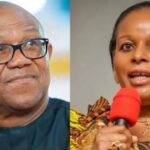
State chairmen of the Nigeria Democratic Congress (NDC) have insisted that the party’s formal structures must remain supreme amid disagreements over the activities and organisational structure of the Obi-Kwankwaso Movement ahead of the 2027 general elections.
The dispute centres on the relationship between the NDC and support groups mobilising for the party’s presidential candidate, Peter Obi, and his running mate, Rabiu Kwankwaso.
While some NDC state chairmen accused the movement of attempting to sideline established party structures, others said there was no serious disagreement in their respective states and that efforts were underway to accommodate various support groups within the party’s campaign framework.
The NDC leaders, who spoke across several states, maintained that the Obidient and Kwankwasiyyah movements were support groups and should operate in coordination with the party rather than establish parallel structures or undertake political activities in the party’s name without approval.
The disagreement intensified after the NDC, on September 19, rejected a 59-member Presidential Campaign Council announced by the Obi-Kwankwaso Movement, popularly known as the OK Movement, for the 2027 presidential campaign.
The party said the campaign council had not been authorised by its leadership and warned that no individual, candidate or support group had the authority to constitute or announce campaign structures in the name of the NDC without approval from the National Working Committee.
The development exposed differences over how the campaign for Obi and Kwankwaso should be organised and coordinated ahead of the election.
The NDC National Leader, Senator Seriake Dickson, also criticised the activities of the OK Movement and cautioned support groups affiliated with the party against operating as parallel structures.
Dickson reportedly warned against any attempt by support organisations to compete with the party for control of campaign activities.
However, the Director-General of the OK Movement, John Ughulu, rejected the position attributed to the NDC leadership.
Ughulu maintained that the movement would not collapse its structure or surrender its organisational identity to the party.
The disagreement has subsequently generated different reactions among NDC state chairmen, with some insisting that party structures must take precedence while others said mechanisms were being developed to ensure cooperation between the party and support groups.
The NDC Chairman in Osun State, Charles Omidiji, said no movement or political group was superior to the party.
Omidiji acknowledged that candidates and their supporters could undertake campaign activities but insisted that such activities should be conducted with the approval and involvement of the party.
According to him, there was nothing inherently wrong with candidates engaging in personal or grassroots campaigns, provided such activities did not undermine the party structure.
“They are just groups and we have said that the groups cannot do their campaign in isolation. They may have one-on-one campaigns because you cannot tell a candidate not to campaign on his own. They can campaign on their own, but they will refer back to the party to carry them along,” he said.
The Osun chairman argued that the party would ultimately bear responsibility for campaign activities conducted by its candidates and supporters, particularly where security or public-order issues arose.
“It is illegal for any candidate to go for a campaign in a particular place and there is a crisis. It is the party people will hold responsible,” he said.
Omidiji also drew a distinction between political support groups and the formal structures through which political parties conduct elections.
He argued that candidates could not independently establish election-day structures or appoint agents outside the framework approved by the party.
“Authorities cannot give a candidate permission to campaign except the party gives a nod. It is just like an agent; candidates cannot have their agents without the party. It is the party that owns agents. The party supervises the election,” he said.
He maintained that the party’s position was clear and that the issue had been communicated to the various support groups.
“The party is supreme over any individual group. There is no controversy over that and they have resolved it. We have made it clear to them,” Omidiji stated.
The disagreement comes as political parties and campaign organisations intensify preparations for the 2027 elections.
Support groups have historically played significant roles in mobilising voters and supporters for political candidates, particularly during presidential campaigns. The Obidient and Kwankwasiyyah movements have developed substantial identities around Obi and Kwankwaso respectively.
The current dispute, however, raises questions about how such movements will operate within the formal structures of the NDC during the campaign period.
For the NDC, the state chairmen’s position is that support groups can mobilise and campaign for the party’s candidates but should do so within an organisational framework approved by the party.
For the OK Movement, its leadership has maintained that its existing structure should remain intact.
The disagreement therefore remains centred on the extent to which independent support groups can organise campaign activities while operating in support of candidates contesting under the NDC platform.
As the 2027 elections approach, the ability of the party and its support groups to establish clear lines of coordination is likely to remain an important organisational issue for the NDC campaign.