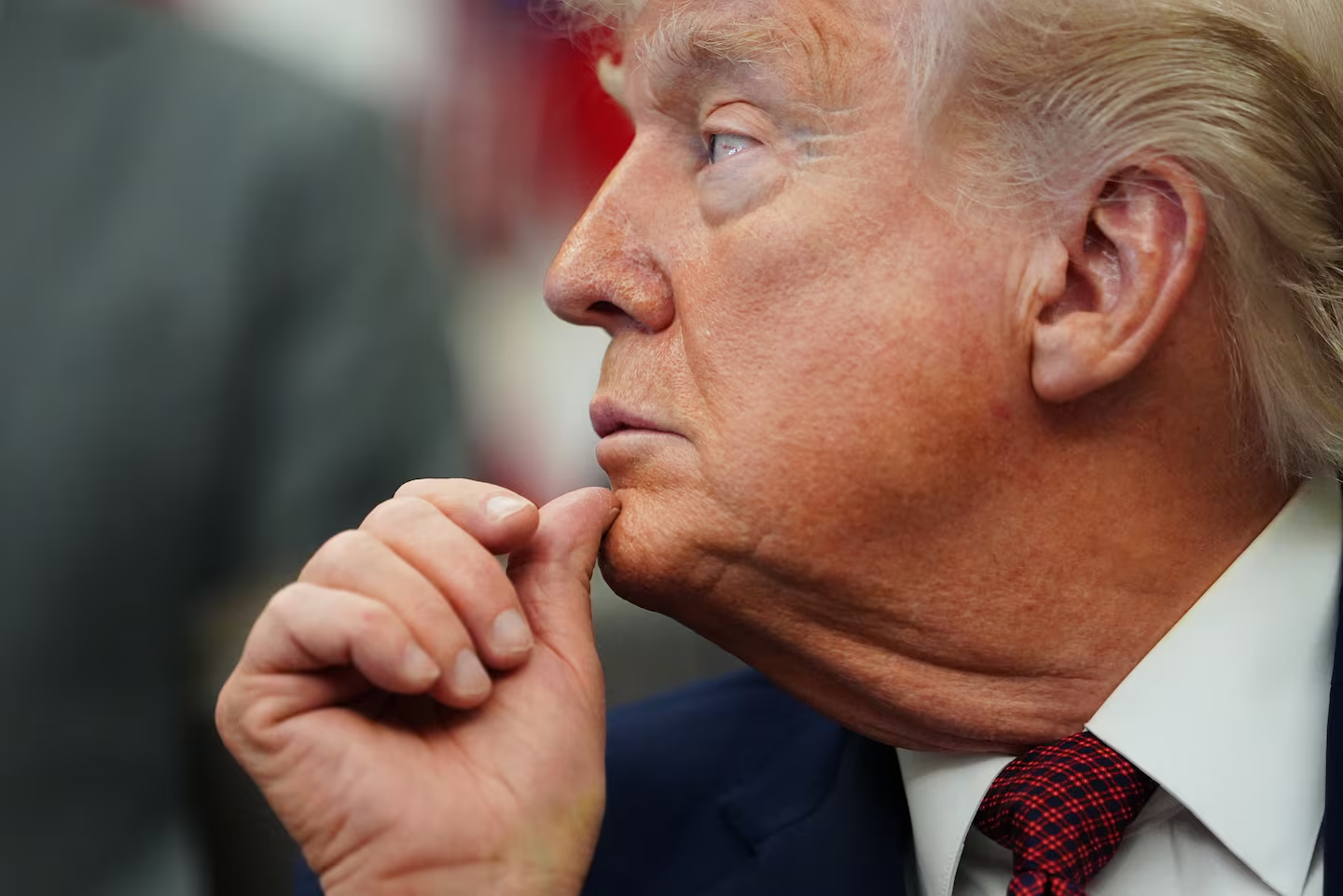
United States President Donald Trump has announced an indefinite extension of the fragile ceasefire between the United States and Iran, just a day before it was due to expire, in a move that appears aimed at preventing a renewed outbreak of hostilities while diplomatic efforts remain uncertain.
The decision, revealed on Tuesday, comes at a critical juncture in the conflict, which has already rattled global energy markets and heightened geopolitical tensions across the Middle East and beyond. By extending the truce without setting a new deadline, Washington has effectively bought time for negotiations that have so far failed to produce a breakthrough.
In his announcement, Trump indicated that the ceasefire would remain in place until Iran submits a formal proposal and meaningful discussions are concluded. The move signals a cautious shift from immediate confrontation toward a wait-and-see diplomatic posture, even as underlying tensions between the two countries remain unresolved.
The ceasefire had originally been brokered as a temporary measure following weeks of intense military confrontation involving the United States, Iran, and Israel. With the deadline looming, there were growing fears that fighting could resume, potentially triggering wider instability in the region. Trump’s decision to extend the truce has, at least for now, eased those concerns.
However, the diplomatic pathway forward remains unclear. Planned negotiations that were expected to take place in Islamabad have been put on hold after Iran signaled reluctance to re-engage under current conditions. The White House also suspended a planned visit by Vice President JD Vance, who had been scheduled to travel to Pakistan for the next round of talks.
Pakistan has played a central mediating role in the conflict, with its leadership working behind the scenes to bring both parties back to the negotiating table. Prime Minister Shehbaz Sharif and other senior officials have reportedly engaged in intensive diplomatic outreach, seeking to preserve the ceasefire and facilitate dialogue.
According to sources familiar with the negotiations, Pakistani officials urged both Washington and Tehran to consider the broader implications of renewed conflict, particularly its potential impact on regional stability and the global economy. Sharif later expressed appreciation for Trump’s willingness to extend the ceasefire, describing it as a necessary step to allow ongoing diplomatic efforts to continue.
Despite these efforts, Iran has yet to formally respond to the ceasefire extension. Officials in Tehran have maintained a cautious stance, emphasizing that any decision to resume talks will depend on the actions of the United States. Iranian authorities have specifically pointed to what they describe as “unacceptable actions,” including the continued U.S. naval blockade of Iranian ports.
Speaking on state television, Iranian Foreign Ministry spokesman Esmail Baghaei stated that no final decision had been made regarding participation in further negotiations. His comments underscore the deep mistrust that continues to define relations between the two countries, even amid efforts to de-escalate tensions.
The U.S. administration, for its part, has made clear that the naval blockade will remain in place despite the ceasefire extension. This position has complicated diplomatic efforts, as Iran views the blockade as a violation of the spirit, if not the letter, of the truce.
Within Washington, senior officials are continuing internal deliberations on how best to proceed. Trump’s special envoy, Steve Witkoff, along with presidential adviser Jared Kushner, returned to Washington for consultations on the next phase of strategy. Their discussions are expected to focus on balancing diplomatic engagement with continued pressure on Iran.
Sources indicate that while Trump remains open to negotiations, he is also considering a range of alternative options should talks fail to resume. These options reportedly fall short of immediate military escalation but could include intensified economic measures or other forms of strategic pressure.
The uncertainty surrounding the next steps reflects the broader complexity of the conflict. At its core are longstanding disputes over Iran’s nuclear programme, regional influence, and security concerns raised by both sides. While the ceasefire has temporarily halted direct military confrontation, it has not addressed the underlying issues that sparked the conflict.
Meanwhile, global markets are closely watching developments. The initial outbreak of hostilities had triggered volatility in oil prices and raised concerns about disruptions to key shipping routes in the Gulf region. The extension of the ceasefire has provided some relief, but analysts warn that continued uncertainty could still pose risks to economic stability.
For now, the focus remains on whether diplomatic momentum can be regained. Pakistan’s role as a mediator is likely to remain crucial, particularly if both sides show willingness to return to the negotiating table. However, the suspension of planned talks highlights the fragile nature of the current situation.
Trump’s decision to extend the ceasefire indefinitely may have prevented an immediate return to conflict, but it also underscores the absence of a clear resolution. With Iran yet to respond and negotiations stalled, the path forward remains uncertain.
Both Washington and Tehran have previously signaled that they are prepared to resume hostilities if diplomacy fails. As a result, the current ceasefire, while extended, remains precarious.
Ultimately, the coming days will be critical in determining whether the extension leads to renewed dialogue or merely delays another phase of confrontation. For now, the world watches as diplomatic efforts hang in the balance, with the hope that the fragile pause in fighting can be transformed into a more lasting peace.