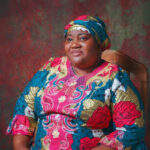
Catholic priest and social commentator,Reverend Father Chinenye John Oluoma aka Fada Oluoma, has appealed to Nigerian social media personality VeryDarkMan (VDM) to publicly apologise to Pastor Arome Osayi over a video in which the activist mimicked the preacher while criticising one of his recent statements.
Fada Oluoma made the appeal while addressing VDM from a Christian perspective, acknowledging the social media personality’s advocacy for social justice but questioning the manner in which he responded to Pastor Arome’s position.
According to him, there is an important distinction between criticism and caricature, arguing that people can strongly disagree with another person’s views without resorting to ridicule, insults or abusive expressions.
He specifically referred to a video in which VDM mimicked Pastor Arome while reacting to the preacher’s statement that Nigerians had a calling to export revival, while other countries could excel in areas such as technology.
Fada Oluoma described VDM’s criticism of the statement as legitimate but said the manner in which it was delivered crossed the boundaries of propriety.
“There is a difference between caricature and criticism,” he said, arguing that VDM could have challenged Pastor Arome’s position without resorting to imitation.
The Catholic priest nevertheless acknowledged VDM’s contributions to social justice, particularly his interventions in cases involving individuals whom he believes may have been denied justice or treated unfairly.
He noted that VDM’s advocacy on behalf of victims had earned him recognition and support among many Nigerians.
“Your effective campaign for social justice has distinguished you among Nigerian celebrities and influencers,” Fada Oluoma said.
He added that the pursuit of social justice was consistent with Christian values and that people committed to defending vulnerable individuals should be appreciated regardless of their religious or social backgrounds.
“Social justice is a core Catholic doctrine and a fundamental part of the gospel,” he said.
Fada Oluoma, however, maintained that VDM’s mimicry of Pastor Arome was inappropriate and unnecessary, stressing that the substance of a criticism should not be weakened by the manner in which it is delivered.
He therefore appealed to the activist to publicly apologise to the preacher if he had not already done so.
“I’m asking you to apologise publicly to Pastor Arome if you haven’t. That will be the noble and right thing to do,” he said.
The priest further argued that disagreement, even when strongly expressed, does not justify personal insults or abusive language.
He said Christians are expected to exercise restraint when confronting views they consider wrong, stressing that the principle applies even when the person being criticised has made a statement considered offensive or misguided.
“No matter how wrong what a person says or said is, insults, caricature and any form of expletives against such person can never be right,” he stated.
To reinforce his argument, Fada Oluoma referred to the biblical account concerning the Archangel Michael and the devil in the Book of Jude.
He cited the passage as an example of restraint, noting that Michael did not resort to abusive language during his dispute with the devil over the body of Moses but instead said, “May the Lord rebuke you.”
The priest used the biblical reference to emphasise that Christians should be cautious about the language they use, particularly when challenging people with whom they strongly disagree.
Beyond the dispute between VDM and Pastor Arome, Fada Oluoma also addressed the broader question of Nigeria’s religious identity and national development.
He disagreed with the suggestion that Nigeria’s principal calling should be religious revival while other nations focus on technological and economic advancement.
According to him, religious commitment and national development should not be treated as mutually exclusive objectives.
“Excelling in only religion is not the calling of Nigeria or any country,” he said.
He argued that Nigerians could serve God faithfully while simultaneously pursuing excellence in science, technology, education, industry, governance, innovation and other sectors necessary for national development.
Fada Oluoma also cautioned against viewing Nigerians as inherently more spiritual than citizens of economically advanced countries.
“Nigerians are not more spiritual than the Chinese, Americans, UAE and other prosperous nations,” he said.
His argument was that countries can pursue religious values while also investing heavily in technological innovation, economic productivity and institutional development.
The comments come amid continuing public debates on the role of religion in Nigeria’s national development and the responsibilities of social media influencers who command large audiences.
VDM has built a significant public profile through outspoken commentary on social issues, alleged abuses and cases involving individuals seeking redress. His interventions have generated both support and criticism, particularly over his confrontational style.
Fada Oluoma’s intervention did not dismiss VDM’s advocacy for social justice. Rather, he sought to distinguish the substance of the activist’s interventions from the methods sometimes used to communicate them.
His appeal ultimately centred on the need for responsible criticism, particularly among people who identify as Christians.
While disagreements over religious teachings and national priorities are likely to continue, Fada Oluoma urged those involved to engage such debates without personal abuse or ridicule.
He ended his message by thanking VDM for his attention to the matter and encouraging him to consider an apology to Pastor Arome.
“Thank you for your attention to this matter. Let me come and be going,” he concluded.
This version preserves Fada Oluoma’s core argument while separating his views and biblical interpretation from independently established facts.