United States President Donald Trump has declared that Washington intends to seek financial compensation from countries that benefit from security in the Strait of Hormuz, following his announcement that the U.S. will assume responsibility for protecting the vital maritime passage amid escalating tensions in the Middle East.
Speaking during an interview on Fox News’ Fox & Friends on Monday, July 13, Trump said the United States had decided to become the principal security guarantor of the strategic waterway, arguing that nations relying on the uninterrupted flow of oil and gas through the Strait should share the financial burden of maintaining its security.
According to the U.S. president, American military personnel have long risked their lives safeguarding one of the world’s busiest energy corridors without receiving adequate compensation from countries that benefit most from its protection.
“We’ll become the guardian of the Strait,” Trump said during the interview. “We’re going to get paid for guarding it. A lot of money, but we just want to be reimbursed for doing all of this, for putting our people in danger.”
Trump maintained that the United States has spent years protecting international shipping routes in the Gulf while shouldering enormous military and financial responsibilities on behalf of the global community.
“We’re going to keep the strait, and we’ll probably run it,” he added. “We’ll become the guardian of the strait. Maybe we’ll call it the guardian angel of the strait. And we should be reimbursed for that.”
The comments come at a time of renewed military and diplomatic tensions between Washington and Tehran, with the Strait of Hormuz once again emerging as the focal point of regional security concerns.
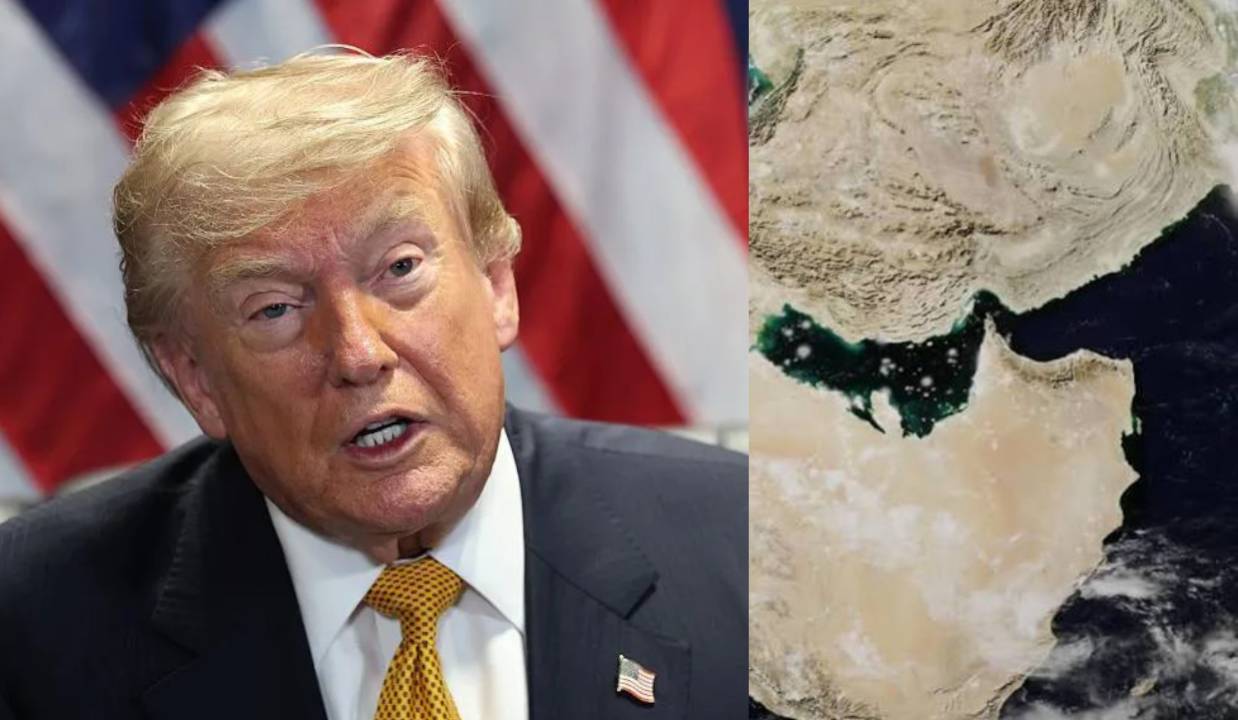
The narrow waterway, situated between Iran and Oman, serves as the principal maritime gateway connecting the Persian Gulf to international waters. It is regarded as one of the world’s most strategically important shipping lanes, with a substantial percentage of global crude oil and liquefied natural gas exports passing through it daily. Any disruption to shipping activities in the Strait has the potential to trigger sharp increases in global energy prices and destabilise international markets.
Trump’s latest remarks follow a series of military confrontations between the United States and Iran over the weekend, despite ongoing diplomatic efforts aimed at preserving an interim ceasefire arrangement reached earlier this year.
The renewed hostilities have intensified uncertainty over maritime security in the Gulf, prompting fears among energy producers, importers and international shipping companies over the safety of commercial vessels operating in the region.
The U.S. president also accused Iran of repeatedly violating agreements reached during previous rounds of negotiations, arguing that Tehran could not be trusted to honour diplomatic commitments.
“We had a deal. It was a done deal, and then they broke it,” Trump said.
“They always break it. We’ve had 10 deals with these people, and so we’re just going to hit them very hard.”
Trump further criticised Iranian negotiators, alleging that they frequently altered agreed positions after lengthy discussions, thereby frustrating efforts to reach lasting settlements.
According to him, one recent round of negotiations lasted for nearly eleven hours before Iranian representatives requested additional changes after leaving the negotiating table.
“Yesterday, they had an 11-hour meeting and everything was agreed to,” Trump stated. “Then they leave the room, call back, and say they had to make a couple of changes.”
While Washington continues to adopt a hardline stance, diplomatic efforts aimed at preventing a broader regional conflict are still ongoing.
Iran’s Foreign Ministry confirmed that discussions are continuing through mediators from Qatar, Pakistan and Oman, with the objective of reducing tensions and preventing further military escalation between both countries.
The mediation efforts are part of broader international attempts to restore stability in the Gulf after weeks of heightened military activity that have unsettled global financial and energy markets.
Despite these diplomatic engagements, Iran’s Islamic Revolutionary Guard Corps (IRGC) has maintained a confrontational position, insisting that the Strait of Hormuz remains effectively closed under current conditions.
The IRGC stated that unrestricted commercial navigation through the strategic waterway would only resume once the United States halted its military operations in the region.
Iranian military officials also warned that continued American military presence and interference around the Strait could have serious implications for international oil and gas supplies, potentially affecting economies across the globe.
The latest developments follow an exchange of missile and drone attacks between U.S. and Iranian forces over the weekend.
Tehran claimed responsibility for strikes targeting American military installations across several Gulf locations, describing the attacks as retaliation for recent U.S. military operations.
Iran also reiterated that restrictions affecting maritime activities in the Strait would remain in place until what it described as hostile American actions cease.
The renewed confrontation has significantly increased concerns among international observers about the possibility of a wider regional conflict involving additional Middle Eastern countries.
Analysts warn that prolonged instability around the Strait of Hormuz could disrupt global supply chains, increase insurance costs for commercial shipping and drive up the prices of crude oil and natural gas on international markets.
Energy traders have already reacted cautiously to the renewed tensions, with global oil prices recording fresh gains amid fears that any prolonged disruption to shipping through the Strait could significantly reduce global energy supplies.
Several governments have also called for restraint from both Washington and Tehran, urging continued diplomatic engagement to prevent further escalation and protect one of the world’s most critical maritime trade routes.
Trump’s proposal that beneficiary nations should reimburse the United States for safeguarding the Strait is expected to generate international debate, particularly among America’s allies and major energy-importing nations that rely heavily on uninterrupted access to Gulf oil supplies.
As diplomatic negotiations continue alongside military posturing, the security of the Strait of Hormuz remains central to international efforts to preserve regional stability and prevent a conflict that could have far-reaching economic and geopolitical consequences.