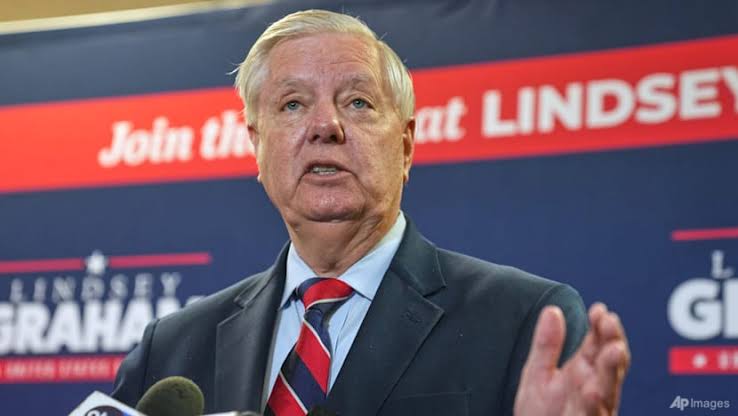
Veteran United States Senator Lindsey Graham, the Republican lawmaker representing South Carolina and one of President Donald Trump’s closest political allies, has died at the age of 71 following a brief illness, according to a statement released by his office.
The announcement, made on Saturday through Graham’s official social media accounts, said the senator passed away after what was described as a “brief and sudden illness.” No further details were provided regarding the nature or cause of the illness.
The statement also conveyed the appreciation of Graham’s family for the outpouring of support while requesting privacy as they mourned his passing.
“Senator Graham’s family appreciates prayers at this time and asks for privacy during this incredibly difficult period,” the statement said.
Graham’s death marks the end of a political career that spanned more than three decades and saw him become one of the most influential Republican voices on national security, foreign affairs and defence policy.
First elected to the United States Senate in 2002, Graham represented South Carolina for more than two decades and was serving his fourth consecutive term at the time of his death. He had also begun campaigning for another term, hoping to extend his long career in public office.
Before joining the Senate, Graham served in the United States House of Representatives from 1995 until 2003, building a reputation as a conservative lawmaker with strong views on military affairs and international relations.
Throughout his years in Congress, Graham established himself as one of the Republican Party’s leading voices on foreign policy, national defence and judicial matters. His outspoken positions often placed him at the centre of debates involving America’s role on the global stage.
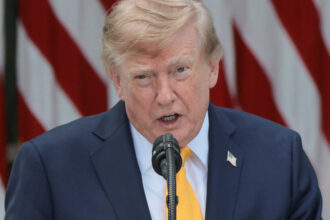
One of the defining moments of his political career came during the 2016 Republican presidential primary, when Graham sought his party’s nomination for the presidency. During that campaign, he openly criticised Donald Trump and questioned his suitability for the White House.
However, following Trump’s victory in the presidential election, Graham gradually developed a close working relationship with him, eventually becoming one of the administration’s most trusted allies and advisers.
Over the years, the South Carolina senator emerged as one of Trump’s strongest defenders in Congress and frequently advised the president on matters relating to foreign policy, defence strategy and national security.
The two politicians were often seen together at official events as well as informal gatherings, including golf outings, where Graham became a regular companion of the president.
His influence was particularly evident in shaping Republican thinking on issues involving Russia, Iran and broader geopolitical conflicts.
Known for his hawkish approach to international affairs, Graham consistently advocated robust American engagement in global security matters.
He repeatedly called for tougher sanctions against adversarial nations and argued for stronger military and diplomatic responses to perceived threats against the United States and its allies.
Iran remained one of the issues on which Graham maintained particularly strong positions throughout his Senate career.
He consistently supported measures aimed at restricting Iran’s missile capabilities and nuclear programme, arguing that Tehran posed a significant threat to regional and international security.
The senator also backed President Trump’s decision to authorise military strikes on Iranian nuclear facilities last year, describing the action as necessary to protect American interests and prevent nuclear proliferation.
Beyond Iran, Graham remained a vocal advocate of firm American policies toward Russia, frequently urging tougher sanctions and greater international pressure against Moscow.
Just one day before news of his death emerged, Graham announced that he had reached an agreement with the Trump administration to advance a new package of sanctions targeting Russia.
The proposal was viewed as another indication of his continued influence within Republican foreign policy circles and his active role in shaping legislative priorities despite his health challenges.
Throughout his career, Graham earned both praise and criticism for his willingness to take strong positions on controversial international issues.
Supporters regarded him as a principled defender of American national security and democratic values, while critics often described his foreign policy approach as overly interventionist.
Regardless of political differences, Graham remained one of the most recognisable figures in the United States Senate and played a significant role in several major legislative and national security debates over the years.
His passing comes at a time when questions surrounding the health and fitness of aging members of the United States Congress have become an increasingly prominent topic in American politics.
Recent prolonged absences by several lawmakers due to health concerns have intensified public debate over transparency regarding the medical conditions of elected officials and the impact such issues may have on legislative responsibilities.
Graham’s death is therefore expected to renew discussions about succession, representation and the broader challenges associated with an aging political leadership in Washington.
Tributes are expected to pour in from political leaders across party lines, reflecting Graham’s decades of service in Congress and his lasting influence on American foreign policy.
His death also creates a significant vacancy in South Carolina’s representation in the Senate and marks the close of a political career that shaped Republican policy on defence, diplomacy and national security for more than a generation.