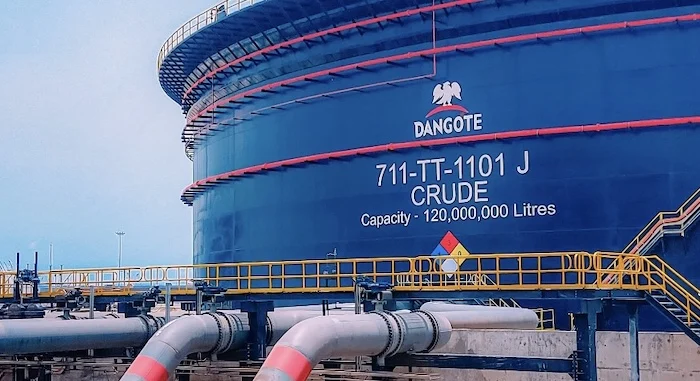
Dangote Petroleum Refinery & Petrochemicals has announced another reduction in the ex-depot price of Premium Motor Spirit (PMS), commonly known as petrol, lowering the gantry price by ₦50 per litre to ₦1,075 per litre. The latest adjustment marks the fourth downward review of petrol prices by the refinery within the last month, reinforcing its strategy of gradually passing lower production costs on to consumers.
With the latest price reduction, the cumulative decrease in the refinery’s ex-depot price of PMS has now reached ₦200 per litre since May 30, 2026, providing significant relief to fuel marketers and motorists across the country.
The company also disclosed that the price reductions have not been limited to petrol alone. Over the same period, the refinery has slashed the ex-depot price of Automotive Gas Oil (AGO), commonly known as diesel, by ₦300 per litre, while the price of Jet A1 aviation fuel has been reduced by ₦520 per litre.
According to the refinery, the successive price cuts reflect its commitment to ensuring that the benefits of lower production costs are transferred to consumers while maintaining the financial sustainability of domestic refining operations.
In a statement issued on Thursday, Dangote Refinery explained that the pricing of refined petroleum products cannot simply mirror the daily movements in international crude oil prices because of the nature of crude oil procurement and refining operations.
The company noted that crude oil used for refining is usually purchased several weeks, and in some cases months, before it is processed into finished petroleum products. As a result, refined products currently being supplied to the Nigerian market are being produced from crude inventories acquired when international oil prices were substantially higher than current levels.
The refinery disclosed that the average landed cost of crude oil processed during May stood at approximately 124.80 U.S. dollars per barrel, while the average cost for June declined to about 95.25 dollars per barrel.
These figures, it explained, remain significantly above the prevailing international benchmark price of approximately 71.01 dollars per barrel.
The company stressed that the cost of acquiring crude oil is not determined solely by the Brent crude benchmark, which is often quoted in international media reports.
Rather, Dangote Refinery explained that its crude purchases are made using the Dated Brent pricing mechanism, together with additional market premiums, freight charges, insurance costs and other logistics expenses.
These additional costs, the refinery said, substantially increase the actual price paid for crude oil beyond the headline Brent benchmark, making direct comparisons misleading.
According to the company, these procurement realities explain why local fuel prices cannot immediately reflect every decline recorded in international crude oil markets.
Despite purchasing crude at relatively high prices over the past few months, the refinery stated that it deliberately absorbed a considerable portion of the increased production costs instead of transferring the full burden to consumers.
This pricing strategy, it said, has enabled Nigeria to maintain petroleum product prices that remain lower than those in several neighbouring countries, even after accounting for applicable taxes and other statutory charges.
“As lower-priced crude cargoes progressively enter our production cycle, we have begun systematically passing the benefits to the market through phased price reductions,” the refinery stated.
It added that the latest ₦50 per litre reduction represents the fourth petrol price cut within one month, bringing the cumulative reduction in the ex-depot price of PMS to more than ₦200 per litre.
According to the company, its pricing decisions are based on actual production economics and the cost of crude inventories rather than temporary fluctuations in global oil prices.
“This approach ensures that pricing decisions are anchored on actual production economics and inventory costs rather than short-term fluctuations in international oil markets,” the statement said.
The refinery also highlighted the strategic importance of its current production capacity, noting that it is now producing sufficient volumes of refined petroleum products to satisfy Nigeria’s domestic fuel requirements.
The company said increased local refining has significantly enhanced the country’s energy security by reducing dependence on imported petroleum products and ensuring a more reliable supply of fuel to consumers nationwide.
It further stated that domestic refining is helping Nigeria conserve scarce foreign exchange previously spent on importing refined petroleum products while also contributing to greater stability in local fuel prices.
Industry analysts have consistently argued that increased domestic refining capacity has the potential to shield Nigeria from extreme volatility in the global petroleum market, particularly when supported by efficient distribution networks and stable crude oil supply.
Dangote Refinery expressed optimism that Nigerians could expect additional reductions in fuel prices in the coming weeks if international crude oil prices remain favourable and lower-cost crude inventories continue replacing earlier, more expensive supplies.
According to the company, the gradual replacement of higher-priced crude with cheaper feedstock will further reduce production costs and create room for additional downward adjustments in the prices of refined products.
The refinery reaffirmed its commitment to supplying Nigerians with high-quality petroleum products that meet internationally recognised standards while remaining competitively priced.
It also reiterated its broader objective of supporting Nigeria’s economic development through increased domestic refining, improved energy security, reduced import dependence and enhanced efficiency within the downstream petroleum sector.
The latest reduction is expected to positively impact transport costs, manufacturing activities and other sectors that depend heavily on petroleum products, while providing some relief to businesses and households grappling with high operating expenses.
As the country’s largest refining facility continues to ramp up production, industry stakeholders will be closely watching whether the recent price reductions translate into lower pump prices across retail filling stations and contribute to easing inflationary pressures in the wider economy.
Dangote Refinery maintained that it remains committed to operating in a manner that balances commercial sustainability with national economic priorities, assuring consumers that it will continue to adjust prices responsibly as production costs decline and market conditions improve.