Former United States President Donald Trump has claimed that the blockade of the Strait of Hormuz “will now be lifted” as part of a proposed agreement involving the United States and Iran, ahead of crucial high-level discussions expected to take place at the White House.
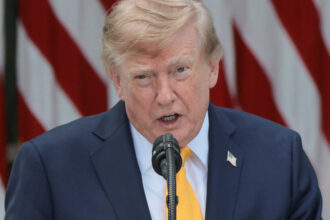
Trump made the declaration in a lengthy statement posted on his Truth Social platform, where he outlined what he described as the major terms of a possible understanding between Washington and Tehran. According to him, the proposed arrangement would involve Iran abandoning any ambition to develop nuclear weapons while also reopening the strategic Strait of Hormuz for unrestricted international shipping.
The Strait of Hormuz remains one of the world’s most critical maritime routes, serving as a major channel for global oil transportation. Any disruption within the waterway has the potential to affect global energy prices and international trade.
In his statement, Trump insisted that Iran must permanently abandon any nuclear weapons programme as part of the agreement.
“Iran must agree that they will never have a Nuclear Weapon or Bomb,” Trump declared.
He also stated that the Strait of Hormuz must immediately become fully accessible to global maritime traffic without restrictions, tolls, or military interference.
“The Hormuz Strait must be immediately open, no tolls, for unrestricted shipping traffic, in both directions,” he added.
Trump further claimed that sea mines allegedly planted in the area would be removed under the proposed arrangement. According to him, some of the mines had already been destroyed by American forces operating in the region.
“All water mines (bombs), if any, will be terminated,” he wrote. “Iran will complete the immediate removal and/or detonation of any mines that are left.”
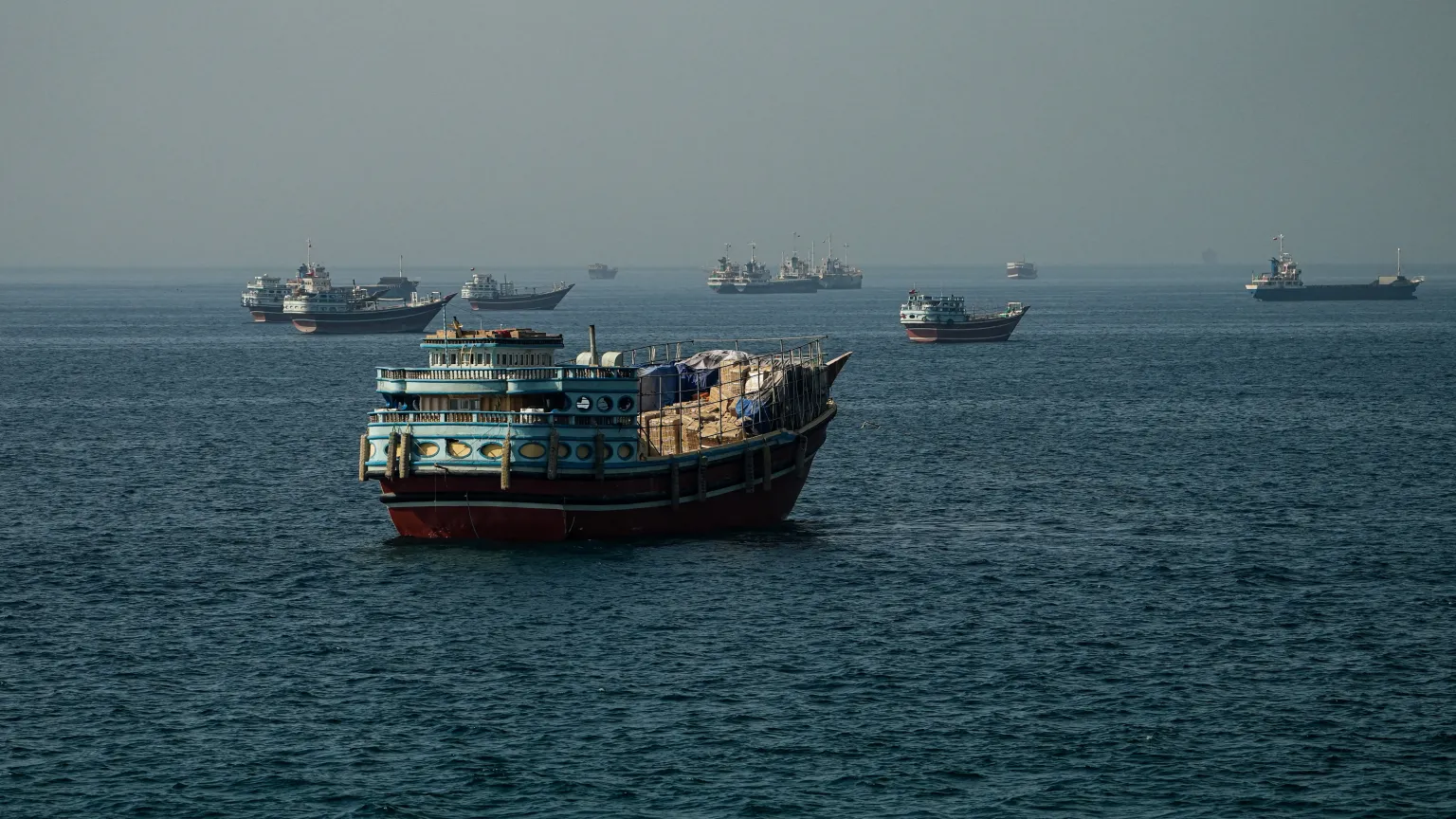
The former president also announced what he described as the end of an “unprecedented Naval Blockade” in the region, suggesting that commercial and civilian vessels trapped within the Strait could begin departing safely.
“Ships caught in the Strait due to our amazing and unprecedented Naval Blockade, which will now be lifted, may start the process of ‘heading home!’” Trump said.
According to reports surrounding the proposed framework, discussions between both sides may also involve possible sanctions relief for Iran, humanitarian assistance deliveries, and the potential release of frozen Iranian assets held abroad.
However, Trump stressed that financial transactions would remain suspended until further notice.
“No money will be exchanged until further notice,” he said.
Despite Trump’s confident announcement, Iranian authorities appeared to distance themselves from the claims almost immediately.
Iranian state-linked Fars News Agency quoted unnamed Iranian sources as denying that any such agreement had been finalised or approved. The report suggested that Trump’s remarks may have overstated the status of the negotiations currently taking place behind closed doors.
The conflicting positions have added uncertainty to an already delicate diplomatic process between both countries, whose relationship has remained tense for decades due to disagreements over Iran’s nuclear programme, sanctions, regional influence, and military activities.
Reports indicate that the proposed arrangement under discussion could involve extending the current ceasefire period by another 60 days while negotiations continue over Tehran’s nuclear activities and regional security issues.
Sources familiar with the discussions said negotiators are still working through unresolved technical and political details before any formal announcement can be made.
United States Vice President JD Vance confirmed that negotiations were still ongoing, noting that both parties were still debating specific wording within the draft proposal.
According to Vance, discussions had narrowed down to “a couple of language points,” while Trump himself had not yet made a final decision on whether to approve the proposed arrangement.
The vice president’s comments suggested that negotiations remain fluid and that several contentious issues may still need to be resolved before any binding agreement emerges.
Meanwhile, senior Iranian official Mohammad Bagher Qalibaf expressed deep skepticism toward Western promises and guarantees, insisting that Iran would only act after seeing concrete steps from the opposing side.
Qalibaf stated that Iran no longer places trust in verbal commitments from foreign powers, especially given previous disputes involving international agreements and sanctions.
“The winner of any agreement is the one who is better prepared for war the day after it is signed,” Qalibaf said.
He argued that Iran’s strength at the negotiating table comes primarily from its military capabilities rather than diplomacy alone.
According to him, Tehran secures concessions “not through dialogue, but through missiles,” while describing negotiations merely as a platform for explaining Iran’s strategic positions.
His remarks underscored the deep mistrust that continues to shape relations between Iran and Western governments despite ongoing diplomatic engagements.
The Strait of Hormuz has long remained a focal point of international geopolitical tension due to its strategic importance to global oil exports. A significant percentage of the world’s crude oil shipments passes through the narrow waterway connecting the Persian Gulf to the Gulf of Oman and the Arabian Sea.
Over the years, repeated confrontations involving Iran, the United States, and allied naval forces have raised fears of military escalation capable of disrupting international energy markets.
Analysts say any agreement guaranteeing unrestricted movement through the Strait could temporarily ease global concerns over energy supply disruptions and rising oil prices.
However, experts also caution that the fragile nature of US-Iran relations means that tensions could quickly resurface if negotiations collapse or either side accuses the other of violating commitments.
Trump’s announcement has already generated mixed reactions internationally, with some observers welcoming the possibility of reduced tensions while others remain cautious about the lack of official confirmation from Tehran.
Diplomatic observers noted that while Trump’s statement projected optimism and confidence, the immediate denial from Iranian-linked sources highlighted the complicated and sensitive nature of the ongoing talks.
Security experts also pointed out that even if a temporary agreement is reached, broader disputes surrounding Iran’s nuclear programme, regional influence, sanctions, and military activities are unlikely to disappear completely.
Nevertheless, the developments mark another significant moment in the evolving diplomatic relationship between Washington and Tehran, especially amid growing international pressure to avoid further instability in the Middle East.
As negotiations continue, attention remains focused on whether both countries can overcome decades of mistrust and geopolitical rivalry to reach a lasting understanding capable of reducing tensions in one of the world’s most strategically important regions.