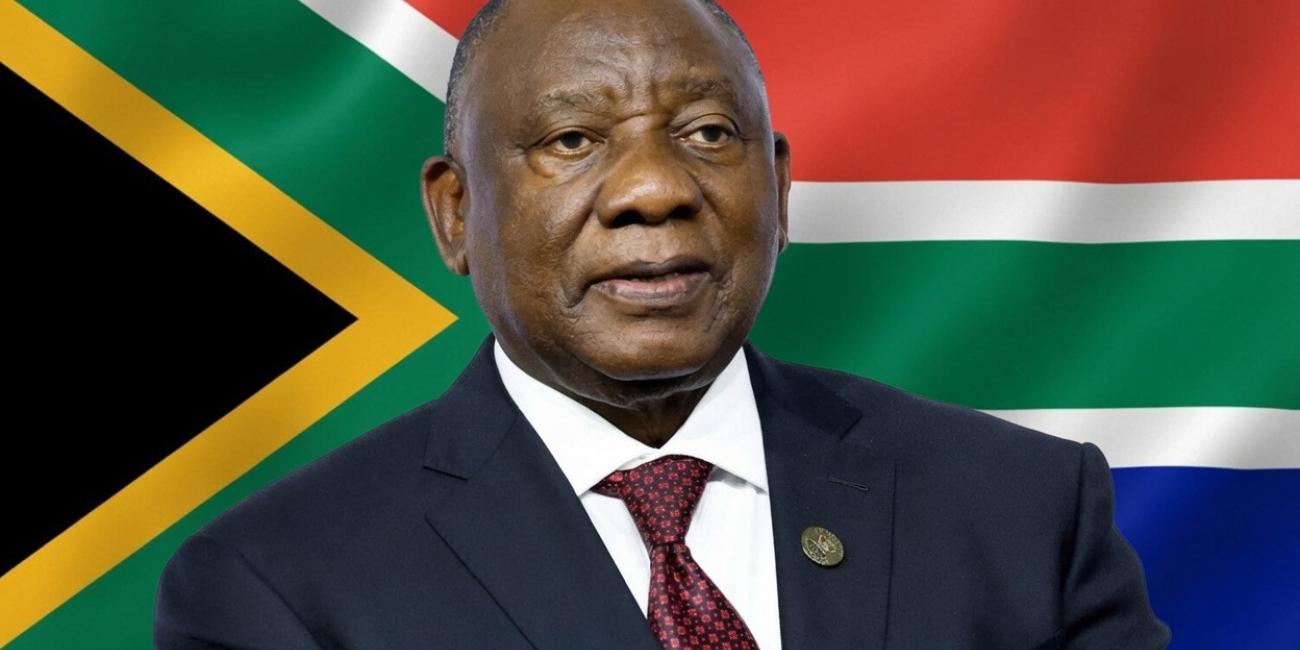
South African President Cyril Ramaphosa has issued a strong warning to anti-immigrant groups and individuals promoting xenophobic campaigns, declaring that his government will not tolerate attempts to incite violence, lawlessness, or social unrest under the guise of addressing illegal immigration.
Speaking in a national address on immigration-related issues on Sunday, Ramaphosa acknowledged that many South Africans have genuine concerns about illegal immigration and its impact on communities. However, he cautioned that such concerns must not be manipulated by political actors, vigilante groups, or criminal networks seeking to advance their own agendas.
The president stressed that while immigration remains a sensitive issue in South Africa, resolving it requires lawful and coordinated action rather than violence or intimidation directed at foreign nationals.
“We must not allow groups to use the legitimate concerns of South Africans to destabilise our country through inciting lawlessness and violence,” Ramaphosa said.
He warned that some individuals and organisations were exploiting public frustration for political gain and personal interests, adding that the government was closely monitoring activities capable of threatening national stability and social cohesion.
“We will act against forces that are exploiting the concerns of our people about illegal immigration to further their own political, personal and criminal agendas,” he stated.
The South African leader also expressed concern over the growing influence of misinformation campaigns on social media platforms, noting that false narratives often fuel tensions between citizens and migrant communities.
“We will not be fooled or influenced by social media campaigns that spread misinformation,” Ramaphosa added.
His remarks come at a time when immigration has become one of the most contentious issues in South Africa, with rising unemployment, economic hardship, and increasing competition for limited resources contributing to growing public frustration.
Several anti-immigrant organisations have intensified campaigns against undocumented migrants in recent months, accusing foreign nationals of taking jobs, straining public services, and contributing to crime. These claims have sparked heated public debates and, in some cases, triggered acts of violence against migrant communities.
Ramaphosa emphasised that immigration enforcement remains the exclusive responsibility of the government and its agencies, warning that private groups have no authority to take the law into their own hands.
According to the president, South Africa’s democratic institutions are fully capable of managing immigration challenges through lawful and constitutional means.
“The responsibility of enforcing immigration laws belongs to the state. It cannot and must not be assumed by private individuals or vigilante groups,” he said.
He reaffirmed his administration’s commitment to strengthening border management, improving immigration systems, and ensuring compliance with existing laws while protecting the rights and dignity of all people living in the country.
“We want a South Africa where every person who enters the country does so lawfully. A South Africa where immigration laws are respected and enforced. A South Africa where businesses compete fairly and where communities feel safe and secure,” Ramaphosa said.
The president also directed a stern message to employers who knowingly violate labour and immigration regulations by hiring undocumented workers or exploiting vulnerable migrants.
He warned that businesses found breaching the law would face severe sanctions and legal consequences.
Ramaphosa argued that enforcing labour laws fairly would help protect both South African workers and migrant labourers from exploitation.
He acknowledged that the country’s economic difficulties have intensified public anxiety over immigration, particularly among unemployed youth and struggling households.
South Africa continues to grapple with one of the highest unemployment rates in the world, a situation that has placed enormous pressure on communities and heightened competition for jobs and economic opportunities.
The president noted that these challenges have created fertile ground for resentment and division, but cautioned against directing anger toward migrants.
“Economic hardship and unemployment can easily create tensions within communities. But we must resist the temptation to blame one another or to target vulnerable groups,” he said.
Instead, Ramaphosa called for unity and constructive engagement, arguing that social cohesion remains essential to South Africa’s progress and stability.
He urged citizens to reject messages of hatred and xenophobia while embracing solutions rooted in law, justice, and mutual respect.
The president’s intervention comes amid growing alarm over a fresh wave of anti-immigrant activities across several parts of the country.
In recent weeks, vigilante groups have reportedly intensified campaigns targeting undocumented migrants, leading to heightened fears within foreign communities.
Particularly troubling was the announcement by some anti-immigrant activists of a June 30, 2026 deadline demanding that undocumented migrants leave South Africa.
Although the South African government has repeatedly clarified that the ultimatum has no legal basis and does not represent official policy, the declaration has generated widespread anxiety among migrant populations.
The threat has reportedly prompted some foreign nationals to return voluntarily to their home countries amid fears of possible attacks and harassment.
Countries including Mozambique, Ghana, and Malawi have reportedly facilitated the repatriation of some citizens who expressed concerns about their safety in South Africa.
Human rights organisations and community groups have also raised concerns that inflammatory rhetoric from anti-immigrant activists could trigger another wave of xenophobic violence similar to previous outbreaks that claimed lives and displaced thousands of people.
South Africa has experienced several episodes of xenophobic unrest over the past two decades, with migrant-owned businesses often targeted during periods of social tension.
Ramaphosa acknowledged these painful chapters in the country’s history and stressed that lessons must be learned to prevent a recurrence.
He said the government would continue to enforce immigration laws firmly while ensuring that public order is maintained and that all residents are protected from violence and intimidation.
According to the president, addressing immigration challenges should not come at the expense of constitutional values, human rights, or national unity.
He emphasised that South Africa’s future depends on strengthening institutions, promoting economic opportunities, and ensuring that grievances are addressed through lawful channels rather than mob action.
As debate over immigration continues to dominate public discourse, Ramaphosa reaffirmed his administration’s commitment to balancing effective immigration control with the protection of human dignity and social harmony.
He concluded by urging South Africans to remain vigilant against attempts to sow division and hatred, insisting that the country’s challenges can only be overcome through unity, lawful governance, and collective responsibility.
The president’s message was clear: while illegal immigration remains a serious issue requiring decisive action, xenophobic vigilantism, violence, and misinformation have no place in South Africa’s democracy. His government, he said, will continue to act against those seeking to exploit public concerns for political or criminal purposes while working to ensure that immigration laws are enforced fairly, effectively, and within the framework of the rule of law.