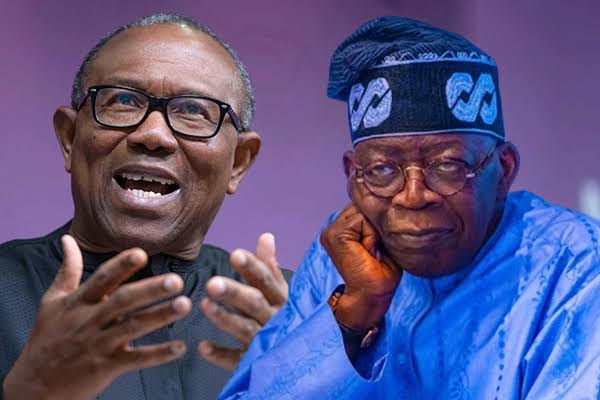
Presidential candidate of the Nigeria Democratic Congress (NDC), Peter Obi, has raised fresh concerns over unresolved questions surrounding President Bola Tinubu’s past, arguing that public office holders must have the courage to confront issues relating to their history with honesty and transparency.
Obi made the remarks in a statement following his prayers for Nigeria and its leaders on Sunday, August 30, 2026. He said he was increasingly concerned about the direction of the country and the standards being set by those occupying positions of authority.
The former Anambra State governor said his loyalty to Nigeria remained unwavering, noting that he had never sought citizenship of another country despite having opportunities to do so.
“As a citizen of no other country, who has never sought foreign citizenship even when doing so became fashionable, my loyalty to Nigeria and my faith in her destiny remain unshaken,” Obi said.
According to him, his concerns were heightened by what he described as the continuing controversy over efforts to prevent the release of records relating to the President’s past.
Obi said it was troubling that a sitting Nigerian President was involved in legal efforts before a foreign court concerning access to records that, in his view, were matters of legitimate public interest.
He argued that leadership required the ability to confront one’s history rather than attempt to shield controversial aspects of it from public scrutiny.
“Leadership, in my humble view, demands the courage and humility to confront one’s history — to acknowledge mistakes, provide candid explanations where questions arise, and, where necessary, apologise and seek forgiveness,” he said.
The NDC presidential candidate maintained that accepting responsibility for past mistakes should not necessarily diminish a leader’s authority. Rather, he argued, accountability could strengthen public confidence in political leadership.
Obi said this principle was particularly important where questions involved educational credentials and other information that could be verified through official records.
He expressed concern over continuing questions surrounding foundational educational records, including primary and secondary school credentials, arguing that such issues should be resolved through clear explanations and credible documentation rather than prolonged legal disputes.
“Issues surrounding foundational schooling — primary and secondary — should not remain unresolved or be addressed primarily through legal proceedings,” he said.
According to Obi, Nigerians are entitled to clear, credible and verifiable explanations when questions arise over information previously presented by public officials.
He said the implications extended beyond the individual involved, stressing that the conduct of political leaders could influence the values and behaviour of citizens, particularly younger Nigerians.
“My deepest concern is the example this sets for more than 200 million Nigerians, particularly the over 30 million young people in schools,” Obi said.
He argued that the Presidency, as the highest political office in the country, should serve as an example of integrity, accountability, transparency and ethical leadership.
Obi acknowledged that no individual was necessarily immune from mistakes, saying an imperfect past was part of the human condition.
However, he maintained that what mattered was how individuals responded when questions were raised about their past.
He called for humility, honesty, accountability and, where necessary, an apology and efforts to make amends.
“An imperfect past is part of the human condition. What matters is the willingness to confront it with humility, honesty and deep apology, to make amends where necessary and, when circumstances so demand, to place the interests of the nation above personal ambition,” he said.
The former governor also challenged Nigeria’s political class to place national interest above individual political ambitions.
He questioned the tendency of politicians to prioritise personal or political survival, stressing that political offices were temporary while the nation and its institutions would endure beyond the tenure of individual office holders.
“When will our political class fully appreciate that individual ambitions are temporary, while the nation endures?” Obi asked.
He argued that the Presidency was an office occupied for a limited period, but that the ethical standards demonstrated by those who occupy it could have consequences lasting for generations.
According to him, the credibility of Nigeria’s democratic institutions and the moral authority of its leadership should take precedence over the interests of any individual.
“Nigeria is greater than any one person, and the integrity of the Republic must always come before the interests of the individual,” he said.
Obi concluded by reiterating his belief that the country could achieve meaningful transformation if its leaders and citizens prioritised accountability, integrity and the common good.
“A New Nigeria is POssible,” he said.