United States President Donald Trump has called on all countries that are members of the International Criminal Court (ICC) to withdraw from the institution, escalating his administration’s opposition to the international tribunal.
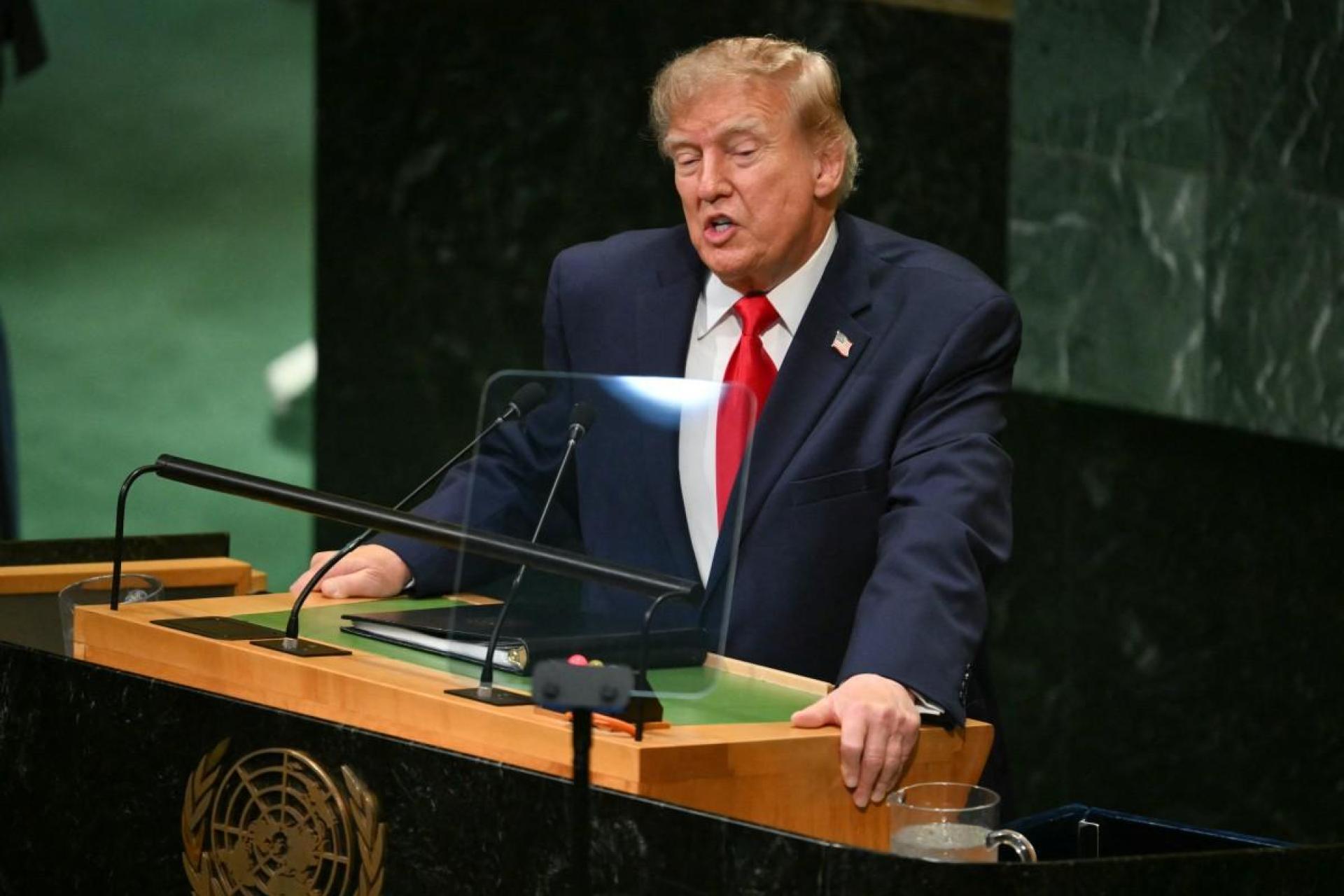
Trump made the call on Tuesday, September 22, 2026, while addressing world leaders at the 81st United Nations General Assembly in New York, where he criticised the ICC and questioned its authority to investigate or prosecute American personnel.
During his address, Trump described the ICC as an “out-of-control institution” and urged countries that belong to the court to leave it.
“I call on all nations that are members of the ICC to officially resign from this rogue institution immediately,” Trump said.
The remarks represent another escalation in Washington’s longstanding dispute with the ICC, particularly over the court’s investigations involving US personnel and its actions against officials of countries allied with the United States.
The ICC, headquartered in The Hague, Netherlands, was established under the Rome Statute and is mandated to investigate and prosecute individuals accused of genocide, crimes against humanity, war crimes and the crime of aggression. The court focuses on individual criminal responsibility rather than prosecuting states as entities.
Trump’s latest criticism was centred on what he described as an unacceptable attempt by an international institution to exercise authority over American citizens and members of the US military.
He said the United States would not accept its service members being subjected to what he characterised as politically motivated proceedings before a tribunal that, in his view, lacks jurisdiction over the country.
Trump argued that Washington should retain authority over its own citizens and military personnel, rather than subject them to proceedings initiated by an international court.
The United States is not a state party to the Rome Statute and has not ratified the treaty that established the ICC. However, the court’s jurisdiction is more complex than membership alone.
Under the Rome Statute, the ICC may, in certain circumstances, exercise jurisdiction where alleged crimes occur on the territory of a state party or where the accused is a national of a state party. The court may also obtain jurisdiction through a referral by the United Nations Security Council or through other mechanisms provided for under the Rome Statute.
The distinction has been central to disagreements between Washington and the ICC over the years.
Trump’s administration has maintained that the court should not exercise jurisdiction over US personnel, particularly where the United States itself has not accepted the court’s jurisdiction as a state party.
The confrontation has intensified over the ICC’s investigations and legal actions involving US allies.
One of the most significant points of tension has been the court’s proceedings involving Israeli officials. The Trump administration has strongly objected to ICC action concerning Israeli Prime Minister Benjamin Netanyahu, a close US ally.
US Secretary of State Marco Rubio has also criticised the ICC and described its activities as a threat to American sovereignty. The Trump administration has imposed sanctions and other restrictions against ICC officials as part of its broader campaign against the institution.
The United States has historically maintained a complicated relationship with the ICC. Although Washington participated in negotiations that led to the creation of the Rome Statute, successive US administrations have raised concerns about the court’s potential reach over American citizens and military personnel.
The United States signed the Rome Statute in 2000 but never ratified it. Consequently, it is not a member of the court in the same way as states that have ratified or acceded to the treaty.
Other major powers, including Russia, China and Israel, are also not parties to the Rome Statute.
The ICC nevertheless maintains that its jurisdiction can apply in particular circumstances involving nationals of non-member states. According to the court’s own explanation of the Rome Statute, jurisdiction may arise where an alleged crime is committed on the territory of a state party, where the accused is a national of a state party, or where a situation is referred to the court by the UN Security Council.
This legal framework has contributed to continuing disagreements between the court and governments that have not accepted the Rome Statute.
Trump’s call for member states to withdraw therefore comes against the background of a broader debate over the authority of international institutions and the limits of national sovereignty.
Supporters of the ICC argue that the court provides an international mechanism for pursuing individuals accused of some of the most serious crimes when domestic judicial systems are unable or unwilling to address them. The court describes its role as complementary to national criminal jurisdictions rather than a replacement for them.
Critics, including the Trump administration, have raised concerns about sovereignty, jurisdiction and what they consider the possibility of politically motivated investigations.
The disagreement has become particularly pronounced where the ICC’s investigations involve military operations or senior officials from countries that do not recognise the court’s authority over their nationals.
Trump’s intervention at the United Nations therefore places the ICC debate firmly within the wider discussion about the future of multilateral institutions.
His remarks also come as the United Nations General Assembly begins its 81st session, bringing together heads of state and government from around the world to discuss international security, conflicts, development and other global issues. The general debate runs from September 22 through September 28, 2026.
For countries that are parties to the Rome Statute, any decision to withdraw from the ICC would involve their respective national constitutional and legal procedures. Such a decision would also have implications for their relationship with the court and their obligations under the Rome Statute.
Trump’s demand does not itself alter the legal status of the ICC or the obligations of its member states. Rather, it represents a political and diplomatic appeal by the United States president for countries to reconsider their membership of the institution.
The ICC continues to operate as an independent international criminal court under the Rome Statute, while the United States remains outside the treaty framework as a non-party state.
Trump’s latest comments are therefore likely to further intensify the international debate over the balance between national sovereignty and international accountability, particularly in cases involving alleged war crimes, crimes against humanity and other serious violations of international criminal law.
The controversy also highlights the continuing challenge facing international institutions: securing broad cooperation from states while maintaining mechanisms for accountability when serious crimes are alleged.
For now, Trump has made Washington’s position clear. His administration wants countries that belong to the ICC to withdraw from the court, while the United States continues to reject what it regards as attempts by the tribunal to exercise authority over American personnel.
The latest confrontation underscores the widening disagreement between Washington and the ICC over jurisdiction, sovereignty and the role of international criminal justice in the modern global order.