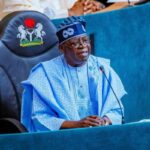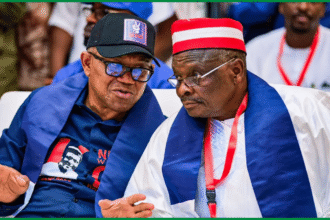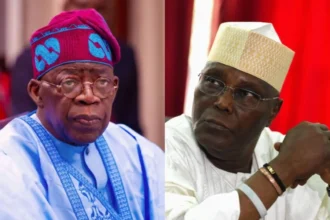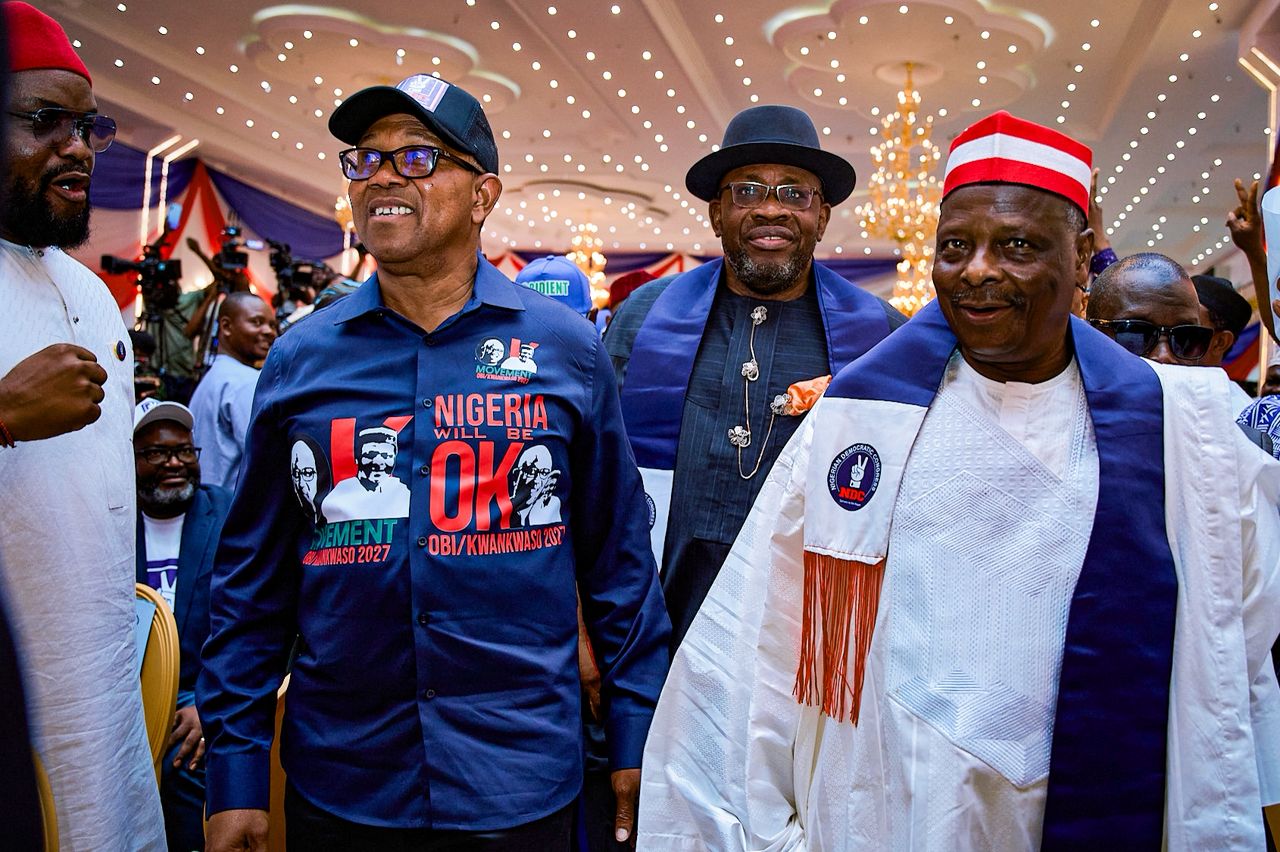
The presidential candidate of the Nigeria Democratic Congress (NDC), Peter Obi, has called on President Bola Ahmed Tinubu to resign from office, arguing that his administration has failed to fulfil the promises it made to Nigerians and has presided over a worsening economic and security situation.
Obi made the call in a statement issued on Monday, where he maintained that accountability remains one of the fundamental pillars of democratic governance. According to him, leaders who fail to deliver on their campaign promises or who lose the confidence of the people should be prepared to accept responsibility for their actions and decisions.
The former Governor of Anambra State said his position was inspired by a recent speech delivered by the British Prime Minister, Sir Keir Starmer, in which the UK leader reportedly announced plans to resign amid public dissatisfaction over economic challenges and unfulfilled campaign commitments. Obi argued that the development demonstrated how mature democracies function, with public officials accepting responsibility when they fail to meet expectations.
According to him, the willingness of leaders in established democracies to step aside when they believe they have not achieved their mandates reflects a culture of accountability that Nigeria should strive to emulate.
Obi noted that leadership is fundamentally about service and responsibility rather than the retention of political power. He argued that elected officials must constantly assess their performance against the promises they made to citizens before assuming office.
The NDC presidential candidate recalled that before the 2015 general elections, Bola Tinubu was one of the strongest critics of the administration of former President Goodluck Jonathan. He said Tinubu consistently demanded Jonathan’s resignation over issues including insecurity, economic hardship and what he described at the time as the government’s inability to protect lives and property.
According to Obi, Tinubu had repeatedly argued during the Jonathan administration that any government unable to guarantee the safety of its citizens had failed in its constitutional responsibility.
He specifically referenced Tinubu’s criticism following the abduction of the Chibok schoolgirls by Boko Haram insurgents in 2014, noting that the current president had maintained at the time that government should be held accountable whenever citizens’ security could not be guaranteed.
Obi argued that the same standard Tinubu applied to previous administrations should equally apply to his own government.
The opposition leader also revisited several commitments made by Tinubu during the 2023 presidential election campaign. According to him, the President promised Nigerians significant improvements in electricity supply, economic growth, national security, anti-corruption efforts, employment creation and the general welfare of citizens.
He further recalled that Tinubu had publicly challenged Nigerians not to support his re-election if he failed to deliver on those commitments.
Obi, however, maintained that the current realities across the country paint a different picture from the campaign promises that were made.
He alleged that electricity supply remains unstable despite repeated assurances of reforms in the power sector.
According to him, insecurity has continued to spread across different regions of the country, with incidents of terrorism, banditry, kidnapping and communal violence persisting despite government efforts to address the challenges.
Obi further argued that the economic hardship confronting millions of Nigerians has deepened under the present administration.
He cited rising inflation, the increasing cost of food, transportation and essential goods, declining purchasing power and worsening poverty as evidence that many Nigerians are experiencing greater economic difficulties than they anticipated.
According to him, businesses continue to struggle with multiple challenges, including high production costs, unstable foreign exchange rates and limited access to affordable financing.
The former governor also expressed concern over what he described as inadequate progress in infrastructure development, arguing that many sectors of the economy have not witnessed the level of transformation promised during the election campaign.
He said transportation, healthcare, education and industrial development still require urgent intervention if Nigeria is to achieve sustainable economic growth.
Obi equally criticised the government’s anti-corruption efforts, arguing that Nigerians expect greater transparency, stronger institutions and more effective mechanisms for ensuring accountability in public office.
According to him, public confidence in governance can only be restored when leaders demonstrate integrity and remain faithful to the commitments they make to the electorate.
He maintained that Nigeria is currently passing through one of the most difficult periods in its democratic history, adding that millions of citizens continue to grapple with severe economic challenges and insecurity.
“The current realities facing Nigerians are inconsistent with the promises made before the election,” Obi stated.
He argued that democratic governance requires leaders to accept responsibility whenever policies fail to produce the desired outcomes.
According to Obi, resignation should not necessarily be viewed as a sign of weakness but rather as an expression of political responsibility and respect for democratic principles.
He maintained that public office is a sacred trust bestowed by the people and that leaders should be willing to relinquish power when they believe they can no longer effectively discharge their responsibilities.
“I join millions of Nigerians of goodwill in calling for the resignation of the President over what I consider monumental failure in governance,” Obi declared.
He added that such a decision would help strengthen democratic institutions by reinforcing the principle that elected officials remain accountable to the people throughout their tenure.
Obi further argued that establishing a culture of accountability would discourage impunity in public office and encourage future leaders to remain focused on delivering tangible results rather than merely occupying political positions.
According to him, democratic progress depends not only on conducting elections but also on ensuring that elected leaders remain answerable to citizens for their performance while in office.
The NDC presidential candidate stressed that Nigeria requires leadership that prioritises competence, transparency and measurable outcomes capable of improving the living standards of ordinary citizens.
He expressed confidence that a stronger culture of accountability would ultimately enhance public trust in government institutions and contribute to national development.
Obi’s statement comes amid ongoing public debate over the country’s economic outlook, rising inflation, security challenges and the impact of recent government reforms on businesses and households.
His remarks are expected to generate fresh political reactions as discussions continue over the performance of the current administration and preparations for the 2027 general elections.