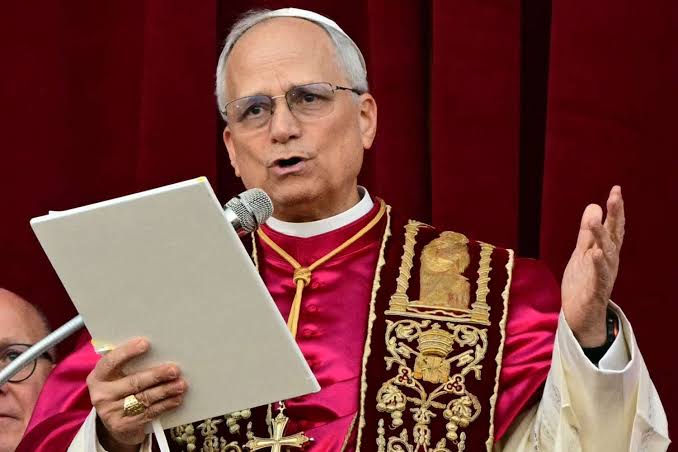
The 71-year-old pontiff disclosed the development on Sunday, October 11, 2026, while addressing pilgrims gathered in St Peter’s Square at the Vatican for his weekly Angelus prayer.
According to the Pope, doctors discovered a small, localised lung nodule during medical tests and recommended surgery to remove it.
He explained that the growth was detected at an early stage and remained well-contained, adding that he had decided to follow the medical team’s advice.
“Recently, during some medical examinations, doctors found a localised nodule in my lung. It was detected at a very early stage and is well contained,” the Pope said.
“The doctors believe it is advisable to intervene, so, following their advice, I have decided to undergo surgery to remove it. The operation is already scheduled for the next few days,” he added.
The announcement marks the first publicly disclosed major health concern involving the pontiff since his election as head of the Roman Catholic Church in May 2025.
The Vatican has not disclosed whether the lung nodule is suspected to be cancerous or provided further details about the nature of the growth.
Doctors Say Lung Nodules Are Often Benign
A lung nodule is a small, localised abnormality in the lung that may develop for several reasons, including previous infections, inflammation or, in some cases, cancer.
Medical experts note that the discovery of a lung nodule does not automatically indicate a cancer diagnosis.
According to information from the American Thoracic Society, fewer than five per cent of lung nodules overall prove to be cancerous, although the likelihood of malignancy varies depending on factors such as the patient’s age, the size and appearance of the nodule, smoking history and other medical considerations.
Stephen Liu, a lung cancer specialist and division chief of haematology-oncology at MedStar Georgetown University Hospital in Washington, said lung nodules were relatively common and frequently benign.
He explained that surgical removal could be appropriate when doctors have sufficient concerns about a nodule and determine that an operation is safe, taking into account its location and the patient’s overall health.
Liu noted that removing the growth could provide a definitive diagnosis, allowing doctors to determine its nature through further examination.
However, the Vatican has not indicated whether the Pope’s medical team suspects cancer or whether additional diagnostic tests have established the cause of the nodule.
Until further information is released, the precise nature of the growth remains undisclosed.
Vatican Expects One-Week Recovery
The Vatican press office said the Pope was expected to require approximately one week to recover from the planned surgery.
Officials did not immediately provide additional information about the procedure, the pontiff’s general health or whether the operation would affect his official engagements.
Despite the announcement, Pope Leo has maintained an active schedule since becoming leader of the Catholic Church.
Before informing the public about his health condition during Sunday’s address, he referred to his planned pastoral visit to South America and thanked Catholics for their prayers ahead of the journey.
The Pope is scheduled to undertake an 11-day tour of Uruguay, Argentina and Peru from November 6 to November 17.
The Vatican has yet to clarify whether the planned surgery and recovery period will affect the trip.
The visit is expected to form part of his continuing pastoral activities and engagement with Catholic communities across the region.
Italian Prime Minister Sends Message of Support
The announcement prompted a message of support from Italian Prime Minister Giorgia Meloni, who expressed solidarity with the pontiff as he prepared for the operation.
In a statement, Meloni said she wished to convey her personal support and that of the Italian government as the Pope faced the medical challenge.
She also expressed confidence in the calm manner in which Leo addressed the issue publicly.
“The serenity and composure with which he spoke about it today are reassuring,” she said.
The message reflected the widespread attention surrounding the health of the Pope, whose position places him at the centre of the spiritual lives of more than a billion Catholics worldwide.
As leader of the Roman Catholic Church and head of the Vatican City State, the Pope’s health is closely followed by religious communities, political leaders and the international public.
Pope Leo Relatively Young for Church Leader
Elected by cardinals in May 2025, Pope Leo is considered relatively young compared with several recent occupants of the papal office.
He is known to enjoy sports, including tennis, and has not been publicly associated with a history of smoking or previously disclosed significant health problems.
His predecessor, Pope Francis, died at the age of 88 after experiencing declining health in his later years.
Francis was hospitalised several times during his papacy, and his medical condition frequently attracted international attention. On some occasions, uncertainty surrounding his hospital visits fuelled speculation about his health.
Unlike his predecessor’s often closely watched medical episodes, Pope Leo has now personally disclosed the discovery of the lung nodule and the planned intervention.
His decision to speak publicly about the condition provides an initial account of the medical issue, although important details, including the exact nature of the growth, remain unknown.
Attention Turns to Surgery and Further Medical Updates
The immediate priority for the Pope is to undergo the recommended procedure and recover under medical supervision.
The decision to remove the nodule reflects the advice of his doctors, but the announcement does not establish that the growth is malignant.
Medical specialists generally assess lung nodules according to their size, appearance, location and the patient’s medical history before determining whether monitoring, further testing or surgical removal is appropriate.
In cases where surgery is recommended, laboratory examination of the removed tissue may help establish a definitive diagnosis.
The Vatican has not announced when further medical information will be made available.
For now, the Holy See expects the pontiff to recover within approximately one week, while attention remains focused on the outcome of the operation and whether it will affect his forthcoming international engagements.
Pope Leo’s announcement has brought his health into the public spotlight for the first time since his election, with Catholics and other well-wishers awaiting further updates on his condition.