
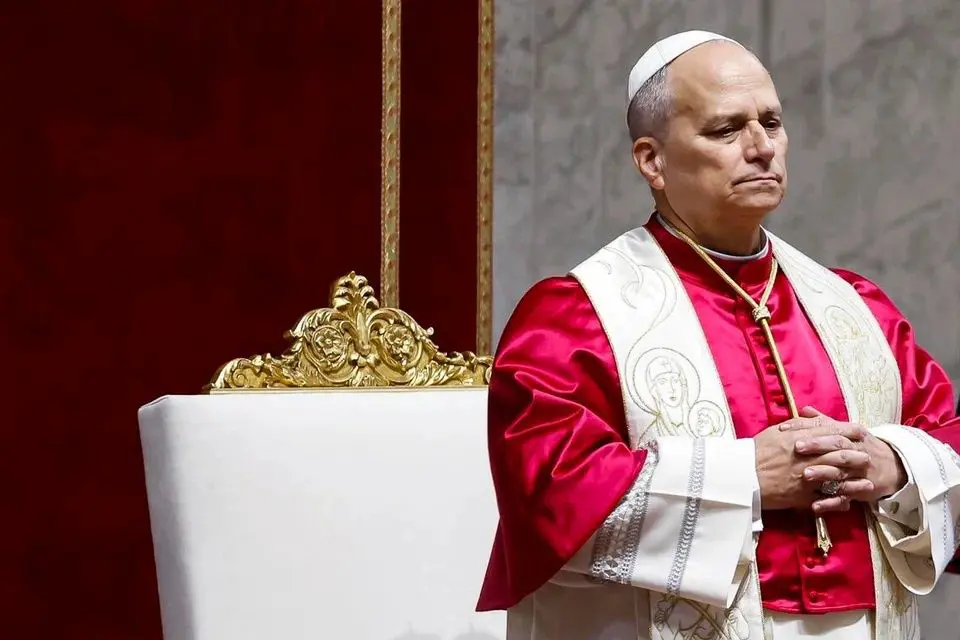
VATICAN CITY — Pope Leo XIV has issued an unprecedented apology for the Vatican’s historical role in legitimizing and justifying slavery, describing the Catholic Church’s past actions as a “wound in Christian memory” and asking for forgiveness on behalf of the Church.
The apology, delivered in the Pope’s first encyclical titled Magnifica Humanitas (“Magnificent Humanity”), marks the first time a pontiff has explicitly acknowledged and apologized for the role played by past popes and the Holy See in authorizing and legitimizing the enslavement of non-Christians during the colonial era.
In the landmark document, Pope Leo XIV expressed profound sorrow over the immense suffering endured by millions of people subjected to slavery and exploitation over several centuries.
“It is impossible not to feel deep sorrow when contemplating the immense suffering and humiliation endured by so many,” the Pope wrote while seeking pardon in the name of the Catholic Church.
The apology represents a significant departure from previous papal statements. While earlier popes had condemned slavery and expressed regret over the involvement of Christians in the transatlantic slave trade, none had directly acknowledged the Vatican’s own institutional role in granting European rulers authority to conquer territories and enslave non-Christians.
Historians note that a series of papal decrees issued during the 15th century provided religious and legal justification for European colonial expansion and the enslavement of indigenous peoples and non-Christian populations in Africa and the Americas. These decrees later became associated with what came to be known as the “Doctrine of Discovery,” which was used to justify colonization and the seizure of indigenous lands.
In his encyclical, Pope Leo acknowledged that the Holy See had, at various times, responded to requests from monarchs by regulating and legitimizing forms of subjugation, including the enslavement of individuals considered “infidels” under the terminology of the era. He also noted that Church institutions themselves owned slaves during parts of the Middle Ages and that the Church was slow in fully recognizing slavery as incompatible with human dignity.
The Pope observed that although the Church consistently taught the dignity of every human person, it took centuries before slavery was unequivocally condemned. He pointed out that a formal and universal condemnation of slavery by the Vatican did not occur until the late 19th century under Pope Leo XIII.
The apology has been welcomed by many Catholic scholars, historians, and advocates who have long called on the Vatican to confront its historical involvement in slavery more directly.
Several commentators described the statement as a major step toward historical accountability and truth-telling. They argued that acknowledging institutional responsibility is essential for addressing the enduring legacy of slavery, racism, and colonialism that continues to affect societies around the world.
Pope Leo’s apology formed part of a broader reflection on human dignity in the modern age. In the encyclical, he linked historical slavery to contemporary forms of exploitation, warning against what he described as “new forms of slavery” emerging through technological abuse, economic injustice, human trafficking, and the unchecked development of artificial intelligence.
The Pope cautioned that humanity must learn from past mistakes to ensure that future generations are not subjected to new systems of oppression disguised as technological or economic progress. He urged governments, institutions, and global leaders to place human dignity at the center of public policy and innovation.
The historic apology has already sparked widespread debate within the Catholic Church and beyond, with some activists calling for additional measures, including greater historical education, dialogue with affected communities, and discussions about reparative justice.
For many observers, however, the statement represents a significant moment in the Church’s history—a public acknowledgment of a painful chapter that had remained largely unaddressed at the highest institutional level for centuries.
As reactions continue to emerge across the world, Pope Leo XIV’s apology is being viewed as one of the most consequential acts of historical reckoning undertaken by the Vatican in modern times.





One Comment
What a painful chapter of history to be reckoned. Honestly this could be the sole reason the Christians remained unforgiven by the Islamic religion. Christians are still paying the price, see the massacre of Christians in Nigeria.