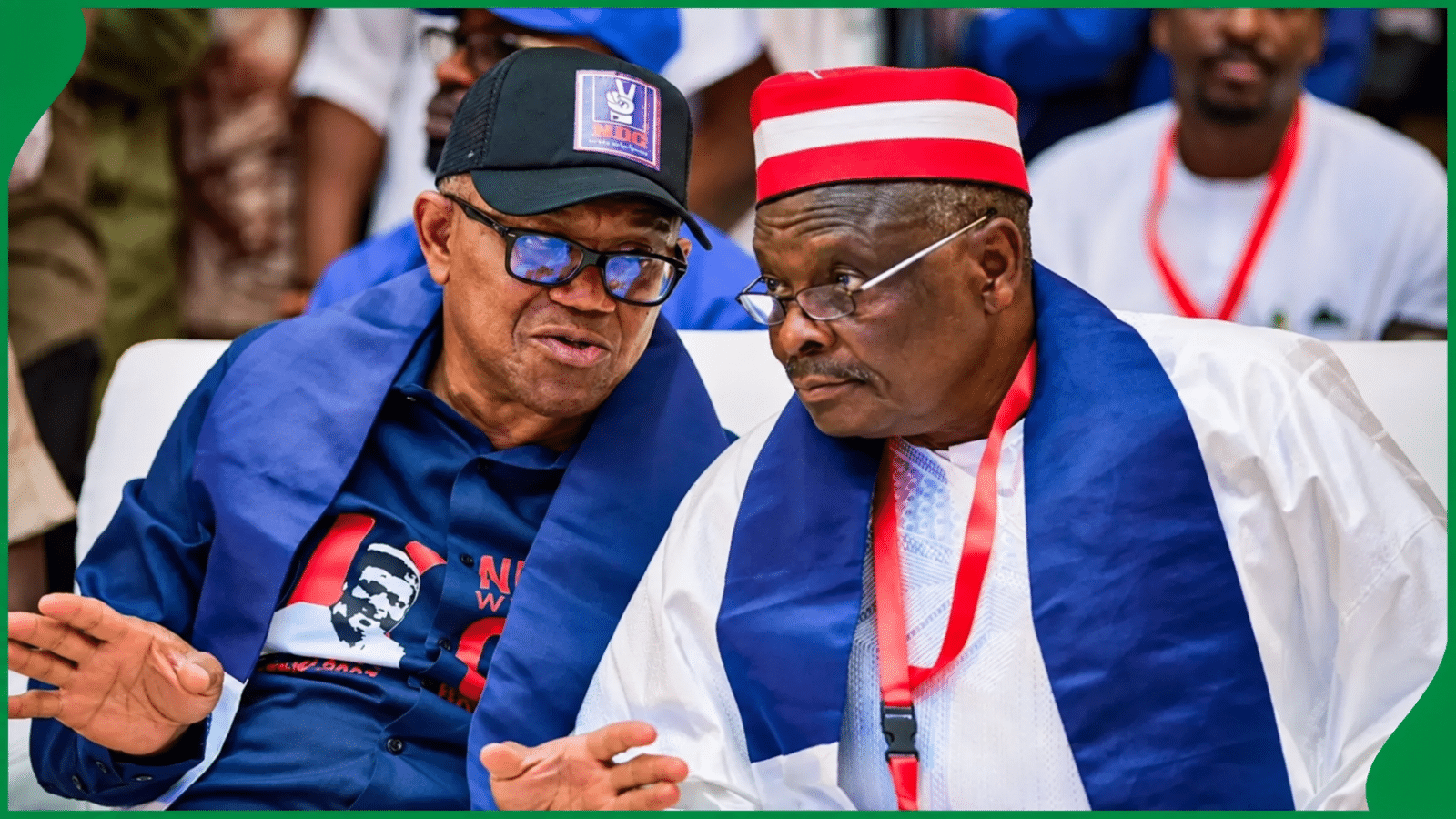
Obi argued that the temporary discount, announced by the All Progressives Congress-led administration of President Bola Tinubu, was an attempt to create favourable political impressions rather than address the underlying economic challenges facing the country.
In a statement titled “One Month Discount on Petrol: From Reactive Policies to Flawed Outcomes!”, Obi said he had deliberately delayed his response to the announcement to assess its implementation and determine whether it would provide meaningful relief to Nigerians.
However, after examining the policy and its expected outcomes, he concluded that it represented another example of what he described as the Tinubu administration’s confused approach to governance.
According to him, the government’s decision failed to demonstrate a comprehensive understanding of the economic difficulties facing ordinary Nigerians or provide a sustainable solution to the hardship resulting from rising petrol prices.
Obi Revisits Fuel Subsidy Removal
Obi traced the current economic difficulties to the removal of the petrol subsidy by President Tinubu on May 29, 2023, arguing that the decision was taken without adequate consultation or a proper assessment of its likely consequences.
He maintained that the government failed to consider the implications of the policy for household incomes, business operations, transportation costs and the broader economy.
According to the former Anambra State governor, the removal of the subsidy was followed by other major economic measures, including the floating of the naira and tax reforms, which he said were implemented without proper sequencing or sufficient preparation.
Obi argued that the combination of these policies placed considerable pressure on the economy, contributing to rising inflation and sharp increases in the prices of goods and services.
He also criticised the government’s handling of public expenditure, pointing to the simultaneous operation of three budgets, which he said raised concerns about transparency and accountability in the management of public resources.
The opposition figure maintained that economic reforms should be designed and implemented through a coordinated process that considers their effects on citizens, businesses and vulnerable groups.
While acknowledging the importance of sound economic policies, Obi argued that reforms introduced without adequate planning, consultation and effective social protection could worsen the living conditions of the population.
Rising Poverty and Economic Hardship
Obi said the consequences of the government’s economic decisions were reflected in increasing poverty, declining purchasing power, shrinking business opportunities and rising unemployment.
He also identified growing insecurity, widening inequality and the migration of young Nigerians in search of better opportunities as major challenges confronting the country.
According to him, the cumulative effects of rising transportation costs, expensive food, higher production expenses and declining household incomes have placed millions of Nigerians under severe economic pressure.
He argued that businesses, particularly those dependent on transportation, electricity and imported raw materials, have struggled with escalating operating costs, forcing some to scale down their activities or shut down completely.
The former Labour Party presidential candidate said these developments underscored the need for a comprehensive review of government policies rather than temporary interventions that provide limited relief.
He maintained that a responsible administration should undertake detailed regulatory impact assessments before introducing major economic measures and publish the findings to enable citizens and stakeholders to understand their implications.
Obi said such assessments would help the government identify potential risks, develop appropriate safeguards and determine whether policies were achieving their intended objectives.
He further argued that the government should engage business leaders, labour unions, farmers, transport operators, civil society organisations and ordinary Nigerians in developing economic strategies that promote inclusive and sustainable growth.
Questions Over the 30-Day Discount
Obi questioned the rationale behind the petrol discount, particularly its limited duration and the relatively small reduction in the price of the product.
He asked whether a discount lasting only one month could significantly reduce poverty, unemployment, insecurity and inequality or stimulate productivity and exports.
He also questioned whether the initiative was intended to determine the feasibility of restoring the petrol subsidy or represented a political calculation ahead of the 2027 general election.
“Too many questions, no answer!” Obi declared, expressing concern that the government had not adequately explained the long-term objectives of the intervention.
He also raised concerns about the limited number of filling stations expected to participate in the scheme.
According to the details cited in his statement, the Federal Government indicated that the discount would be available at Nigerian National Petroleum Company Limited retail outlets, estimated at approximately 900 stations nationwide.
Obi compared that figure with an estimated 24,000 petrol stations across Nigeria, arguing that the initiative would cover fewer than four per cent of the country’s filling stations.
He said the limited coverage could prevent a substantial proportion of Nigerians from benefiting from the discount, particularly those living in communities without accessible NNPC retail outlets.
Using an estimated national population of 243 million, Obi calculated that there would be approximately 243,000 Nigerians for every NNPC retail station if the population were distributed evenly across the 900 outlets.
He acknowledged, however, that the distribution of filling stations and the population was not uniform across the country.
The former presidential candidate questioned the practicality of expecting large numbers of Nigerians to compete for a discount of about ₦66 per litre at participating stations.
He argued that the arrangement could create additional pressure on consumers seeking cheaper petrol while leaving many others without access to the relief measure.
For Obi, the limited duration and geographical reach of the programme raised fundamental questions about whether it was designed to address the country’s economic difficulties or primarily to generate favourable public perception.
Obi Advocates Subsidy Across Key Sectors
Beyond his criticism of the temporary petrol discount, Obi reiterated his position that government subsidies should be reconsidered as part of a broader strategy to improve Nigerians’ welfare.
He said he was preparing a more detailed explanation of his position on fuel subsidy, alongside a policy roadmap for achieving fair, transparent and affordable pricing of petroleum products.
According to him, research into Nigeria’s current revenue and potential earnings under a productive economy and a competent, transparent administration supports his argument that the country could explore restoring subsidies in strategic sectors.
He specifically mentioned petrol, agriculture, healthcare, education and infrastructure as areas where targeted government support could help reduce the cost of living and improve citizens’ quality of life.
Obi argued that the debate should extend beyond whether subsidies should be removed or restored to include questions about revenue generation, public expenditure, accountability and the efficient use of national resources.
He maintained that an administration committed to national development must ensure that the country’s resources translate into tangible benefits for its citizens.
He also stressed the importance of implementing welfare-enhancing pricing policies that make essential goods and services more affordable without compromising transparency or responsible economic management.
‘Nigerians Are Tired of Gimmicks’
Obi concluded that the petrol discount announced by Tinubu on October 1 did not address the structural problems confronting the Nigerian economy.
He described the intervention as political optics presented as public policy, arguing that Nigerians needed sustainable economic solutions rather than short-term measures.
According to him, the government should focus on policies capable of lowering production costs, stimulating employment, supporting businesses, improving security and expanding economic opportunities.
He maintained that meaningful economic recovery would require competent leadership, transparent administration, proper policy sequencing and a clear commitment to the welfare of ordinary citizens.
Obi’s criticism adds to the continuing debate over the consequences of petrol subsidy removal and the measures required to cushion Nigerians against rising living costs.
The Tinubu administration has defended its economic reforms as necessary steps towards restructuring the economy, while critics have continued to question the pace of implementation and the adequacy of measures intended to protect vulnerable households.
For Obi, the central issue is whether government policies produce measurable improvements in citizens’ lives rather than temporary relief or favourable political headlines.
He ended his statement with a renewed appeal for political and economic change, expressing confidence that Nigeria could overcome its current challenges with better leadership and more effective governance.
“A new Nigeria is POssible. Nigeria will be OK!” he declared.