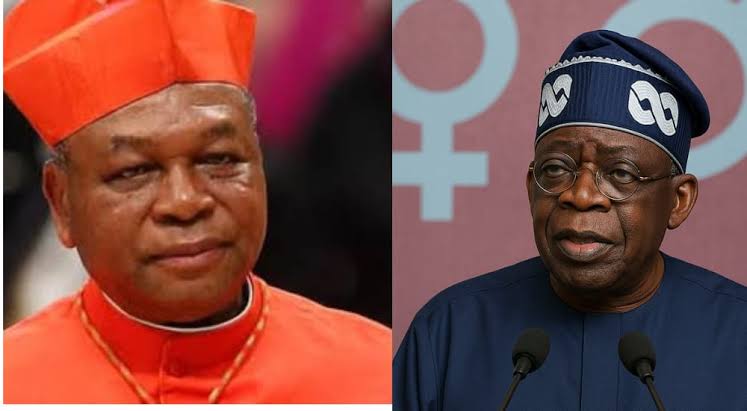
Cardinal John Onaiyekan, former Archbishop of Abuja, has expressed concern that people around President Bola Ahmed Tinubu are presenting an overly optimistic picture of Nigeria’s condition, saying the reality experienced by ordinary citizens is far more troubling than what is being conveyed to the President.
The cardinal made the remarks on Friday during an appearance on Prime Time, a current affairs programme on ARISE Television, while reflecting on the recent meeting between the leadership of the Catholic Bishops’ Conference of Nigeria (CBCN) and President Tinubu at the State House in Abuja.
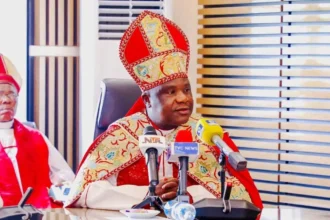
The delegation, led by the CBCN President and Archbishop of Kaduna, Most Rev. Matthew Ndagoso, met with the President on Tuesday to discuss national issues, including insecurity, poverty, economic hardship, education and governance.
During the meeting, the bishops’ address was delivered by Archbishop Ndagoso, who presented what the church leaders described as an honest assessment of the state of the nation.
President Tinubu, in his response, defended the performance of his administration, stating that the economy was stabilising and that the prolonged strikes that had previously disrupted university education had been largely addressed.
He also assured the bishops that the Independent National Electoral Commission (INEC) remained neutral and dismissed suggestions that his administration was undermining democratic processes.
Speaking on television, Cardinal Onaiyekan said the bishops deliberately prepared their address to reflect what they believed was the true condition of the country rather than a flattering assessment designed to please the government.
According to him, the church leaders informed the President that many Nigerians are suffering, that insecurity remains a serious concern and that economic conditions continue to weigh heavily on poor and vulnerable citizens.
The cardinal observed that the atmosphere in the room changed during the presentation and suggested that both the President and some officials present appeared uncomfortable with the message being delivered.
“I was not surprised that he was not looking very happy, nor even some of his colleagues who were there,” Onaiyekan said.
“We knew that what we were saying was different from the kind of reports and statements that our President usually receives.”
He said one of the major concerns of the Catholic bishops is that many individuals around the President are shielding him from the full reality of the country’s situation.
“That is one of the things that worries us,” he said. “There are so many people around Mr President who keep painting a rosy picture of Nigeria, and that is not the reality that many Nigerians are living with.”
According to Onaiyekan, the bishops considered it part of their moral responsibility to help the President appreciate the severity of the nation’s challenges.
“We felt obliged to present the reality as we see it,” he said. “I know it was not the kind of message he wanted to hear, and his response showed clearly that he did not share our assessment.”
Asked whether the meeting was tense, the cardinal said it would have been unrealistic to expect a purely cordial exchange when discussing a country facing deep social and economic difficulties.
“When a nation is bleeding, one cannot expect a completely polite and relaxed conversation with the President,” he said.
Onaiyekan disclosed that after listening to the bishops, President Tinubu insisted that Nigeria was not “bleeding” and maintained that the economy was improving.
“Practically speaking, he told us quite clearly that he did not agree with us,” the cardinal stated.
Despite the disagreement, Onaiyekan said the bishops believed it was important to speak frankly rather than remain silent in the face of hardship affecting millions of Nigerians.
The former archbishop also expressed concern about the political climate ahead of the 2027 general election, saying the bishops fear that the ruling authorities may be determined to retain power by all available means.
According to him, the bishops warned that the credibility of future elections is essential for national stability.
“We are worried about the fact that we see signs that those in power are determined to win elections by all means,” he said.
He argued that incumbency provides governments with significant advantages and cautioned that if elections are not perceived as free and fair, the country could face serious political difficulties.
“Unfortunately, those in government have many resources at their disposal,” Onaiyekan added. “Even where elections are conducted, there is concern that the votes of the people may not truly count.”
The cardinal stressed that the bishops were not speaking as partisan actors but as religious leaders concerned about the future of the country.
He said the church’s duty is to defend truth, justice and the dignity of citizens, regardless of which political party is in power.
“Our concern is not about politics in the narrow sense,” he said. “Our concern is about the welfare of Nigerians and the survival of our democracy.”
The interview has generated widespread discussion about the relationship between religious leaders and political authorities, as well as the broader question of whether governments receive accurate feedback about public conditions.
While the Presidency has not formally responded to Onaiyekan’s latest remarks, the exchange highlights continuing disagreements between sections of the church and the federal government over the state of the economy, insecurity and democratic governance.
For many observers, the cardinal’s comments underscore the growing debate over whether official narratives of economic recovery adequately reflect the everyday experiences of Nigerians struggling with rising living costs, unemployment and insecurity across different parts of the country.