The Christian Association of Nigeria (CAN) has declared that it will continue to criticise the administration of President Bola Ahmed Tinubu whenever it fails to protect citizens, uphold justice or safeguard the constitutional rights of Nigerians.
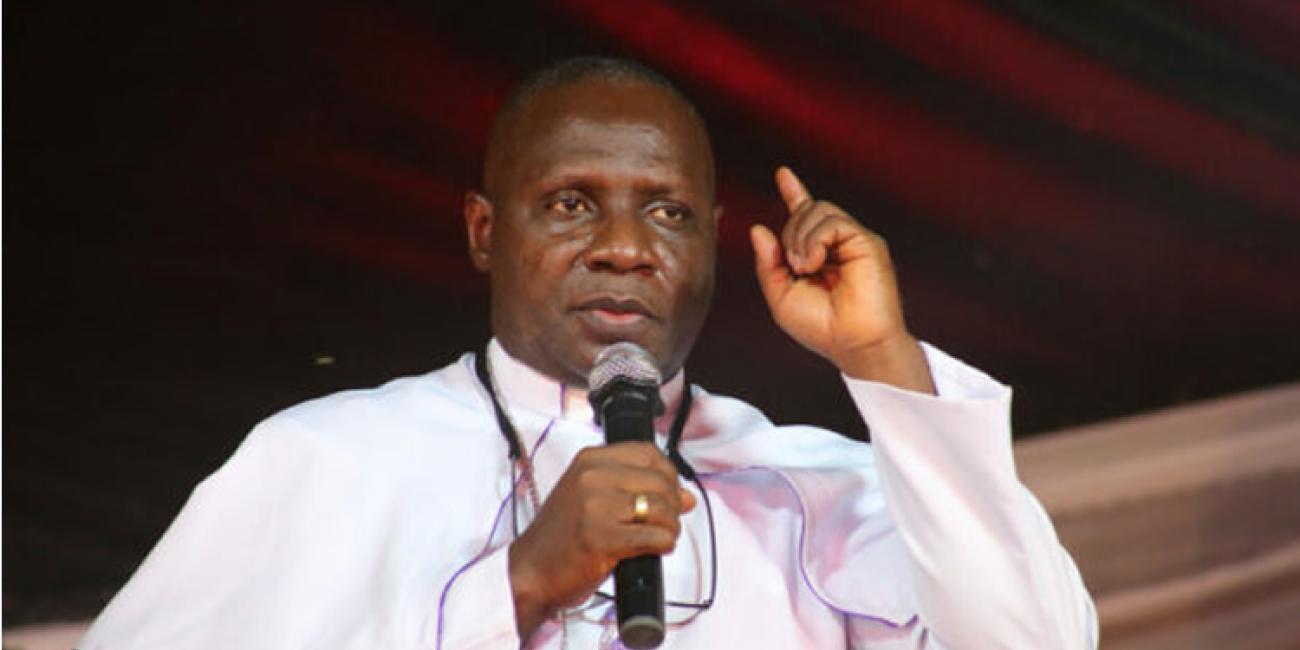
President of CAN, Archbishop Daniel Okoh, said the Christian body would maintain a constructive relationship with government while preserving its independence and moral responsibility to speak against injustice, insecurity and policies that negatively affect the welfare of citizens.
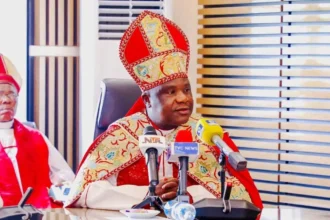
Okoh stated this on Friday in Abuja at a press conference organised to mark CAN’s 50th anniversary. The anniversary was held under the theme, “Walking Together in Faith: Celebrating 50 Years of CAN’s Journey.”
The CAN president said the association was neither a political opposition party nor an organisation established to praise those in government, stressing that its engagement with political authorities would always be guided by principles rather than political considerations.
“CAN is neither a government opposition party nor a government praise-singing organisation. We are a Christian institution with a national responsibility,” Okoh said.
According to him, CAN would support government policies that improve the living conditions of Nigerians and would also cooperate with the government whenever such partnership could contribute to effective governance and national development.
“Where government policies promote the welfare of Nigerians, we will support them.
“Where government requires partnership to deliver the dividends of democracy and good governance to communities, CAN is available to cooperate,” he said.
However, Okoh made it clear that cooperation with government would not prevent CAN from speaking out when citizens are subjected to injustice or their rights are threatened.
“Where government makes progress, we will acknowledge it. Where government fails to protect citizens, we will say so.
“Where injustice occurs, we will speak. Where constitutional rights are threatened, we will raise our voice. Where citizens are suffering, we cannot remain silent,” he said.
The cleric said CAN’s commitment to truth and justice could not be compromised by its relationship with political leaders.
He noted that while the association respected the office of the President and the institutions of government, such respect would not stop it from holding authorities accountable.
“We respect the office of the President of the Federal Republic of Nigeria. We respect the institutions of government.
“But our loyalty to truth cannot be compromised or subordinated to political proximity. To do so is to abdicate from our moral responsibility, and it will be a disservice to God and the people we serve,” Okoh said.
He explained that CAN’s responsibilities went beyond religious activities, noting that the association had a broader role in advocating good governance, protecting fundamental rights and supporting vulnerable Nigerians through humanitarian interventions.
A major part of Okoh’s address focused on the persistent security challenges confronting the country.
The CAN president urged the Federal Government to intensify efforts to address terrorism, banditry, kidnapping, communal violence and other forms of criminality that continue to threaten lives and livelihoods across Nigeria.
He said attacks on places of worship and communities had resulted in deaths, abductions and displacement, while insecurity had also forced many farmers away from their farmlands, contributing to the country’s food-security challenges.
“CAN therefore repeats its call to government that the primary responsibility of government is to protect life and property. Citizens should never have to negotiate with terrorists, bandits or kidnappers simply to remain alive,” he said.
Okoh called for a security architecture that prioritises prevention and early intervention rather than waiting until attacks occur before responding.
“Early warning must lead to early response,” he said.
He also urged security agencies to strengthen collaboration with local communities and civil society organisations to identify emerging threats and prevent attacks before they escalate.
While acknowledging the efforts of President Tinubu and his administration to reduce insecurity, Okoh maintained that more needed to be done to improve the effectiveness of the country’s security agencies.
“We acknowledge the efforts of President Bola Ahmed Tinubu and his team to reduce the level of violence and insecurity in the nation, but we believe that more could be done to improve the services of security agencies in Nigeria,” he said.
“Every Nigerian is looking forward to seeing the end of killings in this nation.”
Addressing concerns over alleged persecution of Christians, Okoh said CAN would continue to draw attention to attacks, discrimination, marginalisation and other violations affecting Christian communities.
He, however, cautioned against interpreting CAN’s advocacy for Christians as hostility towards government or other religious communities.
“Defending Christians does not mean fighting the government. It does not mean hating Muslims or any other religious community,” he said.
According to him, CAN’s position was based on the principle that every Nigerian deserves protection regardless of religious affiliation.
“When a Christian is attacked because of his faith, we will speak. When a Muslim is attacked because of his faith, we should speak.
“When an innocent Nigerian is killed by terrorists, bandits or criminals, we must all speak,” Okoh said.
He also urged the media and other stakeholders to avoid presenting every violent conflict in Nigeria exclusively through the lens of religion.
According to him, some conflicts are also linked to ethnic tensions, land disputes, political competition, criminality and struggles over access to resources.
The CAN president also appealed to political parties and candidates preparing for the 2027 general elections to put national interest above sectional considerations.
He urged politicians to make policies and ideas the central focus of their campaigns rather than relying on religion, ethnicity or regional sentiments to mobilise voters.
Okoh further warned against hate speech, intimidation and electoral violence, stressing that elections should provide Nigerians with an opportunity to choose leaders based on competing programmes and ideas.
“Elections should be a contest of ideas, not a contest of violence; a competition for public service, not a licence for personal destruction,” he said.
Okoh also expressed concern over the economic difficulties confronting millions of Nigerians, citing the rising cost of living, unemployment and the increasing difficulty many families face in meeting basic needs.
He identified food, healthcare, education and housing as some of the areas where households continue to experience significant pressure.
The CAN president urged the Federal Government to implement policies capable of stimulating productive economic activities, creating employment opportunities, supporting small and medium-sized enterprises and protecting vulnerable citizens.
“Every economic policy must ultimately be judged by its impact on the people,” he said.
Reflecting on the association’s 50-year history, Okoh said CAN was established in 1976 to provide a common platform through which Christian denominations could speak with one voice on issues affecting the Church and the Nigerian nation.
He said the organisation had, over the years, contributed to advocacy, peacebuilding, electoral observation, international partnerships and humanitarian interventions.
As CAN marks five decades of existence, Okoh reaffirmed the association’s commitment to engaging government constructively while retaining its independence and moral responsibility.
He said the organisation would continue to support policies that advance the welfare of Nigerians but would equally challenge actions and policies that threaten citizens’ rights, security and wellbeing.
The CAN president’s remarks underscored the association’s stated intention to remain an independent voice in national affairs, combining cooperation with government on matters of public interest with advocacy and criticism whenever it considers citizens’ welfare and fundamental rights to be at risk.