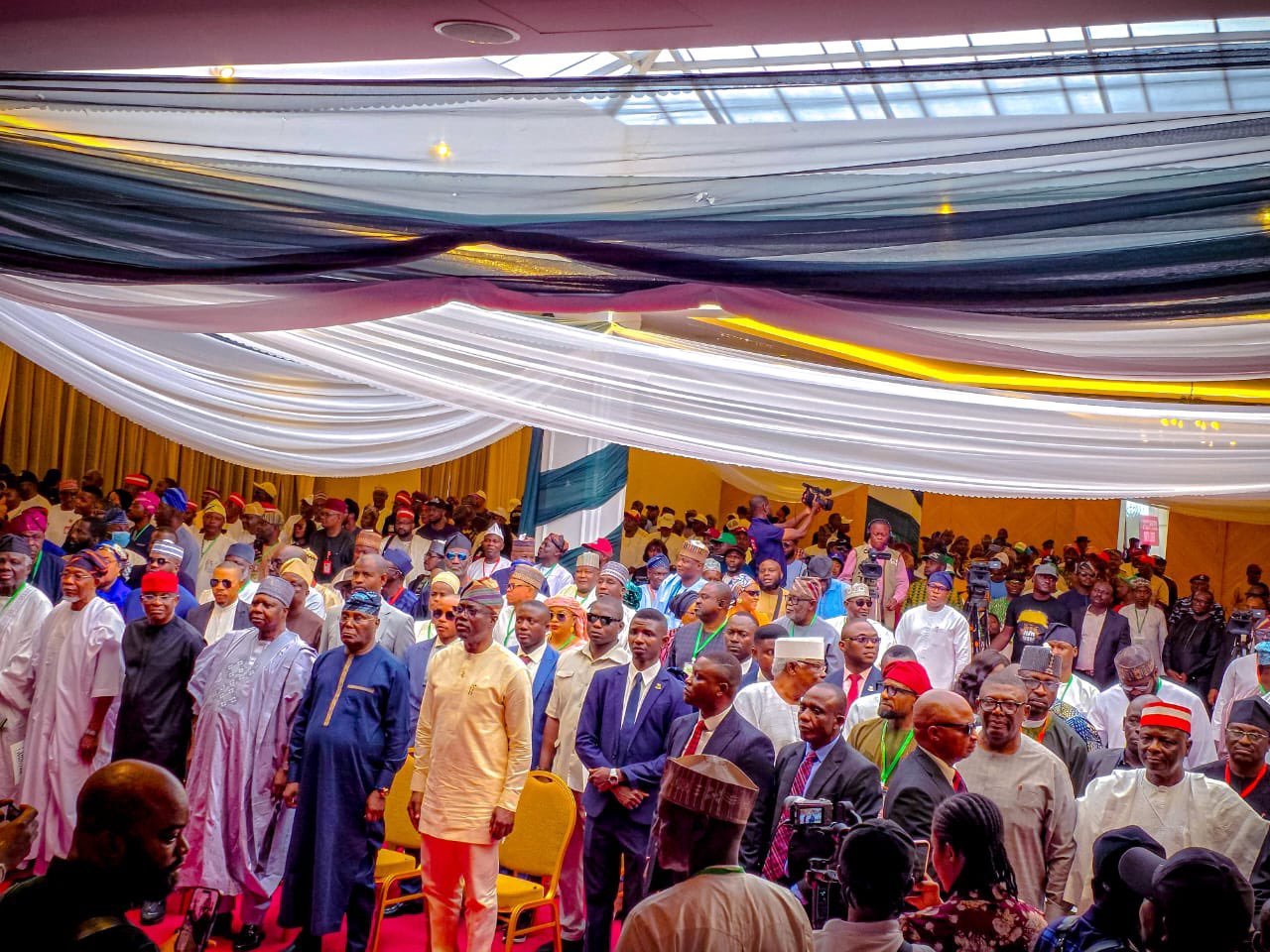
Leaders of Nigeria’s opposition political parties have issued a strong joint declaration following a national summit held in Ibadan, Oyo State, outlining a coordinated strategy to challenge the dominance of the ruling All Progressives Congress (APC) and reshape the political landscape ahead of the 2027 general elections.
The communiqué, released at the end of the high-level meeting on Saturday, April 25, 2026, reflects growing concern among opposition figures over what they described as mounting threats to Nigeria’s democratic system. The summit brought together key stakeholders from across multiple opposition platforms, who collectively resolved to intensify collaboration in what they framed as a critical effort to safeguard the country’s multi-party democracy.
Central to the declaration is a firm rejection of any attempt to transform Nigeria into a one-party state. The opposition leaders accused the APC of pursuing policies and political manoeuvres aimed at consolidating power to the detriment of democratic plurality. They pledged to resist such efforts, emphasizing that the preservation of a competitive political system is essential for accountability and national stability.
The parties also dismissed suggestions that the 2027 presidential election would be uncontested, vowing to field candidates across all elective positions. They specifically pushed back against what they described as attempts to position President Bola Ahmed Tinubu as the sole viable candidate in the next election cycle. According to the communiqué, opposition parties are committed to presenting credible alternatives and ensuring that Nigerians are given a genuine choice at the polls.
In a significant move, the summit resolved to work towards presenting a single, consensus presidential candidate for the 2027 election. The parties agreed that such a unified front would enhance their chances of mounting an effective challenge against the ruling party. While details of the selection process were not disclosed, the leaders indicated that consultations would continue with the aim of identifying a candidate capable of commanding broad support across party lines and among the electorate.
Another major point of contention raised at the summit was the role of the Independent National Electoral Commission (INEC) in overseeing future elections. The opposition leaders expressed a lack of confidence in the current leadership of the commission, alleging bias and partisanship in favour of the APC. They argued that such perceptions could undermine the credibility of the 2027 elections and potentially trigger widespread unrest.
As part of their demands, the opposition called for a review of the Electoral Act 2026 by the National Assembly. They argued that certain provisions within the law threaten the integrity of the electoral process and may conflict with constitutional principles. According to the communiqué, lawmakers must urgently address these concerns to ensure that future elections are conducted in a transparent and credible manner.
The summit also raised concerns over what participants described as the harassment and detention of opposition figures. The leaders called for the immediate release of politicians allegedly being held on bailable offences, stressing that all citizens should be allowed to exercise their fundamental rights without intimidation. They warned that continued repression of political actors could further erode public trust in democratic institutions.
In addition, the opposition parties criticised recent guidelines issued by INEC, describing them as restrictive and potentially designed to disadvantage opposition groups. They argued that the timelines and conditions imposed by the electoral body could hinder proper preparation for the elections. As a result, the summit demanded an extension of the deadline for party primaries until the end of July 2026 to allow for broader participation and internal party processes.
Despite their criticisms of the current political climate, the opposition leaders commended Nigerians for what they described as resilience in the face of economic and political challenges. They acknowledged growing public engagement and expressed confidence that citizens remain committed to democratic ideals and national progress.
The communiqué also conveyed appreciation to the host governor, Seyi Makinde, for facilitating the summit. Participants described the gathering as a significant milestone in efforts to build a united opposition capable of influencing the country’s political direction.
Analysts view the Ibadan declaration as a notable attempt by opposition parties to overcome longstanding divisions and present a more cohesive front ahead of the next general elections. However, questions remain about the feasibility of sustaining such unity, given Nigeria’s complex political dynamics and history of intra-party rivalries.
The coming months are expected to test the opposition’s resolve, particularly as parties begin internal consultations and strategizing for primaries. The proposed plan to field a single presidential candidate will likely require delicate negotiations and compromises among influential political figures with competing ambitions.
For now, the Ibadan summit signals a renewed determination among opposition forces to challenge the status quo and redefine the contours of Nigeria’s democracy. Whether this momentum can be translated into electoral success will depend on their ability to maintain unity, articulate clear policy alternatives, and connect with voters across the country.
As preparations for the 2027 elections gather pace, the positions outlined in the Ibadan declaration are likely to shape political discourse and set the tone for what promises to be a highly contested electoral cycle.