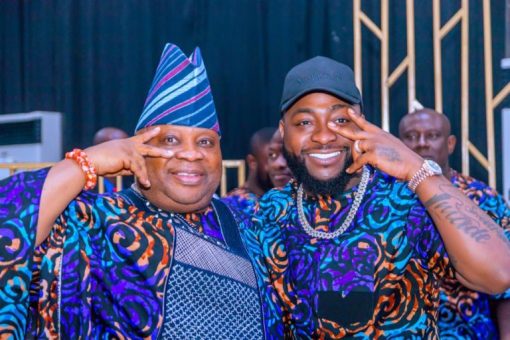
Nigerian music superstar Davido, born David Adeleke, has been appointed as the head of youth mobilisation for the Osun State Campaign Council, a move that has generated significant public interest as political activities intensify ahead of the August 2026 governorship election in the state.
The announcement was made by the artiste himself through a public statement shared on social media, where he confirmed his new political responsibility under the leadership of Osun State Governor, Ademola Adeleke. The governor, who is also Davido’s uncle, is seeking re-election as the flag bearer of the Accord Party.
In his message posted on X (formerly Twitter), Davido expressed enthusiasm about the role and reaffirmed his commitment to supporting the governor’s second-term ambition. “I have been appointed by the Governor of Osun State Ademola Adeleke and flag bearer of the Accord Party as head youth mobilisation of campaign council. We look forward to a smooth campaign and your re-election, Your Excellency! 4+4,” he wrote.
The appointment effectively positions Davido at the forefront of grassroots political engagement in Osun State, particularly among young voters, who are expected to play a decisive role in determining the outcome of the forthcoming election. With a massive following across Nigeria and beyond, the entertainer’s influence is widely seen as a strategic asset for mobilising support and energising the campaign.
Davido has long been associated with political advocacy in Osun State, having actively supported his uncle during previous election cycles. However, his latest appointment marks a more formal and structured involvement in the political process, elevating his role from that of a supporter to a key campaign figure responsible for youth outreach and engagement.
Observers note that the involvement of high-profile entertainers in politics is not new in Nigeria, but Davido’s prominence and direct familial ties to the governor make his role particularly significant. His ability to connect with younger demographics, especially through music and social media, is expected to shape campaign strategies as political parties intensify efforts to secure voter support.
Despite the enthusiasm surrounding his appointment, the political atmosphere in Osun State remains tense, with growing concerns about the integrity of the electoral process. The upcoming election has already been marked by allegations and counter-allegations from key stakeholders, raising questions about the fairness and transparency of the polls.
One of the major issues fuelling the tension is the recent redeployment of the Resident Electoral Commissioner (REC) in Osun State by the Independent National Electoral Commission. The Osun State House of Assembly has raised alarm over what it described as suspicious developments, particularly the transfer of the REC, Mutiu Agboke, to Ondo State just months before the election.
In a strongly worded statement, lawmakers expressed concern that the redeployment could be part of a broader pattern aimed at influencing the electoral outcome. They argued that the timing of the transfer raises serious questions about the neutrality of the electoral body, especially when compared with similar election timelines in other states.
“We are particularly concerned by a deliberate pattern of actions aimed at influencing the electoral process in Osun State,” the Assembly stated, highlighting what it sees as inconsistencies in how electoral officials are being managed ahead of key elections.
The lawmakers further pointed out that in Ekiti State, which recently conducted its own governorship election, no such last-minute redeployment of a Resident Electoral Commissioner occurred. This, they argued, underscores the unusual nature of the decision affecting Osun.
Adding to the concerns, the Assembly disclosed that it had received what it described as credible intelligence suggesting that further deployments of individuals with vested interests were being planned. According to the lawmakers, such changes could affect critical positions within the electoral system, including administrative secretaries, electoral officers, assistant electoral officers, and information technology personnel across the state.
These allegations have heightened anxiety among political actors and citizens alike, as stakeholders worry about the potential impact of such administrative decisions on the credibility of the electoral process. However, the Assembly maintained a defiant stance, insisting that no amount of manipulation would override the will of the people.
“Let it be clearly stated that no amount of administrative changes or deployments of interested officials will override the will of the people of Osun State,” the statement read. “These calculated efforts, no matter how structured, cannot alter the resolve of our people. The people of Osun State are politically conscious, vigilant, and determined to ensure that their votes count and reflect their true choice.”
The Assembly also raised concerns about alleged plans to compromise the election in the Ife/Ijesa senatorial district, describing the situation as troubling and calling for vigilance among voters and security agencies.
Against this backdrop of political tension and heightened scrutiny, Davido’s entry into a formal campaign role adds another layer of complexity to the unfolding electoral dynamics. While his involvement is expected to galvanise youth participation and boost campaign visibility, it also places him in the midst of a politically charged environment where issues of credibility, fairness, and public trust are at the forefront.
As the August 2026 election approaches, all eyes will be on Osun State, not only for the contest itself but also for the broader implications it may have on Nigeria’s democratic processes. The convergence of celebrity influence, political strategy, and electoral integrity concerns makes the race one of the most closely watched in the country.
For now, Davido’s appointment underscores the increasing intersection between entertainment and politics in Nigeria, highlighting how influential public figures are being drawn into the arena as parties seek innovative ways to connect with voters and secure electoral advantage.