The National Publicity Secretary of the Labour Party, Ken Asogwa, has admitted that the exit of the party’s former presidential candidate, Peter Obi, dealt a significant blow to the party, describing the former Anambra State governor as a “colossus” whose departure created a huge vacuum within the opposition movement.
Asogwa made the remarks on Monday while speaking as a guest on Channels Television’s Sunrise Daily, where he reflected on the current state of the Labour Party, the impact of Obi’s departure, and the party’s plans ahead of the 2027 general elections.
According to him, the Labour Party leadership was fully aware before Obi’s eventual exit that there were growing indications the former presidential candidate was preparing to leave the party.
“We can’t close our eyes to the fact that we lost Peter Obi; he was a colossus within the party,” Asogwa said during the programme.
“The last time I came here, I remember saying that his departure left a void in the party. We lost a colossus within the party, but the party envisaged it. Remember that before his departure, the rumour was already out there that he was leaving, and he eventually left on the 31st of December,” he added.
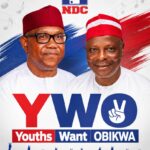
Peter Obi, who emerged as one of the most influential opposition figures during the 2023 presidential election, officially defected from the Labour Party to the African Democratic Congress (ADC) on December 31, 2025, after months of speculation surrounding his political future.
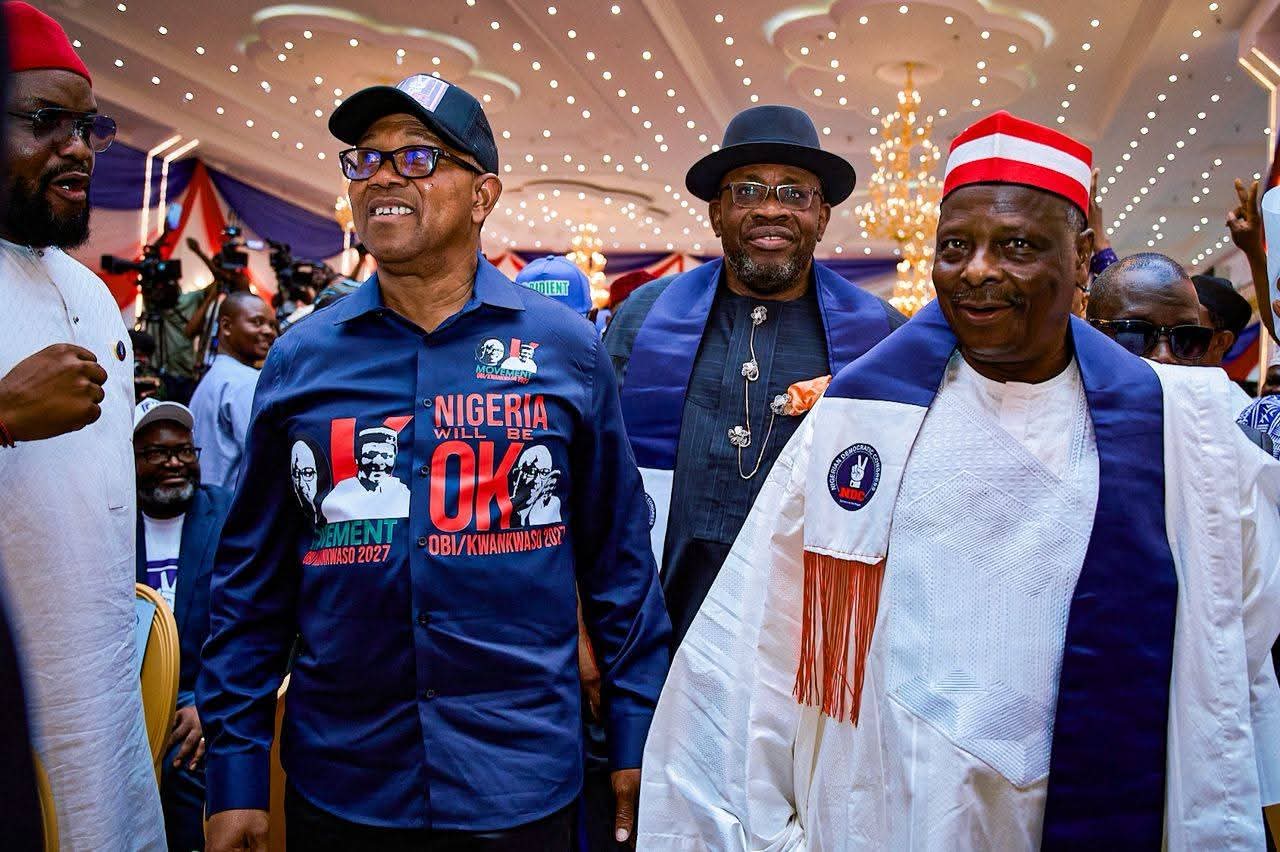
However, Obi’s stay in the ADC was short-lived. Last month, he again switched political platforms, joining the Nigeria Democratic Congress (NDC), where he cited unresolved internal disputes and structural instability within the ADC as reasons for his decision to leave.
Obi’s movement across opposition parties has continued to reshape Nigeria’s political landscape ahead of the 2027 elections, particularly among opposition groups seeking to build a stronger coalition capable of challenging the ruling party.
Despite acknowledging the enormous influence Obi wielded within the Labour Party, Asogwa insisted that the party was already repositioning itself and rebuilding after his departure.
He explained that the Labour Party leadership had returned to the “drawing board” to strengthen its internal structures and reconnect with key institutional stakeholders, especially organised labour groups that historically formed the backbone of the party.
According to him, one of the major priorities of the current leadership has been rebuilding relationships with the Nigeria Labour Congress (NLC) and the Trade Union Congress (TUC), which he described as the party’s greatest institutional assets.
“We discover that the greatest potential the Labour Party has is the institutional members it has in the name of the Nigeria Labour Congress and Trade Union Congress,” he stated.
Asogwa accused previous leaders of alienating the labour unions from the party structure, a situation he claimed weakened the party’s organisational strength over time.
“The former leadership annihilated them, but thankfully, we were able to bring them back to the fold, and we are together today,” he added.
Political analysts have repeatedly argued that Obi’s departure presents a major challenge for the Labour Party, especially considering the unprecedented support he generated during the 2023 presidential election.
Obi, widely backed by young voters and the Obidient Movement, polled more than six million votes nationwide during the election and significantly transformed the Labour Party from a relatively minor political platform into a nationally recognised opposition force.
His candidacy also reshaped political conversations around youth participation, governance reforms, accountability and issue-based campaigns.
However, despite concerns over Obi’s exit, Asogwa maintained that the Labour Party still possesses the political capacity and institutional strength to produce another credible presidential candidate ahead of 2027.
According to him, the party is confident that its presidential primary process will eventually produce a candidate with the stature, credibility and public appeal necessary to sustain the Labour Party’s political relevance.
“So on the issue of the person who is going to drive the face of this project in 2027, I don’t want to preempt what is going to happen in our presidential primaries,” he said.
“But I can assure you that the Labour Party that produced the former presidential candidate has even better capacity today to produce someone of a commensurate stature,” Asogwa added.
The Labour Party spokesperson further suggested that the party had learned valuable lessons from the events surrounding Obi’s exit and was now focused on building stronger institutional structures that would not depend solely on one individual.
His comments come amid increasing political realignments ahead of the 2027 elections, with several opposition politicians and support groups already exploring new alliances and coalitions.
While Obi’s defection has triggered uncertainty within the Labour Party, it has also intensified debates about the future of opposition politics in Nigeria and whether smaller opposition parties can maintain momentum without relying heavily on dominant personalities.
For many political observers, the Labour Party’s ability to reinvent itself after Obi’s exit may determine whether it remains a major political force or gradually fades from national prominence before the next election cycle.
Nonetheless, party officials insist the Labour Party remains committed to rebuilding, strengthening its grassroots structures, reconnecting with labour unions, and presenting a formidable alternative platform for Nigerians seeking political change in 2027.