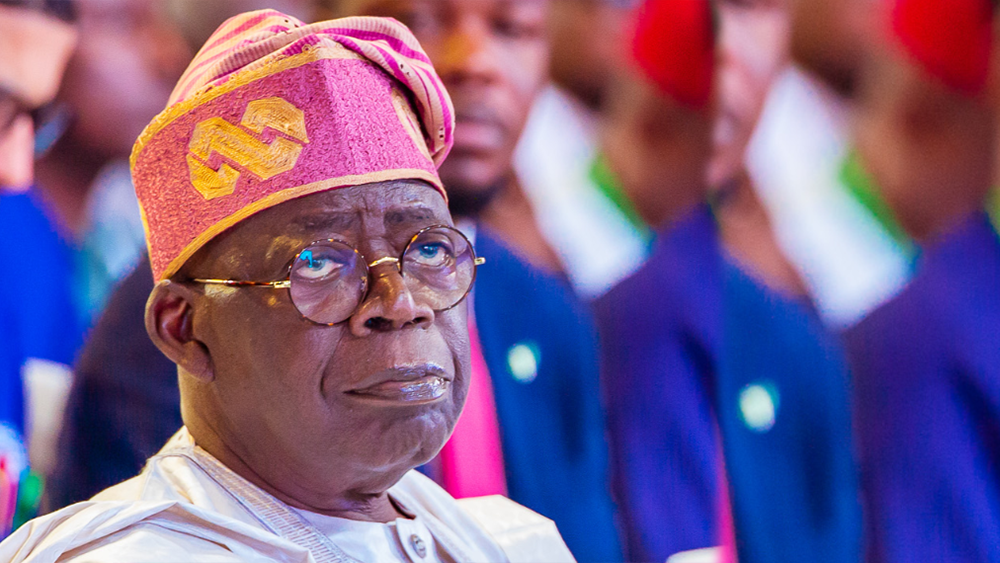
The administration of President Bola Ahmed Tinubu is preparing to secure another major loan facility from the World Bank as part of ongoing efforts to finance economic reforms, stimulate investment, and support job creation initiatives across the country.
Findings indicate that the Federal Government is advancing plans for a fresh $1.25 billion loan facility known as the Nigeria Actions for Investment and Jobs Acceleration programme, which is expected to become the second-largest World Bank loan obtained under the current administration if approved.
According to documents obtained from the World Bank’s Programme Information Document, the proposed loan has already progressed significantly through the institution’s approval stages and is expected to be presented before the World Bank board for final consideration on June 26, 2026.
The proposed facility comes at a time of mounting public concern over Nigeria’s growing debt burden and the increasing reliance of the Federal Government on external borrowing to sustain economic reforms and stabilisation measures.
If approved, the $1.25 billion facility would rank behind only the $1.5 billion Reforms for Economic Stabilisation to Enable Transformation Development Policy Financing secured by the Tinubu administration in June 2024.
At the current exchange rate of about ₦1,361.4 to one US dollar, the new facility is estimated to be worth approximately ₦1.70 trillion, underlining the massive scale of financing being pursued by the Federal Government.
Economic analysts say the proposed borrowing highlights the administration’s continued dependence on multilateral financial institutions to support critical reforms amid declining revenues, foreign exchange pressures, and persistent inflation.
According to the World Bank documents, the project has moved beyond the conceptual and appraisal stages, an indication that negotiations between Nigerian authorities and the lender are already at an advanced level ahead of final approval.
The timing of the loan request has also drawn attention because the expected approval date falls barely six months and 21 days before Nigeria’s next presidential election scheduled for January 16, 2027, based on the revised timetable released by the Independent National Electoral Commission (INEC).
Should the facility eventually receive approval and be fully disbursed, Nigeria’s already rising debt stock is projected to increase even further.
Current figures show that Nigeria’s external debt stood at approximately ₦74.43 trillion, equivalent to about $51.86 billion, as of December 31, 2025. With the additional World Bank loan, the country’s external debt could rise to at least ₦76.13 trillion or roughly $53.11 billion.
Similarly, Nigeria’s total public debt profile, which currently stands at around ₦159.28 trillion, could climb to approximately ₦160.98 trillion after the proposed borrowing.
In dollar terms, the country’s total public debt could increase from about $110.97 billion to roughly $112.22 billion.
The Federal Government is expected to utilise the proposed facility to support reforms aimed at boosting competitiveness, encouraging private sector participation, improving the investment climate, and creating employment opportunities in key sectors of the economy.
Government officials have repeatedly defended the administration’s borrowing strategy, arguing that the loans are necessary to support ongoing structural reforms and cushion the impact of economic adjustments introduced since President Tinubu assumed office.
Since taking office in 2023, the administration has implemented a series of controversial reforms, including the removal of petrol subsidy and the liberalisation of the foreign exchange market, policies officials insist are necessary to stabilise the economy in the long term.
However, many Nigerians continue to grapple with the immediate effects of those reforms, including rising inflation, increasing transportation costs, high food prices, and worsening living conditions.
Critics of the government’s borrowing approach argue that the growing debt profile could place additional pressure on public finances, particularly as debt servicing obligations continue to consume a significant portion of government revenues.
Concerns have also been raised about whether the loans are translating into visible improvements in infrastructure, employment, and economic productivity.
The latest development comes shortly after Nigeria’s Accountant-General of the Federation, Shamseldeen Ogunjimi, warned that the Federal Government could reconsider future World Bank loan arrangements if delays in approval and disbursement continue to affect project execution timelines.
The warning was contained in a statement issued by the Director of Press and Public Relations at the Office of the Accountant-General of the Federation, Bawa Mokwa, following a courtesy visit by a World Bank delegation led by Mrs Treed Lane in Abuja.
During the meeting, Ogunjimi reportedly expressed frustration over what he described as lengthy delays associated with processing and disbursement of loan facilities.
He emphasised that Nigeria expected faster approval procedures because the facilities were repayable loans rather than grants.
“If approvals take more than six months, the Nigerian Government may no longer honour such arrangements,” the Accountant-General warned.
According to him, delays in approvals and fund releases could disrupt project implementation schedules and undermine broader national development goals.
The remarks further highlighted ongoing concerns within government circles regarding the efficiency of multilateral funding processes and their impact on development planning.
Nigeria’s growing dependence on external loans has remained a subject of intense public debate, especially under the Tinubu administration.
While government officials maintain that the loans are tied to productive reforms and strategic investments, critics argue that the country risks sinking deeper into debt without achieving corresponding economic growth or improvements in citizens’ welfare.
Financial experts have also cautioned that rising debt servicing obligations could limit the government’s ability to invest in critical sectors such as healthcare, education, infrastructure, and social protection programmes.
Nonetheless, the Federal Government appears determined to continue pursuing international financing as part of its broader economic recovery and reform agenda.
With negotiations on the proposed $1.25 billion World Bank facility now approaching the final stage, attention is expected to shift to the outcome of the board review later this month and the broader implications for Nigeria’s debt profile, fiscal stability, and economic future.