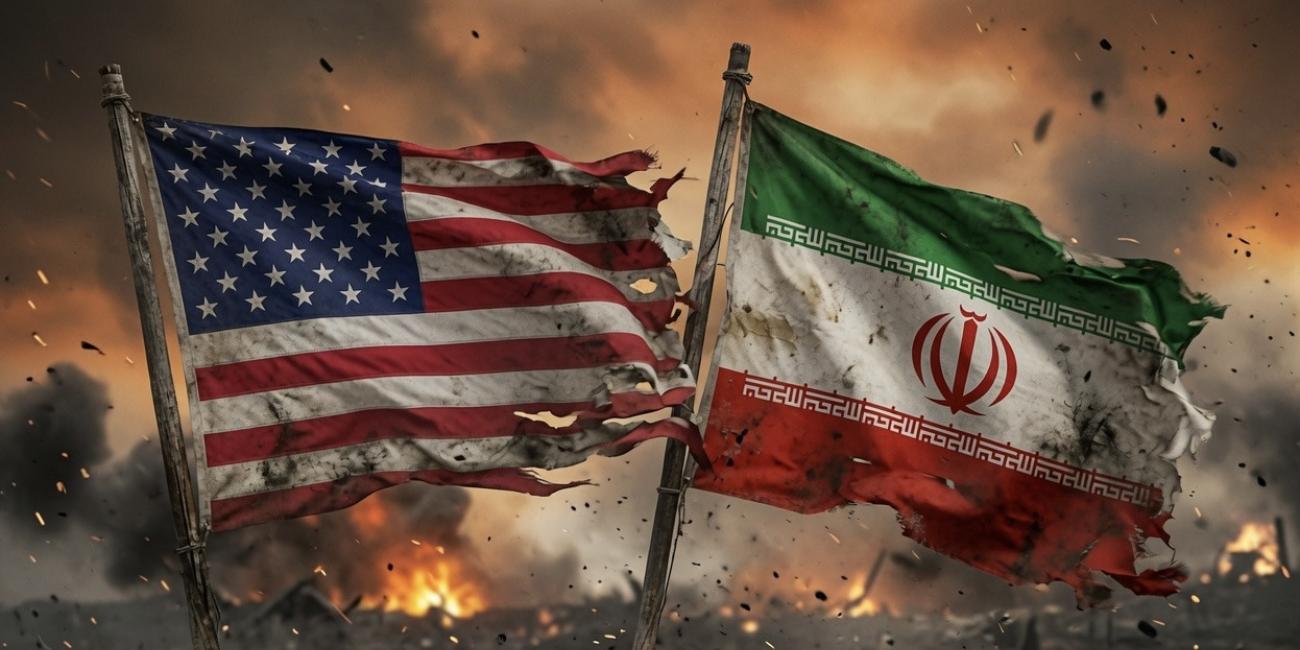
Fresh diplomatic tensions have emerged between Iran and the United States after Tehran accused Washington of failing to honour commitments contained in a recently signed Memorandum of Understanding (MoU), despite ongoing efforts by both countries to maintain dialogue following their recent military confrontation.
Iran’s Foreign Minister, Seyed Abbas Araghchi, alleged that the United States had breached provisions of the agreement while insisting that Iran had fully complied with all of its obligations under the deal. The accusation has renewed uncertainty over the fragile diplomatic process between the two longtime adversaries, whose relations remain strained by disputes over Iran’s nuclear programme, economic sanctions, and regional security.
In a strongly worded post published on his verified X (formerly Twitter) account, Araghchi accused the administration of U.S. President Donald Trump of acting in bad faith and failing to uphold the commitments it had made under the memorandum.
According to the Iranian foreign minister, Tehran has respected every aspect of the agreement, while Washington has repeatedly violated its obligations.
“Iran has so far kept its word, unlike the so-called U.S. Treasury Secretary, who is violating Paragraph 9 of the Memorandum of Understanding,” Araghchi wrote.
He further alleged that the latest breach was not an isolated incident but part of what he described as a broader pattern of American misconduct.
“That violation follows other violations and missteps by the United States. Reality check: There can only be mutual compliance,” he added.
Although Araghchi did not disclose the specific actions that allegedly constituted the violation of Paragraph 9 of the MoU, his comments suggested growing frustration within the Iranian government over what it views as Washington’s failure to implement agreed commitments.
His remarks come at a particularly sensitive moment, as diplomatic contacts between both countries have resumed following one of the most dangerous military confrontations between Iran and the United States in recent years.
The latest disagreement has cast fresh doubt over efforts to rebuild confidence between the two governments after weeks of heightened military tensions that raised fears of a wider conflict across the Middle East.
Relations between Washington and Tehran had deteriorated sharply following a series of military exchanges that saw both countries launch retaliatory strikes against one another.
The confrontation rattled global financial and energy markets while prompting urgent diplomatic intervention by regional and international actors seeking to prevent a full-scale war.
Despite those tensions, both governments had reportedly agreed to continue engaging through diplomatic channels in an attempt to reduce hostilities and find common ground on outstanding disputes, including Iran’s nuclear programme and sanctions relief.
Qatar has played a particularly prominent role in facilitating those discussions, with reports indicating that Qatari officials travelled to Tehran to help revive negotiations and encourage continued dialogue between the two countries.
However, President Donald Trump has adopted a markedly confrontational tone despite the ongoing diplomatic contacts.
While acknowledging that negotiations would continue, Trump insisted that the concept of a ceasefire between the two countries had effectively become irrelevant following the recent military exchanges.
Speaking after the latest hostilities, the U.S. president expressed deep frustration with Iran’s leadership, using unusually harsh language to describe the country’s government.
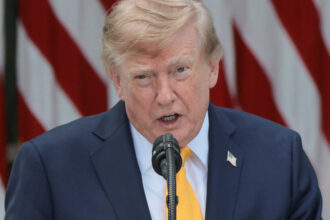
“To me, I think it is over. I don’t want to deal with them any longer. They are scum, you know what scum means. They are sick, led by sick people,” Trump said.
The president also reiterated longstanding American concerns over Iran’s nuclear ambitions, arguing that Tehran continues to pose a serious threat to international peace and security.
“They are vicious, violent people; if they had a nuclear weapon, they would use it,” Trump declared.
The U.S. leader further questioned whether negotiations with Iran remained worthwhile, accusing Iranian officials of dishonesty during previous diplomatic engagements.
“It’s a waste of time dealing with them. They are liars. We make a deal, we say no nuclear weapons, and they go out to the press to say we never even talked about it,” Trump said.
Reaffirming his scepticism about future negotiations, he added: “There is something wrong with them. As far as I am concerned, it is over.”
Trump’s remarks appeared to contrast with reports that diplomatic efforts remained active behind the scenes, with mediators continuing to encourage both governments to pursue dialogue despite their deep disagreements.
The renewed diplomatic contacts followed several days of intense military exchanges that significantly increased fears of a broader regional conflict involving multiple Middle Eastern countries.
The confrontation also had immediate consequences for global commerce and energy supplies.
Shipping traffic through the strategically important Strait of Hormuz reportedly declined sharply as commercial operators responded to heightened security risks in one of the world’s busiest maritime oil routes.
The disruption further intensified concerns over global oil supplies and contributed to renewed volatility in international energy markets.
At the same time, regional instability widened beyond the direct confrontation between Washington and Tehran.
Israeli military operations in Lebanon intensified during the same period, with multiple drone attacks and airstrikes reported overnight from Thursday into Friday.
The escalation fuelled growing concerns among international observers that the crisis could spread further across the Middle East if diplomatic efforts fail to reduce tensions.
Iran has also continued to defend its military response to recent American operations.
According to Iranian authorities, the country launched coordinated attacks against 85 United States military installations located across the Middle East in retaliation for American airstrikes conducted inside Iranian territory.
Iranian officials said the attacks were intended as a direct response to U.S. military operations targeting facilities in Hormozgan Province and the southern port city of Mahshahr.
The United States, however, maintained that its own military action was prompted by attacks on three commercial vessels travelling through the Strait of Hormuz, including oil tankers belonging to Qatar and Saudi Arabia.
Washington described its strikes as a response aimed at protecting international shipping routes and maintaining regional stability following the maritime attacks.
The competing narratives underscore the deep mistrust that continues to define relations between both countries despite intermittent diplomatic engagement.
For decades, disputes over Iran’s nuclear activities, economic sanctions, regional influence and military operations have repeatedly pushed the two nations to the brink of open conflict.
Analysts believe the latest disagreement over compliance with the Memorandum of Understanding could further complicate efforts to rebuild confidence, particularly if both sides continue to accuse one another of violating agreed commitments.
Nevertheless, international mediators remain hopeful that dialogue can still prevent another military escalation.
Diplomatic observers note that maintaining communication channels, even amid public exchanges of accusations, remains essential to reducing the risk of miscalculation and preserving regional stability.
With negotiations continuing behind closed doors, the combination of renewed diplomatic engagement, lingering military tensions, disruptions to international shipping and competing claims over compliance with bilateral agreements highlights the fragile security environment across the Middle East.
As both governments continue to exchange accusations while keeping diplomatic channels open, the coming weeks are expected to be critical in determining whether the latest memorandum can serve as a foundation for improved relations or become another failed attempt at easing one of the world’s most enduring geopolitical rivalries.