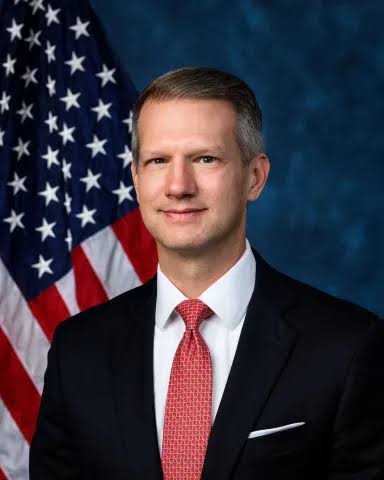
A member of the United States House of Representatives, Riley Moore, has disclosed that the administration of President Donald Trump will closely monitor Nigeria’s 2027 general elections, stressing that the conduct, credibility and outcome of the polls will receive significant attention from Washington.
Moore made the remarks during an interview that has since gained widespread circulation on social media, where he discussed Nigeria’s democratic process, concerns over governance, corruption, religious freedom and the future of relations between the United States and Africa’s most populous nation.
His comments come as political activities ahead of Nigeria’s 2027 general elections continue to gather momentum, with political parties already positioning themselves for what is expected to be one of the country’s most fiercely contested elections. Opposition parties have intensified consultations and coalition-building efforts, while civil society organisations and election observers have repeatedly called for reforms aimed at strengthening electoral integrity, transparency and public confidence in the democratic process.
Responding to a question on whether the United States could play a more active role in supporting credible elections in Nigeria beyond existing diplomatic engagements, Moore said the U.S. government would be carefully observing every stage of the electoral process.
According to him, both members of Congress and the administration of President Trump regard the forthcoming elections as important, not only for Nigeria but also for democratic governance across Africa.
“We’re certainly going to be watching these results and how these elections unfold and how they’re executed,” Moore said during the interview.
“That’s something that myself and the administration are going to be paying very close attention to.”
His remarks suggest that Washington intends to maintain close diplomatic scrutiny over the organisation and conduct of the elections, particularly amid ongoing international interest in Nigeria’s democratic development and political stability.
Nigeria remains one of the United States’ most strategic partners in Africa because of its population, economic influence, regional leadership role and cooperation on security matters. Consequently, developments surrounding the country’s elections often attract considerable attention from foreign governments and international organisations.
Beyond discussing Nigeria’s electoral process, Moore also revealed that the U.S. Congress is considering legislation that could have far-reaching implications for future diplomatic, security and strategic relations between the United States and Nigeria.
The congressman explained that while he is co-sponsoring a separate legislative proposal introduced by fellow Congressman Chris Smith, the more significant development involves provisions included in the annual appropriations legislation covering U.S. foreign operations, national security programmes and the activities of the State Department.
According to Moore, he personally introduced several provisions specifically relating to Nigeria into the bill, particularly those addressing concerns over the persecution of Christians and conditions that could affect future American security assistance to the Nigerian government.
He stated that the proposed legislation contains measures designed to influence future bilateral relations between both countries by linking aspects of U.S. support to actions taken by Nigerian authorities.
“There’s a lot of language that I put in that bill that relates to Nigeria, the persecution of Christians and restrictions on security assistance to the Government of Nigeria and steps that they have to take,” Moore said.
He expressed optimism that the legislation would successfully pass through Congress and eventually become law, noting that its provisions contain what he described as robust and far-reaching policy directives.
According to him, lawmakers were optimistic that the bill would receive legislative approval within a short period.
“That bill is likely to become law. We’re about to hopefully pass that here today,” he stated.
“So there’s some pretty strong and aggressive language in that bill that’s going to be binding as it relates to our relationship with Nigeria moving forward.”
If enacted, the legislation could influence future American engagement with Nigeria on issues relating to defence cooperation, military assistance, security partnerships and diplomatic relations, depending on compliance with the conditions outlined in the proposed law.
Moore also disclosed that he has maintained regular discussions with officials in the Trump administration regarding Nigeria and other African policy issues.
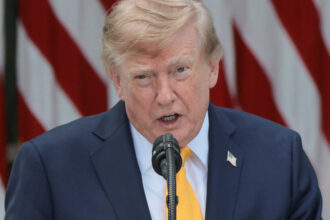
According to him, President Donald Trump has shown considerable interest in developments concerning Nigeria and remains engaged on matters affecting the country’s relationship with the United States.
“I continue to work with the administration on next steps that we’re going to take,” Moore said.
“I’m actually going to see President Trump tonight. I’ll be having dinner with him and some other members. I continue to talk to him about these issues, and it’s very important to him.”
His comments indicate that discussions concerning Nigeria remain part of broader foreign policy considerations within the current U.S. administration.
The remarks also come against the backdrop of continuing debates in Washington regarding religious freedom, human rights, security challenges and governance across several African countries.
Nigeria has, over the years, remained a focal point in discussions within the U.S. Congress on issues ranging from terrorism and insecurity to religious violence, democratic governance, anti-corruption efforts and economic cooperation.
International attention on Nigeria’s elections has increased significantly in recent electoral cycles, with foreign governments, election observer missions and multilateral organisations regularly deploying monitoring teams to assess the credibility of the voting process.
The country’s 2023 general elections generated considerable domestic and international reactions, with observers identifying areas requiring improvement, including electoral logistics, technology deployment, transparency in result management and voter confidence.
As preparations gradually begin for the 2027 elections, calls have continued from civil society organisations, election experts and development partners for reforms capable of strengthening the independence of electoral institutions, improving electoral security and enhancing public trust in the democratic process.
Although Moore’s comments do not indicate any direct American involvement in Nigeria’s electoral administration, they underscore Washington’s continued interest in ensuring that democratic principles, transparency and accountability remain central to the conduct of future elections in Africa’s largest democracy.
As political parties intensify preparations ahead of the next electoral cycle, the conduct of the 2027 general elections is expected to attract not only widespread domestic attention but also close scrutiny from the international community, with partners such as the United States indicating that they will closely observe both the electoral process and its outcome.