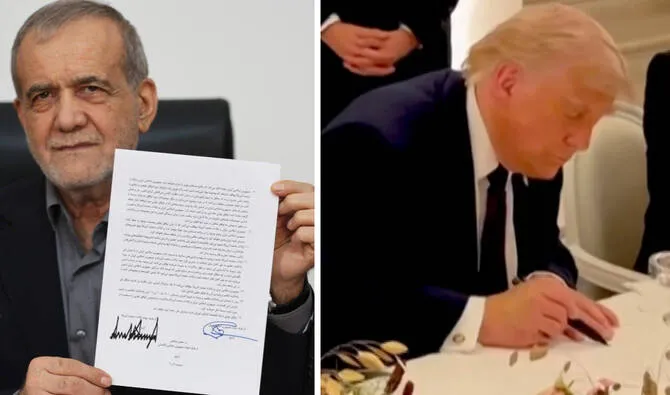
The United States has reportedly released the full text of a Memorandum of Understanding (MOU) said to have been reached with the Islamic Republic of Iran following negotiations aimed at ending recent hostilities between the two countries.
The publication of the document came after widespread calls for greater transparency regarding the agreement, with critics questioning why the text had not initially been made available to the public.
The document, titled “Islamabad Memorandum of Understanding between the United States of America and the Islamic Republic of Iran,” outlines a proposed framework intended to serve as the foundation for a comprehensive peace agreement between Washington and Tehran.
According to the memorandum, both countries agreed to an immediate and permanent cessation of military operations on all fronts for an initial period of 60 days while negotiations continue toward a final peace settlement.
The agreement also contains commitments by both governments to respect each other’s sovereignty and territorial integrity and to refrain from interference in one another’s domestic affairs.
One of the central provisions of the memorandum relates to Iran’s nuclear programme. The document states that Iran reaffirms its commitment not to develop or acquire nuclear weapons, while both parties agree to negotiate arrangements regarding Iran’s existing stockpile of enriched nuclear material.
According to the memorandum, any handling of enriched nuclear material would take place under a mutually agreed mechanism, with on-site down-blending supervised by inspectors from the International Atomic Energy Agency (IAEA).
The proposed agreement further outlines plans for the gradual removal of sanctions imposed on Iran. It states that negotiations would establish an agreed timetable for lifting U.S. sanctions, including primary and secondary sanctions, while also addressing measures linked to international restrictions.
Another significant provision contained in the memorandum involves economic reconstruction. The document indicates that regional partners, working with the United States, would seek to establish a development package valued at no less than $300 billion to support Iran’s reconstruction and long-term economic development. Details regarding the financing mechanism and implementation strategy would reportedly be negotiated as part of the final agreement.
The memorandum also addresses maritime security in the Persian Gulf.
According to the document, the United States would begin removing its naval blockade and other military impediments immediately after the signing of the agreement, with full implementation expected within 30 days.
Iran, in turn, would facilitate the safe movement of commercial vessels through the Persian Gulf and the Sea of Oman for an initial 60-day period. The memorandum further proposes discussions involving Oman and other Gulf states regarding the future administration and maritime services in the Strait of Hormuz in accordance with international law.
The document also provides for the gradual withdrawal of U.S. military forces operating near Iran following the conclusion of a final peace agreement.
On energy and trade, the memorandum states that the U.S. Department of the Treasury would issue waivers permitting the export of Iranian crude oil, petroleum products and related services pending the complete removal of sanctions. These waivers would reportedly cover associated banking transactions, insurance services and transportation arrangements.
The memorandum further proposes the release of Iranian funds and financial assets currently frozen or otherwise restricted. According to the document, both governments would negotiate procedures governing the release and use of these assets, with all necessary licences and authorisations to be issued by the United States.
To oversee implementation, the agreement proposes the establishment of a joint executive mechanism responsible for monitoring compliance with both the memorandum and any subsequent final peace accord.
The framework also outlines a 60-day negotiation period during which both countries would seek to conclude a comprehensive and legally binding final agreement. That period could reportedly be extended by mutual consent if additional time is required.
During the negotiation process, both sides would maintain the existing status quo. Under the memorandum, Iran would refrain from expanding its current nuclear programme, while the United States would agree not to impose additional sanctions or deploy further military forces to the region.
The document states that negotiations on the remaining provisions would commence after the implementation of key confidence-building measures, including the ceasefire, maritime arrangements, sanctions waivers and the release of restricted Iranian assets.
The final provision of the memorandum states that any comprehensive peace agreement resulting from the negotiations would ultimately be endorsed through a binding resolution of the United Nations Security Council.
The reported 14-point memorandum represents a broad framework covering military de-escalation, nuclear issues, sanctions relief, economic reconstruction, maritime security, diplomatic relations and long-term international oversight.
If implemented as outlined, the agreement would mark a significant shift in relations between the United States and Iran after years of political tension, economic sanctions and military confrontation. Observers note, however, that the success of the proposed framework would depend on the completion of a comprehensive final agreement and the willingness of both parties to fulfil their respective commitments.