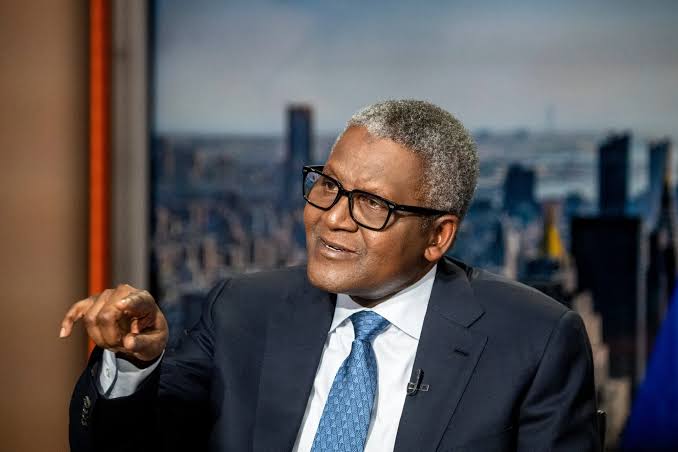
Africa’s richest businessman, Aliko Dangote, has urged wealthy Nigerians to reconsider how they deploy their wealth, particularly those who spend tens or even hundreds of millions of dollars acquiring private aircraft.
Dangote said Nigeria could achieve greater economic development if wealthy individuals directed more of their resources into productive investments, including manufacturing and other businesses capable of creating jobs, expanding the economy and strengthening domestic production.
The billionaire industrialist made the remarks while reflecting on his own business journey and changing attitude towards private aviation.
According to Dangote, he experienced the luxury of private air travel relatively early in his career, revealing that he acquired his first private jet at the age of 22 and a half.
Despite having access to private aviation, however, he said he has reached a stage where he is comfortable using commercial flights when necessary.
“In my career as a businessman, I had great times. I was telling somebody that right now, I don’t mind. I can take commercial, I can take anything. I had my first private jet at 22 years and a half,” Dangote said.
The businessman used his personal experience to make a broader argument about wealth creation and national development, particularly in a country where substantial private wealth exists alongside significant infrastructure and industrialisation challenges.
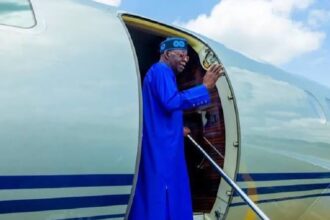
Dangote specifically appealed to Nigerians who own aircraft worth between $90 million and $100 million to consider investing equivalent resources in productive ventures.
He argued that such investments could have a greater impact on the economy than spending enormous sums on luxury assets that primarily serve private purposes.
“So I try as much as possible to encourage people who are riding 90, 100 million dollars aircraft, please go and put that into business. We are not going to create a great nation without doing something productive,” he said.
For Dangote, the issue is not necessarily about discouraging successful Nigerians from enjoying the fruits of their labour, but about encouraging a stronger culture of productive investment.
He suggested that capital deployed into factories, businesses and other productive enterprises could contribute to building the economy in ways that luxury consumption cannot.
Manufacturing, in particular, has remained central to Dangote’s business philosophy. Through his extensive investments in cement, fertiliser, food processing and petroleum refining, he has consistently emphasised the importance of domestic production and reducing Nigeria’s dependence on imports.
His comments therefore come from the perspective of an industrialist who has invested billions of dollars in large-scale production facilities in Nigeria and across Africa.
Dangote also illustrated his concerns with an experience he recently had in Abuja.
He recalled spending approximately 30 minutes looking for a parking space in the Nigerian capital, an experience that prompted him to reflect on the number of private aircraft and the limited amount of productive industrial activity in the country.
“It took me 30 minutes to find a parking space in Abuja. It was Wednesday or Thursday. And I said, ‘Oh, I wish this place was full of factories, not private jets,’” he recalled.
The anecdote captured what Dangote sees as a broader challenge in Nigeria’s economic structure: the contrast between conspicuous consumption and the need for greater investment in productive capacity.
Nigeria has a large population and substantial economic potential, but businesses continue to face challenges including infrastructure deficits, high energy costs, inadequate financing, logistics constraints, insecurity and policy uncertainty.
For entrepreneurs and investors, these challenges can make manufacturing more difficult and expensive than simply importing goods or investing in assets that do not require large-scale productive infrastructure.
Dangote’s argument is that Nigeria needs more people willing to take on the risks associated with productive investment if the country is to develop a stronger industrial base.
Factories, he suggested, can generate employment, support local supply chains, increase government revenue and help produce goods needed by millions of Nigerians.
Private jets, by contrast, primarily provide convenience and luxury to their owners.
The billionaire’s comments also highlight the changing priorities that can accompany business success. Having experienced private aviation since his early twenties, Dangote said he is now comfortable with commercial travel, suggesting that personal convenience does not necessarily have to remain the dominant consideration once an individual has accumulated significant wealth.
His position could resonate with ongoing discussions about wealth inequality and conspicuous consumption in Nigeria. While the country has produced a growing number of wealthy entrepreneurs, business leaders and high-net-worth individuals, many citizens continue to struggle with unemployment, inflation and rising living costs.
The contrast between luxury consumption and widespread economic hardship has increasingly become part of public discussions about Nigeria’s development.
Dangote’s call for greater productive investment is therefore also an appeal to wealthy Nigerians to consider the wider economic consequences of their financial decisions.
Investing $100 million in a factory or other productive enterprise does not guarantee success, particularly in an environment where businesses face significant operating challenges. However, successful investments in manufacturing and other sectors can create economic value beyond the returns received by the investor.
A new factory can employ workers, purchase raw materials from local suppliers, engage transport operators and distributors, generate tax revenue and contribute to the development of surrounding communities.
This multiplier effect, Dangote suggested, is essential to building a stronger economy.
His remarks also reinforce his longstanding advocacy for domestic production. Nigeria remains heavily dependent on imported products across several sectors, putting pressure on foreign exchange reserves and exposing consumers and businesses to fluctuations in global prices and exchange rates.
Greater domestic production could help reduce some of these vulnerabilities while creating opportunities for Nigerian entrepreneurs and workers.
Dangote’s own investments have demonstrated his belief in this approach. His industrial interests span several strategic sectors, with the Dangote Refinery representing one of the most prominent examples of private-sector investment aimed at expanding Nigeria’s domestic productive capacity.
The refinery, alongside the group’s investments in cement and fertiliser, reflects the scale of capital that can be deployed when wealth is channelled into industrial ventures.
The businessman’s latest appeal is consequently broader than a criticism of private jet ownership. It is a call for wealthy Nigerians to think beyond personal luxury and consider how their capital can contribute to national economic transformation.
His reference to the $90 million and $100 million price tags of some private aircraft was intended to illustrate the enormous amount of capital that can be tied up in luxury assets.
Dangote’s central message was that Nigeria cannot build a great nation without productive activity.
As the country seeks to attract investment, expand manufacturing, create jobs and reduce its dependence on imports, the role of domestic private capital will remain important.
For Dangote, the priority should be to transform wealth into factories, businesses and productive enterprises capable of creating opportunities for millions of people.
His personal willingness to fly commercially, despite having owned a private jet from a very young age, provided the backdrop for his argument that convenience and status should not overshadow the larger responsibility of using wealth to build economic value.
Ultimately, Dangote’s message to Nigeria’s wealthy is straightforward: enjoy success, but also invest in production. In his view, a country filled with factories, businesses and productive enterprises would have a far greater foundation for prosperity than one defined by the number of private jets parked at its airports.