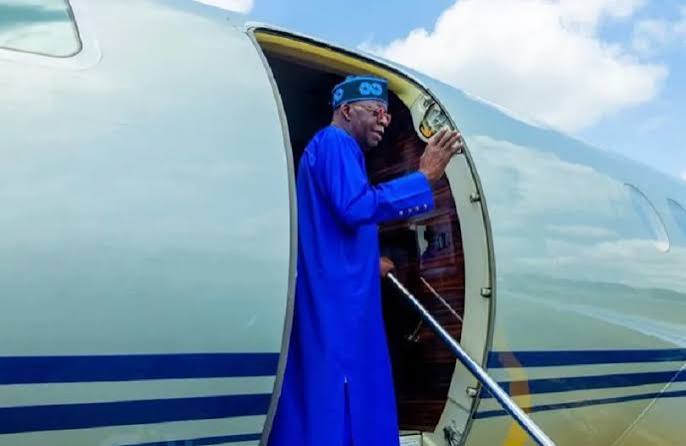
The Presidency reportedly spent N37.64 billion on presidential travels, logistics, foreign exchange and other travel-related expenses between June 2023 and April 2026, according to an analysis of GovSpend records.
The reported expenditure comes amid renewed scrutiny of the frequency and cost of President Bola Tinubu’s foreign trips, particularly as Nigerians continue to grapple with rising living costs, transportation expenses and other economic challenges.
Tinubu on Sunday departed Abuja for Europe on a three-week annual vacation, with London reportedly his first destination. The latest trip is expected to increase the President’s foreign travel tally since assuming office to 52 trips.
Presidential spokesman, Bayo Onanuga, said the President would return from the working vacation to participate in preparations for the January 2027 elections.
According to official travel records analysed by Daily Trust, Tinubu has spent approximately 261 days outside Nigeria since May 29, 2023, visiting at least 30 countries in 51 foreign trips.
France reportedly ranks as the President’s most frequently visited foreign destination, followed by London.
The GovSpend records cited in the report showed that travel-related expenditure rose substantially in 2024. The Presidency reportedly spent N9.18 billion on such expenses during the second half of 2023, while expenditure increased to N25.26 billion in 2024.
The records further indicated that N2.7 billion was spent on travel-related activities in 2025, while another N477.4 million was recorded between January and April 2026.
The figures put total reported spending at N37.64 billion over the period under review.
The report indicated that 2024 accounted for the largest share of the expenditure, with the increase attributed largely to foreign exchange allocations and funding associated with the Presidential Air Fleet.
The spending has drawn attention to the financial implications of presidential travel at a time when the Federal Government is implementing economic reforms and Nigerians are facing significant increases in the cost of living.
The report also examined expenditure associated with overseas trips involving First Lady Oluremi Tinubu.
According to the records, $553,884, equivalent to about N700.7 million at the applicable exchange rates, was reportedly released for overseas trips involving the First Lady between 2023 and 2024.
The disclosure has prompted questions from transparency advocates over the legal and administrative framework for financing official travels involving the President’s wife.
Reacting to the expenditure, President of the Transparency and Accountability Group, Ayo Ologun, questioned the legal basis for using public funds to finance official foreign trips by the First Lady.
Ologun argued that because the office of the First Lady is not expressly recognised as a constitutional office, there should be clarity regarding the official responsibilities attached to such travels and the justification for funding them with public resources.
“Because her office is not recognised by the law, if it is established that public money was spent on supposed official travels, the question should be: what is the duty?” he said.
He further argued that if public funds were used for activities that were essentially personal rather than official, the expenditure could raise serious accountability concerns.
“If it is spent on the wife of the President, that is abuse of power,” Ologun added.
He called for closer scrutiny and an investigation into the reported expenditure to determine whether the funds were properly authorised and used for legitimate public purposes.
The report has consequently renewed debate over the cost of presidential foreign travel and the broader issue of accountability in the management of public resources.
Presidential travels often involve several components of expenditure, including transportation, accommodation, security, logistics, foreign exchange and the operation of government aircraft. The reported figures therefore raise questions about the overall cost of maintaining presidential movements, particularly international trips.
While foreign travel is an established component of presidential duties, official visits are generally justified on the basis of diplomacy, economic engagement, bilateral relations and participation in international meetings. However, the frequency and financial cost of such trips can become subjects of public scrutiny, especially during periods of economic difficulty.
The latest figures are therefore likely to fuel calls for greater transparency concerning presidential travel expenses, including clearer disclosure of the purposes of trips, the number of officials involved and the total cost incurred by government.
The controversy also comes as the 2027 political season approaches, with the President expected to combine official responsibilities with increased political activities ahead of the general elections.
For transparency advocates, the central issue remains whether expenditure associated with presidential and presidential-family travels provides sufficient public value and whether the use of taxpayers’ money is being subjected to adequate oversight.
The reported N37.64 billion expenditure between June 2023 and April 2026 is consequently expected to remain part of the wider debate over government spending, accountability and the management of public resources under the Tinubu administration.