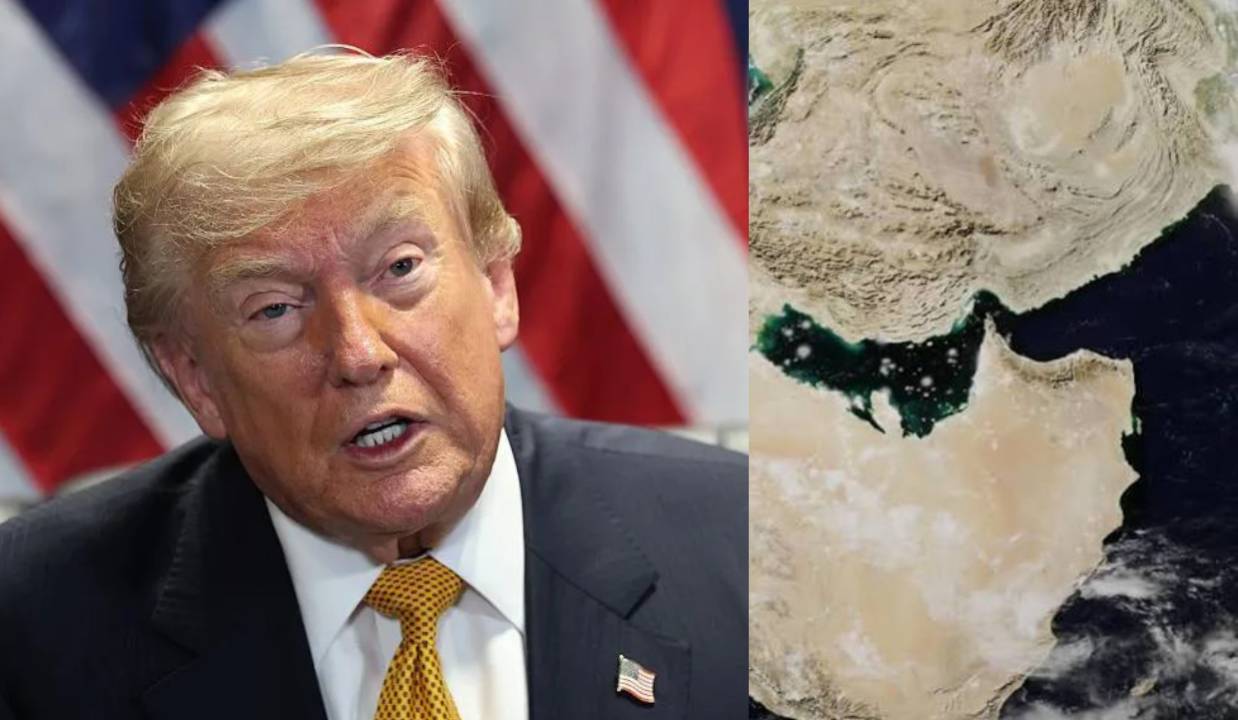
United States President Donald Trump has declared that American military operations against Iran will continue for as long as he considers necessary, vowing that the campaign will intensify until Tehran either agrees to Washington’s demands or the United States achieves its strategic objectives.
Speaking during an interview with Fox News on Tuesday, July 24, Trump adopted a defiant tone, insisting that the ongoing military offensive would not end until he personally decided that enough had been done.
According to the US President, American forces would continue launching heavy strikes against Iranian military infrastructure over the coming days, warning that the attacks would become increasingly severe if Iran failed to change course.
“We’re going to hit them very hard tonight, very hard tomorrow night,” Trump said, adding that the operation would continue relentlessly.
He stressed that the military campaign “won’t stop until I say it’s enough,” signalling that Washington had no immediate plans to scale back its offensive despite growing international concern over the escalating conflict.
Trump also revealed that while the United States had already struck numerous military targets across Iran, it was deliberately postponing attacks on the country’s critical energy infrastructure.
“I’ll save the energy targets for last, but ultimately we’ll hit energy targets,” he warned.
The President further disclosed that American forces were preparing another phase of operations that would target key components of Iran’s national infrastructure, including electricity generation facilities.
According to him, the coming week would witness even more devastating strikes.
“We’re going to hit them very hard the night after, and then next week it gets really bad for them because next week comes the power plants,” Trump stated.
In addition to energy facilities, Trump said bridges and other strategic transport infrastructure could also become military targets unless Iran agreed to negotiate a comprehensive peace agreement that addressed its nuclear programme.
He reiterated that Washington’s primary objective remained preventing Iran from acquiring nuclear weapons and dismantling its enriched uranium stockpiles.
The President maintained that military pressure would continue until Tehran accepted terms that satisfied the United States.
“Until I say it’s enough,” Trump repeated, underlining his determination to sustain the offensive.
Shortly after Trump’s interview, the United States Central Command (CENTCOM) announced that another major round of military operations had been completed against Iranian positions.
In an operational update released late Tuesday night, CENTCOM disclosed that American forces had conducted coordinated strikes on dozens of military installations located near the Strait of Hormuz and along Iran’s southern coastline.
According to the statement, the latest offensive involved fighter aircraft, armed drones and naval assets operating simultaneously in a coordinated assault lasting approximately seven hours.
The command said precision-guided munitions were used to destroy Iranian missile launch sites, drone facilities, naval assets and coastal defence systems.
“US fighter aircraft, drones, and naval vessels launched precision munitions against Iranian missile and drone sites, naval capabilities, and coastal defense systems during the seven-hour wave to further degrade Iran’s ability to threaten commercial shipping and civilian crews,” CENTCOM stated.
Military officials explained that the operation formed part of broader efforts to reduce Iran’s capability to interfere with maritime traffic through the Strait of Hormuz, one of the world’s busiest and most strategically significant shipping routes.
Following the strikes, US naval forces reportedly resumed enforcing a maritime blockade on vessels travelling to and from Iranian ports and coastal areas, further tightening pressure on Tehran.
The renewed offensive follows Trump’s decision to notify the United States Congress that military operations would resume after Washington accused Iran of violating a previously negotiated memorandum of understanding.
According to the Trump administration, Iran breached the agreement by allegedly supporting attacks on commercial vessels transiting the Strait of Hormuz, prompting the United States to restart military operations.
Although Washington has so far relied primarily on air and naval power, Trump refused to rule out the possibility of deploying American ground forces if circumstances required.
He suggested that military planners remained focused on eliminating Iran’s enriched uranium reserves and ensuring that Tehran’s nuclear programme could no longer pose a threat.
Trump also insisted that the United States had exercised restraint by avoiding deliberate attacks on civilian populations during the campaign.
However, he warned that all options remained available should Iran refuse to negotiate.
“You better make a deal, or you’re not going to have anything left,” the President cautioned.
Using a boxing analogy, Trump compared Iran to an experienced fighter capable of recovering even after suffering significant setbacks.
He said sustained military pressure was necessary to prevent Tehran from regrouping.
“It’s like a great boxer,” Trump said. “You think you have them beat, then they’ll come back and give you a shot.”
The President also cast doubt on the future of diplomatic negotiations between Washington and Tehran, expressing frustration with Iranian negotiators.
According to Trump, repeated attempts to reach agreements had failed because Iranian officials could not be trusted to honour their commitments.
He claimed that previous negotiations had repeatedly collapsed after Iran sought to revise agreed terms or failed to implement its obligations.
“They lie,” Trump said, explaining why he had become increasingly sceptical about continued diplomatic engagement.
Despite his criticism, Trump disclosed that communication between both sides had not completely ceased.
He revealed that his administration had been in contact with Iranian negotiators as recently as an hour before the interview, although he suggested little progress had been made.
The President also used the interview to commend members of his administration for their handling of the crisis.
He praised Defence Secretary Pete Hegseth and other senior national security officials, saying they had executed American military operations effectively while maintaining pressure on Tehran.
Trump further claimed that global oil production remained strong despite heightened tensions in the Gulf region.
According to him, “oil is flowing like never before,” suggesting that efforts to stabilise international energy markets had largely succeeded despite disruptions around the Strait of Hormuz.
The President also announced changes to US policy regarding maritime security in the Gulf.
He disclosed that his administration would replace the existing 20 per cent fee previously imposed on Gulf States for services related to security operations in the Strait of Hormuz.
Although Trump did not immediately provide details of the replacement arrangement, he reiterated his longstanding view that countries benefiting from American military protection should contribute more towards the cost of those operations.
The latest escalation has further heightened fears of a wider regional conflict, with analysts warning that continued military exchanges between Washington and Tehran could threaten global energy supplies and destabilise the Middle East.
Despite mounting international calls for restraint, Trump’s latest remarks indicate that the United States intends to maintain its military campaign until it believes its strategic objectives have been fully achieved.