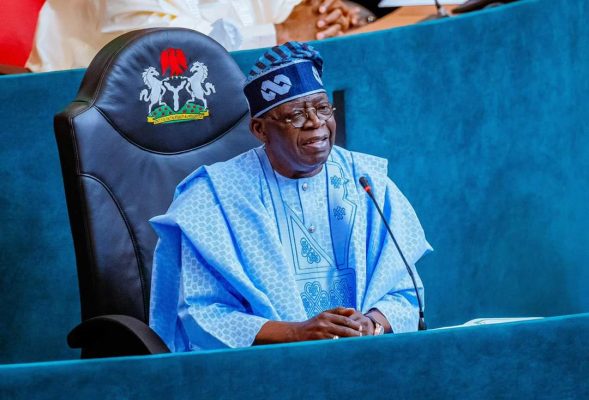
The Presidency has dismissed calls by the presidential candidate of the Nigeria Democratic Congress (NDC), Peter Obi, for President Bola Ahmed Tinubu to resign, describing the demand as “childish,” politically motivated and inconsistent with Nigeria’s constitutional system of government.
In a statement issued on Monday, Special Adviser to the President on Information and Strategy, Bayo Onanuga, argued that Obi’s comparison between Nigeria’s presidential system and the resignation of the British Prime Minister was fundamentally flawed. According to him, unlike the United Kingdom’s parliamentary system, Nigeria operates a presidential democracy in which a president is elected for a constitutionally guaranteed four-year tenure.
Onanuga maintained that President Tinubu remains accountable to the electorate through the electoral process rather than through public pressure on social media.
He pointed to the outcome of recent elections in Ekiti State and senatorial elections in Nasarawa, Enugu, Ondo and Rivers states, where candidates of the ruling party recorded victories, as evidence that the administration continues to enjoy public support.
According to him, the election results demonstrated that Nigerians would ultimately determine the President’s political future during the next general election rather than through calls for resignation.
“The appropriate avenue for judging any elected president remains the ballot box,” Onanuga stated, adding that Obi’s attempt to pressure the President into resigning through social media amounted to an undemocratic distraction from governance.
Responding to Obi’s criticism of the administration’s handling of security, the Presidency argued that President Tinubu inherited deeply entrenched security challenges that predated his administration.
The statement maintained that despite these longstanding problems, the government has made measurable progress in tackling insecurity across different parts of the country.
According to the Presidency, security forces have successfully rescued hundreds of kidnapped victims through coordinated military operations, particularly in Borno State and the North-West region.
It further claimed that thousands of terrorists and criminal elements have been neutralised during sustained counter-terrorism operations, while security agencies have intensified operations against insurgents, bandits and other violent groups.
The Presidency also highlighted the deployment of modern surveillance technologies, including drones, and the appointment of a Special Adviser on Homeland Security as part of broader efforts to strengthen Nigeria’s security architecture.
Onanuga argued that these initiatives demonstrate the administration’s determination to confront insecurity rather than evidence of failure.
He also criticised Obi’s comments on security by referring to his tenure as Governor of Anambra State, alleging that the former governor struggled to address security challenges during his administration.
Turning to the economy, the Presidency rejected Obi’s description of Nigeria’s current condition as the worst in its history, insisting that available economic indicators point to steady progress under the Tinubu administration.
According to the statement, President Tinubu inherited an economy facing severe structural challenges and implemented difficult but necessary reforms immediately after assuming office in May 2023.
The Presidency noted that the administration introduced policies that previous governments had avoided, including major economic reforms aimed at stabilising public finances and attracting investment.
It claimed that Nigeria has recorded positive Gross Domestic Product (GDP) growth in successive quarters since those reforms were introduced.
The statement also highlighted improvements in foreign reserves, increased oil production, higher government revenues and sustained trade surpluses as indicators of economic recovery.
According to the Presidency, crude oil production has increased significantly compared to levels recorded before the current administration assumed office, while federation revenue has grown substantially, providing state governments with greater financial resources to fund development projects.
The statement added that increased revenue has enabled states to invest more in education, healthcare, infrastructure, housing and other public services.
The Presidency further cited the performance of the Nigerian stock market, noting that the All-Share Index has experienced significant growth, creating wealth for millions of investors.
It also claimed that improved investor confidence has resulted in increased foreign direct investment and portfolio inflows into the country, particularly within the oil and gas sector.
On infrastructure, the Presidency maintained that the Tinubu administration has embarked on some of the country’s most ambitious road construction projects in decades.
Among the projects highlighted were the Lagos-Calabar Coastal Highway and the Sokoto-Badagry Superhighway, both described as landmark infrastructure initiatives expected to improve connectivity and stimulate economic development across Nigeria.
The statement further credited the administration with introducing compressed natural gas (CNG) as an alternative to petrol and diesel, describing the initiative as part of efforts to reduce transportation costs and diversify energy sources.
It also pointed to the Federal Government’s student loan programme, under which close to two million tertiary education students have reportedly accessed interest-free loans to support their education.
According to the Presidency, the absence of prolonged industrial actions by university-based unions during the current administration represents another major achievement.
The statement argued that one of President Tinubu’s campaign promises was to ensure that students complete their academic programmes without unnecessary disruptions caused by strikes.
Addressing electricity supply, Onanuga accused Obi and his supporters of misrepresenting President Tinubu’s campaign statements regarding power sector reforms.
He argued that the President never promised immediate nationwide 24-hour electricity but instead pledged to reform the sector, eliminate estimated billing and improve power supply through structural reforms.
According to the Presidency, one of the administration’s earliest policy decisions was signing the Electricity Act, which grants state governments greater authority to generate, transmit and distribute electricity independently of the national grid.
The statement also highlighted ongoing efforts to deploy millions of prepaid electricity meters nationwide as part of measures to eliminate estimated billing.
It further noted that investments in off-grid solar power projects for schools, hospitals and markets have expanded electricity access in several communities.
The Presidency acknowledged that transmission infrastructure remains a significant challenge but insisted that reforms are underway to attract additional private investment into the sector.
Regarding the country’s rising cost of living, Onanuga argued that Nigeria’s economic difficulties cannot be viewed in isolation from global developments.
He attributed recent inflationary pressures partly to geopolitical tensions in the Middle East, including disruptions associated with the conflict involving Iran, Israel and the United States.
According to him, these international developments affected global supply chains and contributed to increases in the prices of crude oil and other commodities worldwide.
The statement concluded by dismissing Obi’s call for President Tinubu’s resignation as lacking substance and driven more by politics than genuine concern for national development.
Onanuga argued that effective leadership requires resilience, difficult decision-making and sustained commitment to reforms rather than political rhetoric.
He maintained that President Tinubu remains focused on implementing policies aimed at improving security, stabilising the economy and laying the foundation for long-term national development.
The Presidential spokesman further alleged that Obi’s assessment of Nigeria’s current situation reflects a distorted understanding of the country’s realities.
He accused the opposition leader of repeatedly presenting what he described as an inaccurate narrative of national affairs while overlooking areas where the administration believes measurable progress has been achieved.
According to the Presidency, despite the challenges confronting the nation, Nigeria remains on a path of reform and recovery under President Tinubu’s leadership, and the administration remains committed to delivering on its mandate throughout its constitutional tenure.