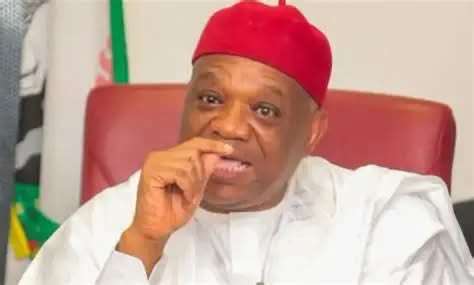
Senator representing Abia North Senatorial District, Orji Uzor Kalu, has declared that he would resign from the All Progressives Congress (APC) if President Bola Tinubu ever showed disrespect toward the opposition or the Catholic Church.
Kalu, a former governor of Abia State, made the statement during an interview on Wednesday’s edition of Channels Television’s Politics Today, while reacting to the controversy surrounding the recent meeting between President Tinubu and leaders of the Catholic Church.
The senator said he was convinced that Tinubu did not insult the Catholic bishops and maintained that he saw no basis for the President to apologise over the meeting.
“Any day President Tinubu disrespects the opposition or disrespects the Catholic Church, I will resign from the APC,” Kalu said. “Knowing President Tinubu, he can never insult the Catholic bishops. I do not believe he said anything that warrants an apology. However, if there is any wrongdoing on the part of the Presidency, then an apology should be offered.”
Kalu defended the President’s relationship with the Catholic Church, describing Tinubu as a long-standing friend of the Church and arguing that the bishops were entitled to raise concerns directly with him.
“President Tinubu has a cordial relationship with the Catholic Church,” he said. “There is nothing wrong with what the Catholic bishops said. Tinubu is not an enemy of the bishops; in fact, he is one of their friends. I did not see any insult in his remarks.”
The lawmaker stressed that open engagement between political leaders and religious institutions should not be interpreted as hostility, adding that democratic governance requires dialogue among different segments of society.
Commenting on the remarks made by Cardinal John Onaiyekan after the meeting, Kalu said the cardinal’s views should not automatically be regarded as the official position of the Catholic Bishops’ Conference of Nigeria (CBCN).
“The discussion between the bishops and the President was not a private affair; cameras were present, so it was a public engagement,” he said. “Cardinal Onaiyekan’s comments may represent his personal opinion. He did not go there alone, and individual bishops or cardinals may hold different views.”
Kalu noted that the President of the Catholic Bishops’ Conference had formally presented the communiqué from the meeting and suggested that the conference’s official position should be distinguished from the personal reflections of individual clerics.
The controversy began after Cardinal Onaiyekan granted an interview following the meeting at the Presidential Villa in Abuja. In the interview, the cleric said the bishops had told President Tinubu that Nigeria was “bleeding” and that many citizens were facing severe economic hardship.
Onaiyekan also expressed concern about preparations for the 2027 general election and the credibility of the electoral process, warning that public confidence in democratic institutions must be protected.
His comments triggered criticism from some government officials and political figures, who accused him of politicising the engagement with the President.
The debate intensified after the Minister of the Federal Capital Territory, Nyesom Wike, alleged that the cardinal was politically biased in his assessment of the Tinubu administration. Wike argued that religious leaders should acknowledge government achievements alongside their criticisms.
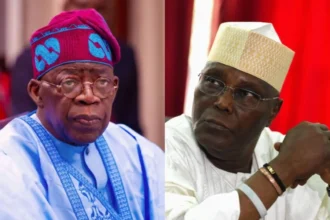
However, former Vice President Atiku Abubakar and former Minister of Transportation Rotimi Amaechi rejected Wike’s position, insisting that Cardinal Onaiyekan was speaking out of concern for Nigerians suffering from poverty, insecurity, unemployment, and economic hardship.
Both opposition figures urged the Federal Government to focus on addressing the country’s economic and security challenges rather than attacking critics.
Kalu’s intervention places him among the prominent APC figures who have publicly defended the Catholic bishops’ right to speak on national issues while also expressing support for President Tinubu.
The senator emphasised that criticism from religious leaders should not automatically be viewed as opposition politics, noting that faith-based institutions have historically played an important role in promoting accountability and social justice in Nigeria.
He said politicians must learn to tolerate criticism and engage with dissenting opinions in a mature manner, especially in a democracy where citizens and institutions are entitled to express their concerns.
Meanwhile, President Tinubu, during the meeting with the bishops, dismissed allegations that his administration was intimidating political opponents. He insisted that the Independent National Electoral Commission (INEC) remained neutral and declared that he was prepared for political competition without giving his opponents “a red carpet.”
The President also defended his administration’s economic reforms, saying Nigeria had been placed on a more stable footing and that the government was working to improve living conditions for citizens.
The exchange between the Catholic bishops, government officials, and opposition figures has continued to generate national debate over governance, economic hardship, insecurity, and the role of religious leaders in public affairs ahead of the 2027 general election.
Kalu, however, maintained that respect for democratic opposition and respect for the Catholic Church were non-negotiable principles for him, insisting that any departure from those values would compel him to leave the ruling party.