Nigeria and the United States have reaffirmed their commitment to deepening bilateral cooperation on security, counterterrorism, regional stability, and strategic engagement following a series of high-level meetings between Nigeria’s National Security Adviser, Mallam Nuhu Ribadu, and senior officials of the U.S. government in Washington, D.C.
The engagements formed part of Ribadu’s three-day official working visit to the United States from May 4 to May 6, during which he conveyed President Bola Ahmed Tinubu’s commitment to strengthening Nigeria’s long-standing strategic relationship with the United States.
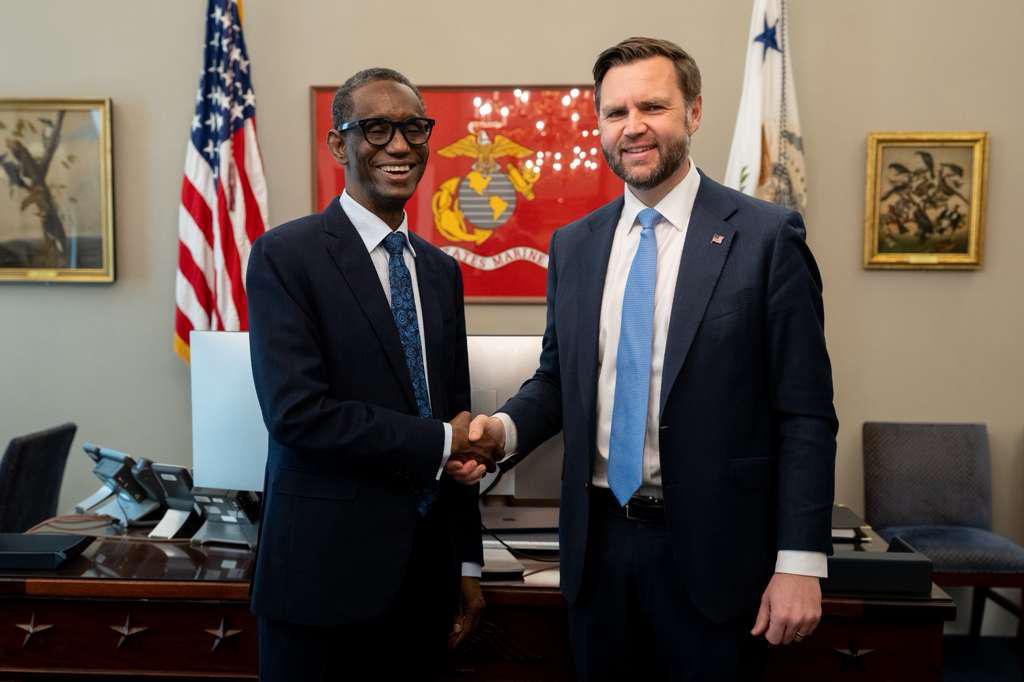
During the visit, Ribadu met with U.S. Vice President J.D. Vance, Acting National Security Adviser and Secretary of State Marco Rubio, Undersecretary for Political Affairs Allison Hooker, and Assistant Secretary of War Daniel Zimmerim.
The meetings focused on reviewing the current state of Nigeria–United States relations and identifying new areas of cooperation, particularly in the fight against terrorism, intelligence sharing, defence collaboration, economic resilience, regional peace, and democratic governance.
According to a statement issued by the Presidency, both countries acknowledged the growing security challenges confronting West Africa and agreed on the need for stronger cooperation to tackle terrorism, violent extremism, organised crime, cyber threats, and instability across the Sahel region.
Ribadu used the opportunity to reiterate Nigeria’s commitment to working closely with international partners to promote peace, democratic governance, and sustainable economic development across Africa.
He stressed that Nigeria remained a critical regional leader in the fight against terrorism, particularly within the Lake Chad Basin and the wider West African sub-region.
The NSA noted that the security situation in the Sahel had become increasingly complex, requiring stronger collaboration among regional and global partners.
He emphasised the need for sustained intelligence cooperation, enhanced military coordination, and institutional support to address asymmetric threats posed by terrorist groups and criminal networks operating across the region.
Discussions between the Nigerian delegation and U.S. officials also centred on the implementation of the Nigeria–U.S. Joint Working Group framework, which was established to strengthen bilateral cooperation on security and strategic matters.
During his meeting with Undersecretary Allison Hooker at the U.S. Department of State, Ribadu expressed appreciation to the American government for its continued support to Nigeria in several areas, especially security assistance, counterterrorism operations, humanitarian support, defence training, intelligence collaboration, and capacity building for Nigerian security agencies.
He reaffirmed Nigeria’s commitment to fully implementing the agreed roadmap under the Joint Working Group arrangement.
Both countries reviewed the progress already made under the framework and discussed practical measures aimed at improving cooperation in areas such as border security, strategic communication, intelligence exchange, military operations, and institutional development.
The parties also agreed on the importance of maintaining regular diplomatic communication and enhancing coordination between security institutions in both countries.
Ribadu further briefed American officials on ongoing reforms being undertaken by the Nigerian government to improve national security and stabilise communities affected by insurgency and violence.
He explained that the Tinubu administration had adopted a “whole-of-government” approach in addressing insecurity, combining both military operations and non-kinetic measures such as community engagement, economic development initiatives, deradicalisation programmes, and regional partnerships.
According to the NSA, Nigeria recognises that military action alone cannot permanently resolve the security crisis and that addressing the root causes of insecurity remains essential to achieving lasting peace.
He highlighted efforts by the Nigerian government to improve collaboration among security agencies, strengthen intelligence gathering, modernise defence capabilities, and improve civilian protection in conflict-affected areas.
American officials reportedly commended Nigeria for its continued leadership role in promoting peace and stability across West Africa.
They also acknowledged Nigeria’s strategic importance to the United States as a major partner in Africa, particularly in areas relating to counterterrorism, democratic governance, economic cooperation, and regional security.
The meetings further reaffirmed the shared commitment of both countries to democratic values, economic growth, regional stability, and sustainable peace throughout the African continent.
According to the Presidency, the discussions concluded with a mutual agreement to deepen bilateral engagement through stronger defence cooperation, sustained diplomatic dialogue, and effective implementation of existing agreements under the Joint Working Group framework.
Officials from both sides expressed optimism about the future of Nigeria–U.S. relations and reiterated their readiness to continue working together in confronting emerging global and regional challenges.
The renewed engagement comes at a time when Nigeria continues to face multiple security threats, including terrorism, banditry, kidnapping, piracy, and transnational organised crime.
It also reflects growing international concern over the deteriorating security situation in the Sahel region, where extremist groups continue to expand operations despite ongoing military interventions by regional governments.
Security analysts believe that enhanced collaboration between Nigeria and the United States could improve intelligence sharing, strengthen operational capacity, and support ongoing efforts to combat insurgency and violent extremism in the region.
The visit also signals the Tinubu administration’s continued effort to strengthen diplomatic and security partnerships with key international allies as part of broader efforts to stabilise the country and attract economic and strategic support.
The Presidency described the meetings as productive and significant for the future of bilateral cooperation between both nations.
The statement was signed by the Special Adviser to the President on Information and Strategy, Mr. Bayo Onanuga, on May 9, 2026.