Nigeria’s political landscape has taken a dramatic turn as the Nigeria Democratic Congress (NDC) reportedly recorded an unprecedented surge in membership, reaching an estimated 10 million registered members within just 48 hours of the defection of Peter Obi and Rabiu Musa Kwankwaso.
The development, which has sent shockwaves across the political ecosystem, underscores the growing momentum behind the NDC as it positions itself as a formidable opposition platform ahead of the 2027 general elections. While the figure has not yet been independently verified by electoral authorities, it has been widely circulated in political circles and reflects the scale of public enthusiasm triggered by the high-profile defections.
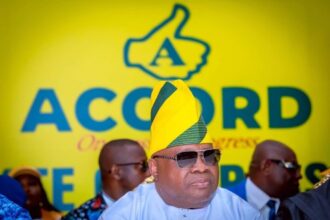
Obi and Kwankwaso formally joined the NDC in Abuja following their exit from the African Democratic Congress (ADC), citing internal instability, persistent litigations, and what they described as an increasingly hostile political environment. Their move has since catalyzed a wave of political realignment, drawing supporters, grassroots mobilisers, and political actors from across the country into the party.
Related posts:
- (Video) Obi, Kwankwaso officially join NDC, receive membership cards
- Nigeria Records Sharp Surge in Terrorism Fatalities Despite Global Decline – 2026 Global Terrorism Index
- Kano State Assembly Thrown Into Mourning as Two Lawmakers Die Within Hours
- ADC kicks off nationwide membership revalidation, registration
The two politicians, both of whom were presidential candidates in the 2023 elections, command significant followings across different regions of Nigeria. Obi’s popularity, particularly among young voters and urban populations, has been widely noted as one of the most influential political movements in recent Nigerian history. Kwankwaso, on the other hand, maintains a strong political base in northern Nigeria, especially through his well-established Kwankwasiyya movement.
Their combined entry into the NDC appears to have created a convergence of political forces, translating into rapid membership growth. Analysts suggest that the reported 10 million registrations within two days, if accurate, would represent one of the fastest political mobilisations in Nigeria’s democratic history.
The surge is also linked to the urgency surrounding timelines set by the Independent National Electoral Commission (INEC), particularly deadlines for submission of party membership registers ahead of the 2027 elections. The need for political actors and aspirants to align with viable platforms has accelerated mass registrations and defections across party lines.
Within the NDC, party leaders have welcomed the influx as a validation of their ideological positioning and growing national appeal. The party’s leadership, spearheaded by figures such as Senator Seriake Dickson, has consistently projected the NDC as a platform built on stability, internal cohesion, and policy-driven governance—qualities that Obi and Kwankwaso cited as key factors in their decision to join.
At their official reception, both leaders emphasized the need for a political environment free from endless legal disputes and internal crises. Obi, in particular, highlighted the importance of building a party focused on governance rather than litigation, urging members to prioritise national development over internal conflicts.
Kwankwaso also used the opportunity to call on his supporters and political allies nationwide to register with the party, stressing that time was of the essence as the political calendar for 2027 continues to tighten. His appeal appears to have resonated strongly, contributing to the rapid expansion of the party’s membership base.
Beyond the numbers, the development signals a deeper transformation in Nigeria’s opposition politics. The NDC, which was relatively new on the political scene, is quickly emerging as a central hub for coalition-building among opposition figures seeking to challenge the dominance of the ruling party.
Political observers note that the scale of mobilisation reflects widespread dissatisfaction with existing party structures and a growing appetite for alternative platforms. The convergence of Obi’s reform-driven support base and Kwankwaso’s grassroots network has created a unique political synergy that could redefine opposition strategy ahead of the next election cycle.
However, questions remain regarding the sustainability and verification of the reported membership figures. While political parties often experience surges following major defections, the process of converting expressions of support into verified, registered membership requires administrative rigor and oversight.
Some analysts caution that the figure, though indicative of strong momentum, should be treated with caution until formally validated. Nevertheless, even conservative estimates suggest that the NDC is experiencing one of the fastest growth trajectories among Nigeria’s political parties in recent times.
The implications of this development are far-reaching. For the ADC, the departure of its most prominent figures represents a significant setback, potentially weakening its influence within the opposition coalition. For the broader political landscape, the emergence of a rapidly expanding NDC introduces a new dynamic that could reshape alliances, electoral strategies, and voter engagement.
As preparations for the 2027 elections intensify, the focus is likely to shift toward how effectively the NDC can consolidate its gains, build internal structures, and translate its growing membership into electoral success.
For now, the reported 10 million membership milestone—whether ultimately confirmed or adjusted—has already achieved one critical objective: placing the NDC at the centre of Nigeria’s evolving political conversation.
With momentum on its side and high-profile figures driving its expansion, the party appears poised to play a decisive role in the unfolding contest for power in Africa’s most populous nation.