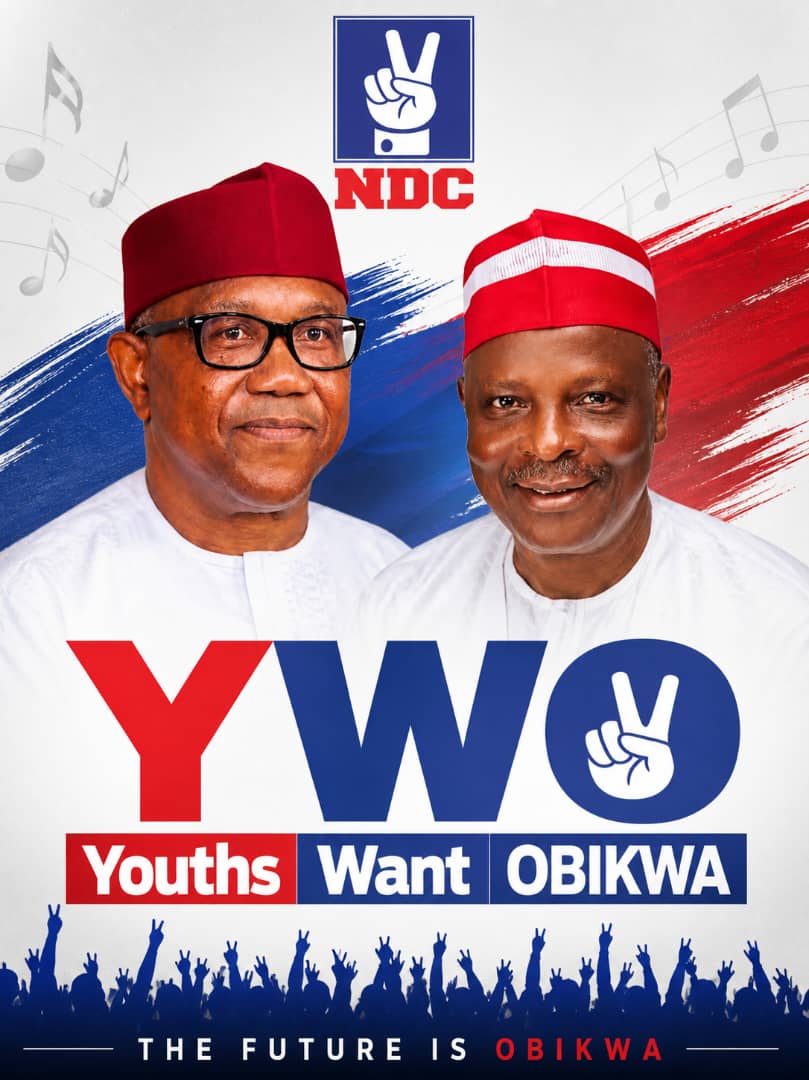
Former Kano State governor and national political figure, Rabiu Musa Kwankwaso, has declared his support for the decision of the Nigeria Democratic Congress (NDC) to zone its 2027 presidential ticket to southern Nigeria, describing the move as a step toward fairness, equity, and national unity.
Kwankwaso made his position known during the party’s national convention held on Saturday, May 9, where delegates unanimously adopted a zoning arrangement that reserves the party’s presidential ticket for the South in 2027, while the North is expected to produce the party’s presidential candidate in 2031.
The decision was reached after a motion moved by Afam Victor and seconded by Seyi Sowumi was presented before party delegates and subsequently adopted by voice vote at the convention, which attracted key political stakeholders, party leaders, and supporters from across the country.
Addressing party faithful at the gathering, Kwankwaso said the zoning arrangement reflects the spirit of fairness and inclusiveness needed to sustain Nigeria’s unity and democratic stability.
“It is therefore with a great sense of unity and solidarity, that as a loyal party member, I support the decision to zone the presidential ticket of the NDC to the south, so that it allows the region to complete its turn in producing national leadership,” he stated.
According to him, respecting rotational leadership and federal character principles remains essential in maintaining national balance and political harmony in a multi-ethnic country like Nigeria.
“We shall work in abidance with the party’s agreement to ensure fairness and federal character in all ramifications,” Kwankwaso added.
The former governor used the occasion to paint a grim picture of Nigeria’s current economic and security realities, blaming what he described as years of poor leadership and ineffective governance for the worsening hardship experienced by Nigerians across the country.
Kwankwaso lamented the declining standard of living, growing insecurity, and economic instability affecting millions of citizens.
“We are witnessing a sharp decline in the quality of life. Insecurity has created widows and orphans across the land. Millions have been displaced from their homes,” he said.
He further argued that the country’s economic environment had become increasingly hostile to investment and sustainable development.
“Investments are fleeing, critical infrastructure is neglected, the education system is collapsing, and harsh economic policies have been imposed on citizens without meaningful safety nets or relief,” he declared.
The former presidential candidate stressed that Nigeria urgently requires a new political direction capable of restoring public confidence, rebuilding institutions, and addressing widespread poverty and insecurity.
Kwankwaso also reflected on Nigeria’s political history, drawing parallels between the NDC’s current coalition efforts and some of the alliances that shaped the country’s political development during the First Republic and beyond.
He referenced the historical cooperation between the late Mallam Aminu Kano’s Northern Elements Progressive Union (NEPU) and Dr. Nnamdi Azikiwe’s National Council of Nigeria and the Cameroons (NCNC) during the 1950s, describing such alliances as important examples of national integration and political cooperation.
According to him, Nigeria has previously witnessed moments where political actors from different regions and ideological backgrounds came together to pursue national unity and development.
Kwankwaso suggested that the NDC seeks to revive that spirit of inclusive politics and national partnership.
He maintained that the party intends to build a political structure that prioritises competence, justice, and national development above ethnic or religious sentiments.
“The leadership standard we shall set will therefore restore Nigeria’s dignity and will guarantee that our citizens at home and in the diaspora will be treated with respect and dignity,” he stated.
The former governor further urged Nigerians, particularly young people, to participate actively in the democratic process by registering to vote and engaging constructively in politics ahead of future elections.
He said meaningful political change can only happen when citizens become actively involved in leadership selection and governance.
Kwankwaso’s endorsement of the zoning arrangement is widely viewed as significant, especially considering his political influence in northern Nigeria and his role within the Kwankwasiyya political movement.
Observers believe his support may strengthen the NDC’s efforts to present itself as a broad-based national coalition ahead of the 2027 elections.
The convention also witnessed the presence of several notable political figures and supporters, including members of the Obidient Movement and the Kwankwasiyya Movement, both of which have emerged as influential grassroots political blocs in recent years.
Political analysts say the zoning decision could help the party avoid internal divisions often associated with presidential ticket contests in Nigeria’s major political parties.
The NDC leadership insisted that the arrangement was designed to promote inclusiveness and reassure all sections of the country that power-sharing and national balance remain central to the party’s ideology.
The adoption of the zoning formula comes at a time when political alignments and coalition talks are intensifying ahead of the 2027 general elections, with opposition parties seeking strategies to challenge the dominance of the ruling establishment.
Kwankwaso’s speech at the convention was greeted with applause from delegates, many of whom described the zoning decision as a demonstration of political maturity and commitment to national cohesion.
As preparations for the 2027 elections gradually gather momentum, the NDC appears determined to position itself as a party focused on unity, equitable representation, and institutional reforms aimed at addressing Nigeria’s numerous socio-economic challenges.
For many party supporters at the convention, the endorsement by Kwankwaso was seen as a major boost to the party’s efforts to consolidate support across both northern and southern Nigeria ahead of the next presidential contest.