The political future of Siminalayi Fubara appeared to face a fresh setback on Sunday after the Rivers State governor reportedly walked out of the screening exercise organised by the All Progressives Congress in Abuja under tense circumstances.
Fubara, who is seeking re-election amid his prolonged political conflict with Nyesom Wike, was said to have spent barely 20 minutes before the party’s screening panel before emerging visibly displeased and declining to speak about what transpired during the session.
The screening exercise, organised ahead of the 2027 elections, has attracted governors, senators and other high-profile aspirants seeking the party’s endorsement. However, unlike many of the other governors who underwent the process and were received with warmth and ceremonial recognition, Fubara’s appearance reportedly ended on a tense and awkward note.
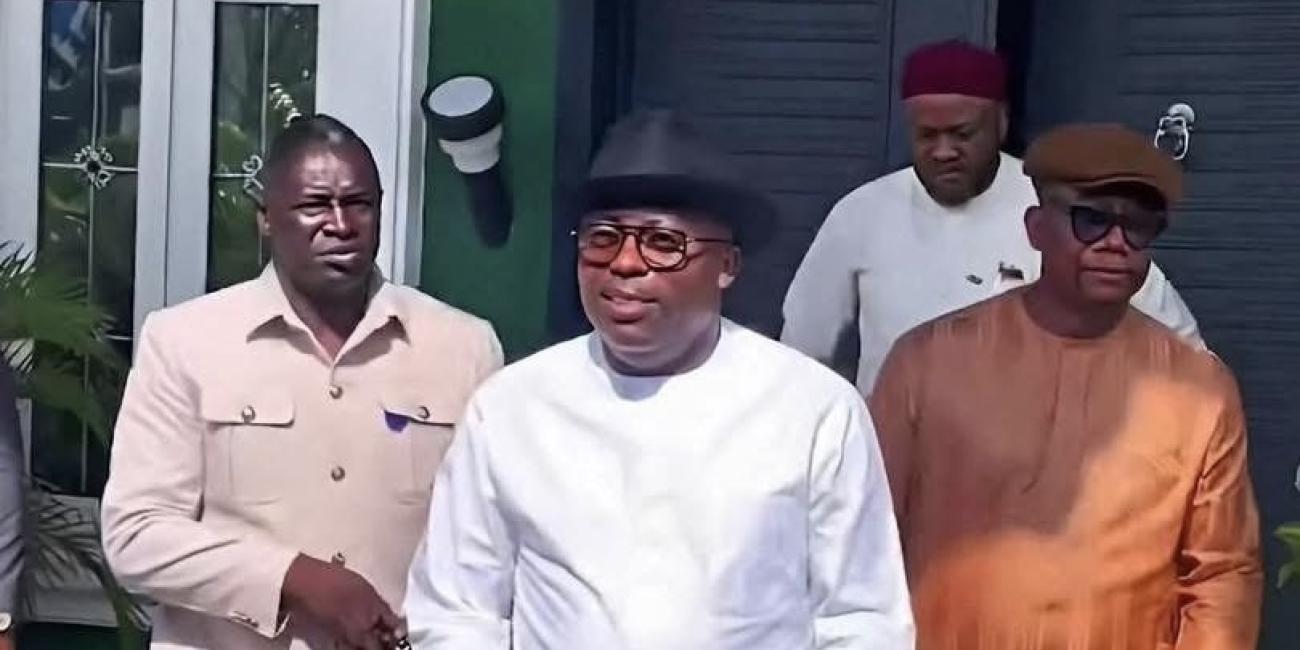
According to reports, the Rivers governor arrived quietly at the screening venue in Abuja and proceeded into the committee room where party officials were interviewing aspirants. But shortly afterwards, he emerged looking visibly upset and walked straight out of the premises without interacting with party supporters or officials gathered outside.
Journalists who had waited several hours to interview him attempted to ask questions regarding the outcome of the exercise, but the governor refused to disclose details about the interaction with the panel.
When asked how the screening went, Fubara simply replied, “No comment,” before entering his vehicle and departing the venue.
Political observers at the screening centre noted that the governor’s outing contrasted sharply with what had become the pattern since the commencement of the exercise. Several governors and senior aspirants who had appeared before the committee in previous days were publicly escorted out by members of the screening panel, a gesture widely interpreted as symbolic approval and respect for their status within the party.
In Fubara’s case, however, no member of the committee accompanied him out after the session, further fuelling speculation that tensions may have arisen behind closed doors.
The unusual development immediately sparked fresh political discussions within party circles and among political observers, especially given the lingering crisis surrounding the governor’s political future and his strained relationship with Wike.
Attempts to obtain clarification from party officials after the exercise produced little certainty.
Speaking to journalists shortly after the session, the APC National Secretary, Ajibola Basiru, avoided directly confirming whether Fubara had successfully passed the screening exercise.
“I don’t know what you mean by ‘screened.’ Anyone who appears before the committee does so as a necessary part of the process. Once the committee has seen everyone, they will sit down and produce a report. As of now, there is no report from the screening committee,” Basiru stated.
His comments did little to calm speculation, as many political analysts interpreted the carefully worded response as evidence that the committee had yet to reach a consensus regarding the governor’s fate.
The latest development comes amid the lingering and bitter political rivalry between Fubara and Wike, a conflict that has dominated Rivers State politics for months and significantly altered the political landscape of the oil-rich state.
Wike, who previously served as governor of Rivers State before becoming Minister of the Federal Capital Territory under President Bola Ahmed Tinubu, was once regarded as Fubara’s political mentor and key supporter during the governorship election.
However, shortly after Fubara assumed office, relations between both men deteriorated dramatically, leading to an intense power struggle over control of the political structure in Rivers State.
The crisis quickly engulfed the Rivers State House of Assembly, splitting lawmakers into rival factions loyal to either the governor or the former governor. The dispute triggered repeated political confrontations, protests, legal battles and threats of impeachment proceedings against Fubara.
At the peak of the crisis, President Tinubu reportedly intervened in an effort to broker peace between both camps and stabilise governance in the state.
Although temporary reconciliation efforts were announced after the intervention, tensions between the two political camps have continued to simmer beneath the surface.
Wike has repeatedly accused Fubara of failing to honour agreements reached during the reconciliation process and abandoning governance for political manoeuvring ahead of the 2027 elections.
In one of his recent public remarks, Wike openly criticised the governor, claiming that Fubara had previously indicated that he was no longer interested in seeking another term after Tinubu intervened in the impeachment crisis.
“President Tinubu intervened in the impeachment proceedings and the governor agreed to peace, even saying he was no longer interested in contesting again. Now, after that intervention, you are playing smart on what was agreed,” Wike had said.
The former Rivers governor has also consistently maintained strong influence within the APC and national political structures, leading to widespread speculation that his position could significantly shape Fubara’s political prospects moving forward.
Political analysts believe Sunday’s tense screening session may signal deeper internal divisions within the party regarding Fubara’s candidacy.
Some observers argue that the governor’s decision to seek re-election despite his ongoing dispute with Wike may have complicated his standing within influential political blocs aligned with the ruling party leadership.
Others, however, insist that the screening controversy may simply reflect procedural disagreements rather than any final decision on the governor’s eligibility.
Despite the uncertainty, supporters of the Rivers governor have continued to express confidence that he would eventually secure the necessary backing to contest for another term.
Several of his allies in Rivers State reportedly dismissed concerns surrounding the screening exercise, insisting that the governor remains popular among many residents due to his governance style and infrastructural projects.
However, the visible tension surrounding the exercise has further intensified political uncertainty in Rivers State ahead of the 2027 elections.
With the APC yet to release the final report of its screening committee, attention is now focused on whether the party leadership will eventually clear Fubara for the governorship race or whether the latest development signals deeper complications for his re-election ambition.
For now, the governor’s abrupt exit from the screening venue and refusal to address the media have only deepened speculation about the future of one of Nigeria’s most closely watched political battles.