The Secretary to the Enugu State Government (SSG), Prof. Chidiebere Onyia, faced an embarrassing public backlash on Friday after members of a church congregation openly challenged his claims that the Enugu State Government had significantly improved access to pipe-borne water across the state capital.
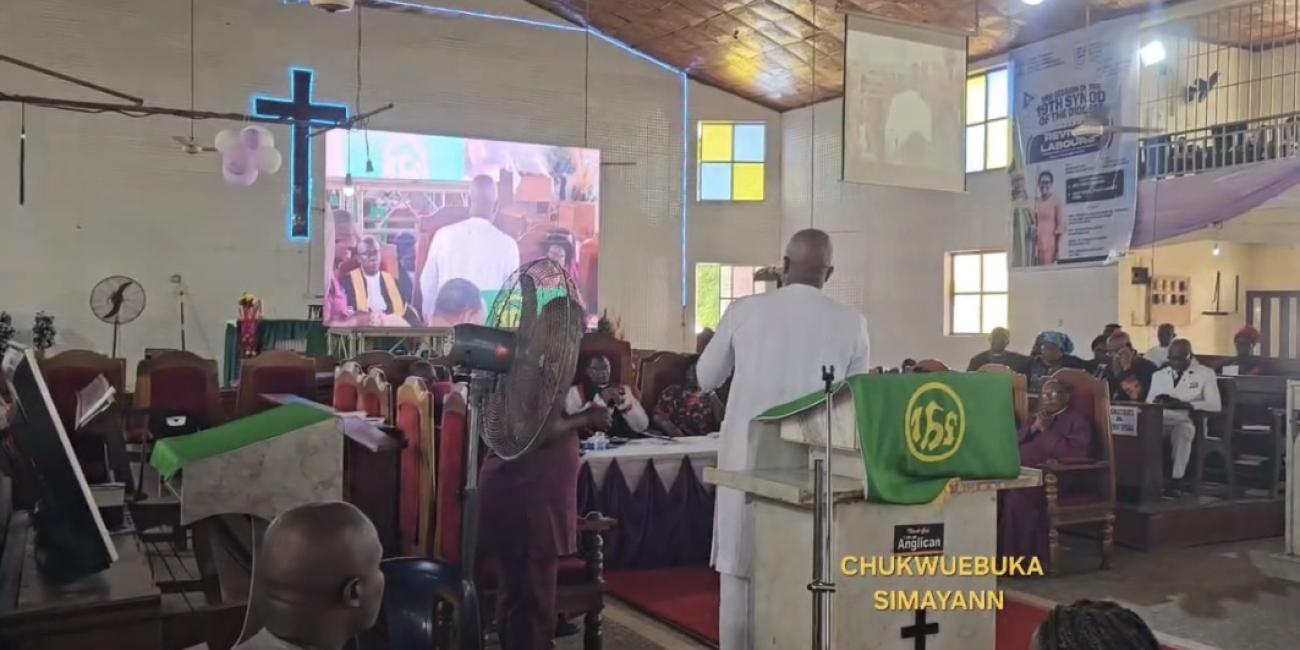
The incident occurred at St. Peter’s Anglican Church, Ogbete, Enugu, during the Third Session of the 19th Synod of the Diocese of Enugu. The annual synod, held under the theme, “Revival Labours: A Prepared Heart to Study, Do and Teach the Word,” brought together clergy, government officials, political leaders, and members of the Anglican Communion for deliberations on both spiritual and societal issues.
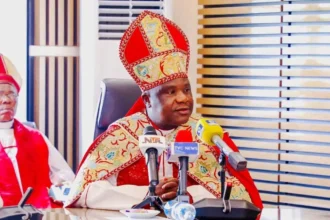
Prof. Onyia attended the event as the representative of Governor Peter Mbah’s administration. His presence was expected to provide the state government’s perspective following the presidential address delivered by the Anglican Bishop of Enugu Diocese, Rt. Rev. Samuel Ike.
After the bishop concluded his address, the SSG was invited to the podium to address the congregation and provide an update on the activities and achievements of the state government.
As he outlined the administration’s developmental programmes, Onyia turned his attention to one of Governor Peter Mbah’s most prominent campaign promises—the commitment to restore regular pipe-borne water supply to every household in Enugu metropolis within 180 days of assuming office.
The governor had made the pledge during the 2023 governorship campaign, presenting it as one of the flagship objectives of his administration aimed at ending decades of water shortages affecting residents of the Coal City.
While speaking before the congregation, Onyia defended the government’s performance on the project, insisting that substantial progress had been made.
According to him, the administration had deployed water infrastructure across various parts of the state capital and that pipe-borne water was already flowing in many communities.
The SSG further claimed that the government’s intervention had extended water supply to virtually every household in Enugu.
His remarks, however, immediately triggered a strong reaction from members of the congregation.
No sooner had the statement been made than worshippers interrupted the speech, loudly rejecting the government’s claims.
The church auditorium quickly transformed into a scene of open disagreement as congregants repeatedly shouted, “No! No! It’s a lie!”
The spontaneous outburst drowned out the SSG’s speech and made it difficult for him to continue addressing the gathering.
A video of the incident, which has since gone viral on social media, captured the dramatic moment as the senior government official attempted to calm the increasingly vocal congregation.
Standing at the church’s altar, Onyia appealed to the worshippers to allow him to explain his position.
“No! No! Do not shout no. I will tell you that—I can take you to go and verify,” he pleaded.
His appeal, however, failed to persuade the congregation.
Instead, the worshippers intensified their objections, repeatedly chanting, “No, no, no, it is a lie!”
The persistent interruption prevented the SSG from completing his address.
Unable to regain control of the audience or continue his presentation, Onyia eventually stepped away from the podium and returned to his seat as murmurs and reactions continued within the church.
The incident has since generated widespread public discussion, particularly on social media, where many Nigerians viewed the exchange as a reflection of public dissatisfaction with the government’s handling of water supply in Enugu State.
Observers noted that the confrontation illustrated the widening gap between official government claims and the experiences of many residents who continue to struggle with inadequate access to potable water.
Governor Peter Mbah had, during his election campaign and shortly after assuming office, promised to resolve the state’s long-standing water supply challenges within six months.
The pledge was widely publicised and became one of the administration’s defining commitments.
More than three years after that promise, however, many residents maintain that access to government-supplied pipe-borne water remains limited.
Several communities continue to report little or no access to public water supply, forcing households to depend largely on privately owned boreholes and commercial water vendors for their daily domestic needs.
Residents in many parts of Enugu have repeatedly complained that while a handful of neighbourhoods occasionally receive water through existing infrastructure, supply remains irregular and insufficient to meet demand.
Other communities, they say, have not experienced any meaningful improvement since the current administration came into office.
The prolonged water shortages have had significant economic consequences for families across the state.
Thousands of households now spend a substantial portion of their income purchasing water from private vendors, whose services have become the primary source of domestic water in many communities.
Residents also report that the cost of purchasing water has increased considerably over the past three years, adding to the financial burden created by inflation and the country’s broader economic challenges.
Many families now pay significantly more for water than they did before the present administration assumed office, making access to clean water an increasingly expensive necessity.
Political observers believe the reaction witnessed during the Anglican synod reflects growing public frustration over perceived gaps between campaign promises and actual service delivery.
They argue that public officials face increasing pressure to provide measurable evidence of government achievements, particularly on issues that directly affect the daily lives of citizens.
The incident also highlights the important role religious gatherings continue to play as platforms where citizens openly express their views on governance and public policy.
For many of those present at the synod, the immediate rejection of the SSG’s remarks demonstrated their belief that official statements about water supply did not correspond with their lived experiences.
As discussions continue following the widely circulated video, attention has once again shifted to the Enugu State Government’s efforts to fulfil its promise of restoring reliable pipe-borne water to residents.
Whether the administration can bridge the gap between public perception and its stated achievements remains to be seen, but Friday’s dramatic exchange at St. Peter’s Anglican Church has undoubtedly intensified scrutiny of one of Governor Mbah’s most ambitious campaign commitments.
The incident is also expected to fuel broader political debate as the state moves closer to another electoral cycle, with analysts noting that infrastructure delivery and public trust are likely to remain central issues in future political discourse.