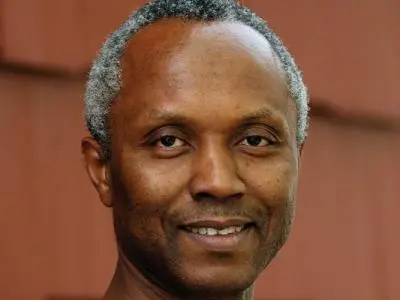
The Department of State Services (DSS) has dismissed reports that it arrested or detained renowned Nigerian author, scholar, and public intellectual, Professor Okey Ndibe, at the Murtala Muhammed International Airport in Lagos, stating that its engagement with him was part of a routine review of long-standing security watchlists and not an act of detention.
The clarification followed widespread reports and public reactions generated by allegations made by human rights activist and former presidential candidate, Omoyele Sowore, who claimed that DSS operatives detained Ndibe upon his arrival from the United States and subjected him to questioning over what they allegedly described as a suspicious visit to Nigeria.
In a statement released on Tuesday and signed by the Deputy Director of Public Relations and Strategic Communications of the DSS, Favour Dozie, the agency described the reports of Ndibe’s arrest as inaccurate and misleading.
According to the DSS, Professor Ndibe was neither arrested nor detained at the Lagos airport or any other location on June 1, 2026. The agency explained that the interaction was part of an ongoing institutional process aimed at reviewing and updating old Watch-List Actions (WLAs), some of which date back several years and, in some cases, to Nigeria’s military era.
The DSS stated that under the leadership of its current Director-General, efforts have been intensified to review outdated watchlists in order to prevent law-abiding citizens from being unnecessarily inconvenienced or embarrassed by security records that may no longer be relevant.
The agency explained that individuals whose names appear on such watchlists are routinely invited for brief interactions whenever they pass through designated entry points into the country. These interactions, it said, form part of a structured review process that may ultimately lead to the downgrading and eventual removal of their names from security watchlists.
According to the statement, the review mechanism aligns with international best practices and is intended to ensure that security databases remain accurate, current, and fair.
The DSS noted that the objective of the process is to determine whether the circumstances that originally led to an individual’s inclusion on a watchlist still exist. This includes examining current activities, travel histories, and other relevant information to ascertain whether any security concerns remain valid.
The agency emphasized that the procedure is not punitive but administrative and designed to ensure a balanced approach between national security concerns and the protection of citizens’ rights.
Providing further details on Ndibe’s case, the DSS disclosed that the celebrated writer had been placed on its watchlist on January 29, 2013. However, following an internal review, his case had already been downgraded before his recent arrival in Nigeria.
The service explained that the airport interaction was specifically intended to facilitate the final stage of the process leading to the complete removal of his name from the watchlist.
According to the DSS, the engagement lasted less than one hour, after which Professor Ndibe was cleared and allowed to proceed without restrictions.
The agency stated that following the interaction, he was courteously escorted in line with standard procedures.
The DSS also pointed to comments reportedly made by Ndibe on social media following the encounter, noting that the writer himself acknowledged the professionalism, courtesy, and respectful conduct displayed by the officers who engaged with him.
The agency said such conduct reflects its commitment to operating within the framework of the rule of law, respect for human rights, and professional standards under its current leadership.
In addition, the DSS revealed that a number of Nigerians who had been placed on security watchlists in the past have benefited from the ongoing review exercise.
As an example, it cited the case of veteran journalist and Executive Director of the International Press Centre (IPC), Lanre Arogundade, whose name was removed from the watchlist in May 2025 after more than a decade.
The agency described this as evidence of its commitment to ensuring fairness, transparency, and due process in handling matters relating to security monitoring and surveillance.
Reaffirming its position, the DSS said it would continue reviewing old watchlists to ensure that citizens are treated justly and that outdated records do not unnecessarily affect their freedom of movement or reputation.
The agency also encouraged Nigerians who believe they may be affected by similar watchlist actions to formally contact its national headquarters to facilitate verification and possible review of their cases.
The clarification comes amid ongoing public debate about civic freedoms, government accountability, and the balance between national security and individual rights.
Sowore had earlier criticized the reported airport encounter, describing it as evidence of shrinking democratic space and increased pressure on government critics. His allegations attracted significant attention on social media and generated calls for greater transparency regarding the circumstances surrounding the interaction.
However, with the DSS now presenting its version of events, the focus has shifted to the broader issue of security watchlists and the procedures governing their review and management.
The revelation that Professor Ndibe’s name remained on a security watchlist for more than 13 years has also raised questions about the criteria used for placing individuals on such lists and the processes involved in reviewing or removing names over time.
Observers say the development may prompt renewed discussions about transparency in security operations, the protection of civil liberties, and the need for regular audits of government databases to ensure that outdated records do not continue to affect citizens unnecessarily.
As public interest in the matter continues, many Nigerians will be watching closely for further clarification regarding the origins of the watchlist entry and the broader reforms being implemented by the DSS to modernize its security monitoring systems while safeguarding the rights of citizens.