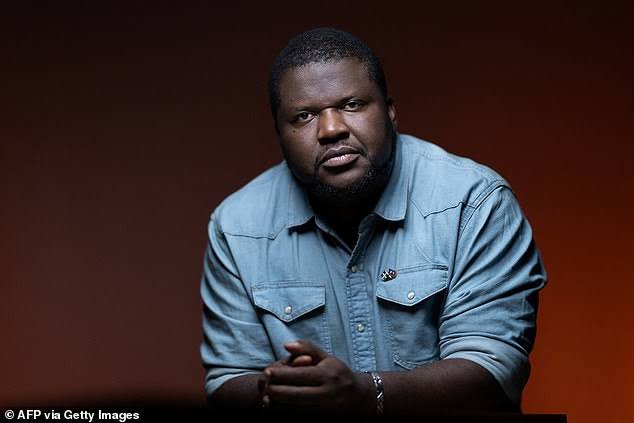
Award-winning Canadian-Haitian author Thélyson Orélien has denied allegations that he used artificial intelligence to write his debut novel, C’était ça ou mourir (It Was Either That or Die), which recently won France’s prestigious Prix du Roman Fnac.
The 38-year-old writer has emerged as one of the notable literary figures of the year following the success of his novel, which has also appeared on early selection lists for two of France’s major literary prizes, the Prix Goncourt and the Prix Renaudot.
However, the acclaim surrounding the book was overshadowed this week after a little-known group known as Balance ton Claude alleged that artificial intelligence was used extensively in producing the manuscript.
In a statement posted on X on Tuesday, the group claimed that the novel was “almost totally” generated by AI. It said it had tested several passages taken from different sections of the manuscript and obtained what it described as a “100 percent AI” result.
The group said its assessment was conducted using Pangram, an AI-detection programme it described as highly accurate, while acknowledging that its membership and identity were not publicly clear.
The allegation has sparked questions about the use of generative artificial intelligence in literary production, particularly as AI tools become increasingly capable of producing sophisticated prose.
Orélien, however, strongly rejected the accusation and insisted that the novel was the product of his own creativity and literary experience.
Speaking to French newspaper Libération, the author questioned why he would have needed to rely on a machine to produce the work.
“I have always loved creation and literature. I can’t see why I would feel compelled to use a machine,” he said.
Orélien added that he was working with his publisher to compile documentation that could demonstrate that he wrote the novel himself.
He also pointed to the cultural influences behind his writing, arguing that the book’s language, imagery and rhythm reflected his Haitian and Caribbean traditions.
“My traditions are Haitian and Caribbean. The images, the repetitions and the rhythms are the living word, they are my own,” he said.
His publisher, Grasset, also defended the author and rejected the allegations against him.
The publishing house described the accusations as deeply damaging to a writer with what it called an exceptional life story, while maintaining that his work was original and powerful.
Orélien was born in Haiti and moved to Montreal, Canada, in 2010. His debut novel draws on themes of migration, violence, displacement and the search for safety.
The story follows a teacher who flees gang violence in Haiti and recounts his experiences before eventually reaching Canada. There, the protagonist rediscovers what the novel describes as the ability to “breathe without fear.”
The controversy comes at a time when the increasing use of AI-generated text has raised questions across the publishing and academic sectors about authorship, originality and the reliability of AI-detection tools.
For now, the allegations against Orélien remain disputed. The author has denied using AI to write the novel, while the group behind the accusation has presented its detection results as evidence. Any further assessment is likely to depend on the documentation the author and his publisher say they are compiling.
This version keeps the AI-use claim clearly attributed and avoids presenting the detection result as established fact.