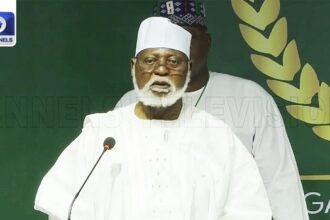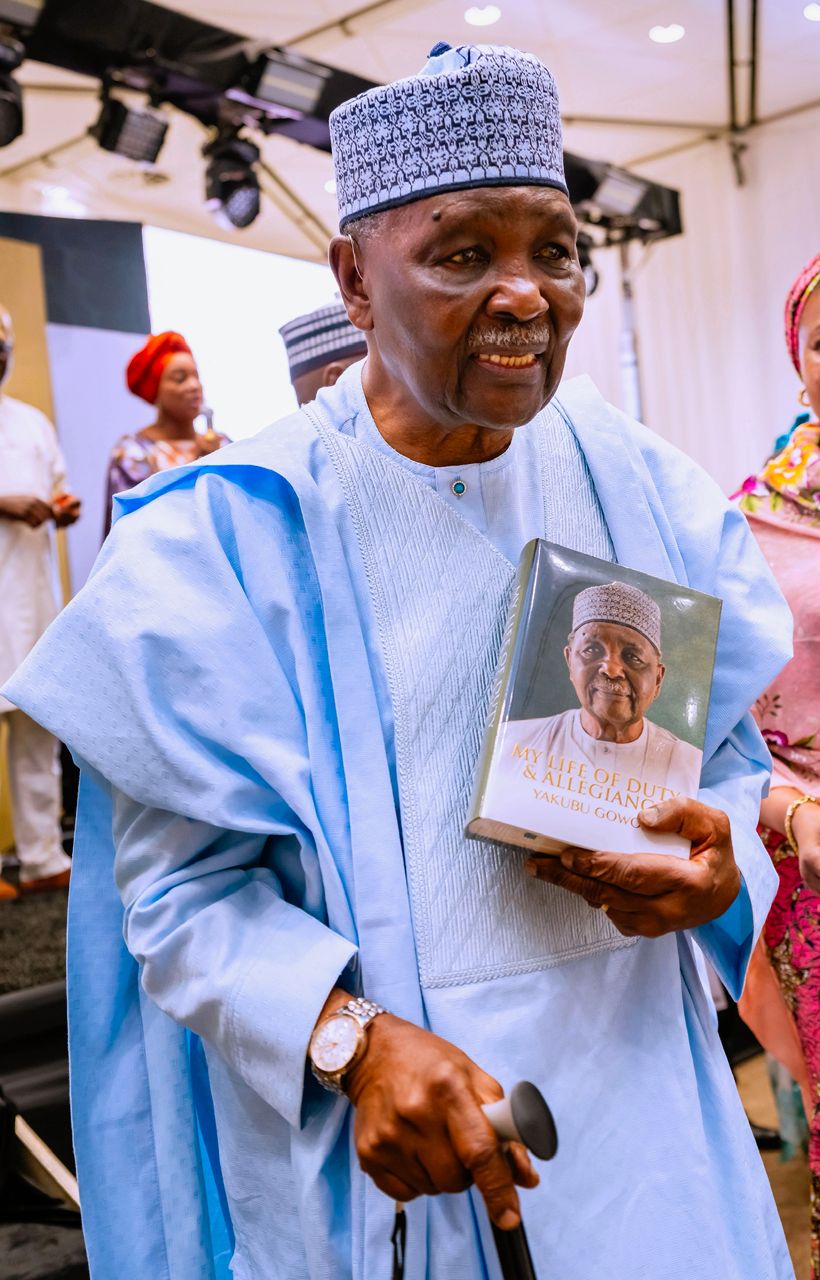
Former Nigerian Head of State, Yakubu Gowon, has explained that his newly released autobiography was written to provide clarity on the difficult decisions, policies and circumstances that shaped his administration during the Nigerian Civil War, insisting that the book was not intended to reopen painful memories of the conflict.
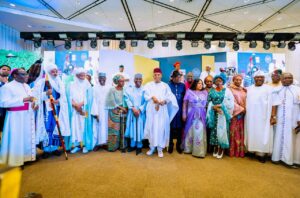
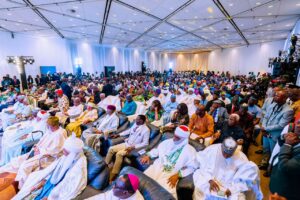
Gowon made the clarification during the public presentation of the 881-page autobiography scheduled for May 19, 2026, at the Bola Ahmed Tinubu International Conference Centre in Abuja.
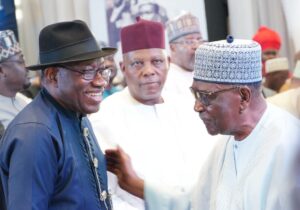
The event is expected to attracted prominent political figures, retired military officers, diplomats, academics and senior government officials from across the country and beyond.
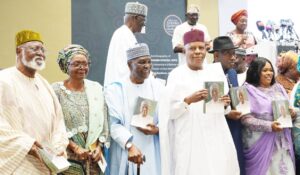
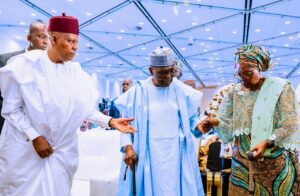
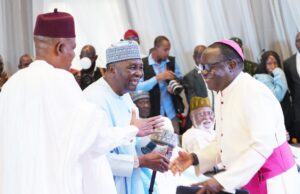
President Bola Tinubu wS the special guest of honour, while former Minister of Defence and ex-Chief of Army Staff, Theophilus Danjuma, formally unveilED the autobiography.
The memoir offerS Gowon’s personal reflections on some of the most critical periods in Nigeria’s post-independence history, especially the 30-month civil war fought between 1967 and 1970 following the attempted secession of the former Eastern Region as the Republic of Biafra.
Speaking on his reasons for writing the book, Gowon said he felt compelled to document his own perspective because many accounts of the civil war years had been written by different individuals and groups over the decades without fully explaining the rationale behind the actions and decisions taken by his government at the time.
According to him, the autobiography was not intended to reignite old political or ethnic divisions but rather to contribute to historical understanding and provide context to decisions made under extraordinary national pressure.
“The autobiography became necessary because many accounts of the civil war era had been written from different perspectives over the years without fully reflecting my own reasoning as Nigeria’s leader at the time,” Gowon stated.
“By choosing to write, I took a conscious decision not to reopen old wounds but to clarify my thinking on policies and plans at a period often narrated by others,” he added.
The former military ruler described his story as one shaped by difficult national circumstances, competing expectations and the realities of leadership during one of Nigeria’s most turbulent eras.
“My story is one of conviction evaluated by circumstances at the crossroads of expectations and reality,” he said.
The Nigerian Civil War remains one of the most sensitive chapters in the country’s history, with millions of people displaced and countless lives lost during the conflict.
The war erupted after the declaration of the Republic of Biafra in 1967 by the then Eastern Region under the leadership of the late Chukwuemeka Odumegwu Ojukwu.
The conflict lasted until January 1970 when Biafran forces surrendered to the Federal Military Government led by Gowon.
Following the end of the war, Gowon introduced the famous “No Victor, No Vanquished” policy, which sought to promote reconciliation, reintegration and national healing after years of bloodshed and division.
The slogan later became one of the defining legacies of his administration and was widely regarded as an attempt to rebuild trust and unity among Nigerians after the devastating conflict.
Gowon, who became Head of State on August 1, 1966, at the age of 31, was one of the youngest leaders in Nigeria’s history.
His rise to power came during a period of deep political instability marked by coups, ethnic tensions and regional crises that threatened the survival of the newly independent nation.
The autobiography is also expected to recount his childhood, military training, early years in the armed forces and the circumstances that unexpectedly thrust him into national leadership during the crisis-ridden 1960s.
Born in 1934 in present-day Plateau State, Gowon attended military institutions in Nigeria and abroad before emerging as a prominent officer within the Nigerian Army.
He remained in power for nine years before he was removed in a bloodless military coup in July 1975 while attending an Organisation of African Unity summit in Uganda.
Despite being overthrown, Gowon later reinvented himself as a statesman and advocate for peacebuilding, national unity and humanitarian causes.
After leaving office, he pursued further academic studies and obtained a doctorate degree in Political Science from the University of Warwick in 1984.
He subsequently established the Yakubu Gowon Centre, an institution focused on peacebuilding, leadership development and national integration.
Over the years, Gowon has remained active in national and international humanitarian initiatives.
Through programmes such as the “Nigeria Prays” movement, he has championed campaigns promoting peace, moral renewal and interfaith dialogue across Nigeria.
He has also participated in public health advocacy efforts targeting diseases such as guinea worm, HIV/AIDS, tuberculosis and malaria.
In addition, Gowon has served as National Goodwill Ambassador for the control of viral hepatitis in Nigeria, further expanding his involvement in humanitarian and public health causes.
Commenting on the significance of the autobiography, Group Chief Executive Officer of Havilah Group, Lanre Adesuyi, described the publication as an important contribution to Nigeria’s historical documentation and national discourse.
According to him, the project reflects the company’s broader commitment to preserving important historical narratives and encouraging informed conversations about Nigeria’s past and future.
“We consider this project a significant milestone in our journey, one that reflects our commitment to preserving history, promoting thought leadership, and contributing meaningfully to national discourse,” Adesuyi stated.
Observers say the release of Gowon’s autobiography is likely to generate renewed public interest in Nigeria’s civil war history, especially among younger generations seeking to better understand the events that shaped the country’s political evolution.
Historians and political analysts also believe the memoir could provide fresh insight into the internal deliberations, military strategies and political calculations that influenced decisions during the war years.
The autobiography is expected to serve not only as a personal memoir but also as a historical document that may contribute to ongoing debates about national unity, reconciliation, leadership and the lessons of Nigeria’s civil war experience.
With many surviving actors of the civil war era now advanced in age, the publication of firsthand accounts from key figures continues to be viewed as important in preserving historical memory and deepening national understanding of one of Nigeria’s defining historical moments.