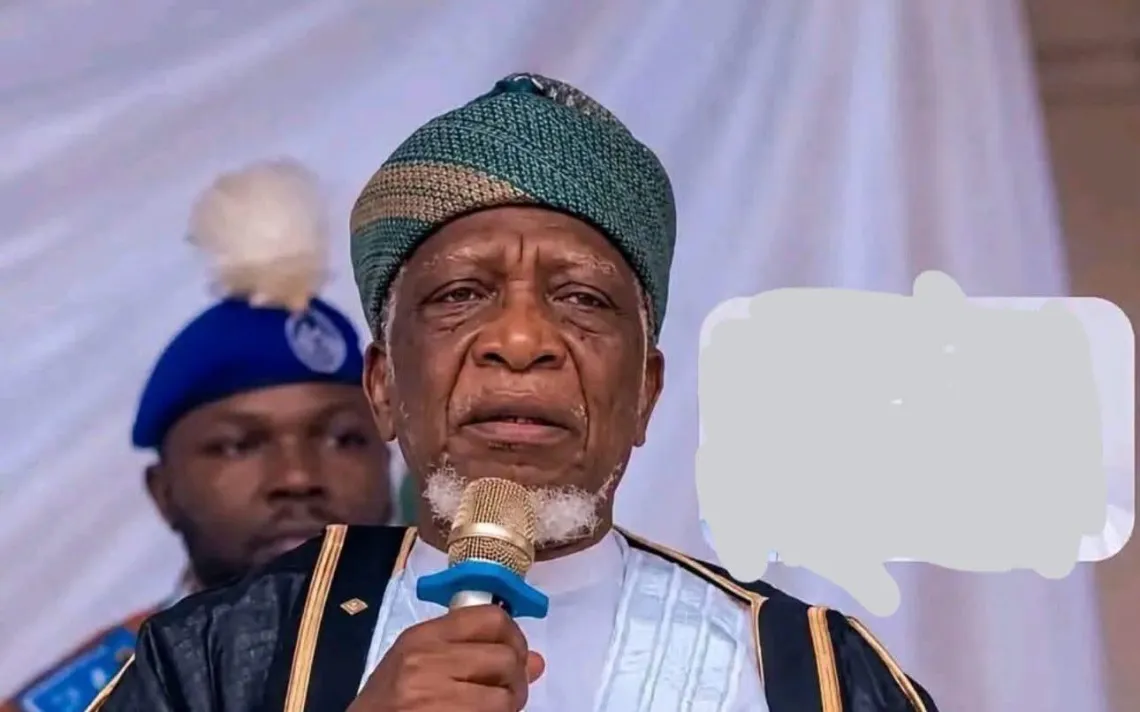
Prominent Islamic cleric, Sheikh Sani Jingir, has defended his recent comments advocating a Muslim-Muslim ticket in Nigeria, insisting that he has no regrets over the remarks despite widespread criticism from various quarters.
Jingir made the clarification during an interview with BBC Hausa on Tuesday, days after his comments at a mass wedding ceremony organised by the Kano State Government for about 1,500 couples sparked controversy across the country.
Speaking at the event, the cleric urged Muslims to vote in a manner that reflects what he described as their numerical strength in Nigeria. He argued that Muslims demonstrated their majority during the 2023 general election by voting massively in support of a Muslim-Muslim presidential ticket.
The comments drew criticism from religious groups, political observers and civil society organisations, many of whom accused the cleric of making statements capable of deepening religious divisions in a multi-faith country.
Responding to the backlash, Jingir said he remained convinced that his position was correct and would not retract his remarks.
“I have absolutely no regrets. I stand firmly by my words and will never apologise. I will continue to advocate for a Muslim-Muslim ticket,” he said.
The cleric stressed that his advocacy was rooted in his religious convictions and should not be interpreted as support for President Bola Tinubu or former President Muhammadu Buhari. According to him, his position predates the current administration and is based solely on what he believes to be an Islamic obligation.
“I am not campaigning for Bola Tinubu; I am campaigning for my religion,” Jingir said. “As I have stated before, my advocacy for a Muslim-Muslim leadership structure is not about Tinubu or Muhammadu Buhari. It is strictly for the sake of Allah.”
He explained that he views political participation as part of religious responsibility and regularly encourages members of his congregation to take active interest in governance. He urged Muslims to make political decisions based on their beliefs and values rather than financial inducements or material benefits offered by politicians.
Jingir also described the religious pulpit as a sacred platform for educating people. He said clerics have a duty to communicate what they believe to be the truth, even when such messages attract criticism.
“The preaching podium is a sacred space meant for education,” he said. “My responsibility is to explain to people what I believe is right.”
The cleric further argued that modern society is heavily influenced by propaganda and misinformation, which he said often prevents people from understanding their true situation. He maintained that religious leaders must therefore continue to guide their followers according to their convictions.
Addressing the criticism directed at him, Jingir said he had anticipated negative reactions and was not discouraged by public opinion. He stated that anyone who believes he is speaking the truth should not be intimidated by criticism.
“If you know you are speaking the truth, you must never allow public criticism to discourage you,” he said. “That is why I continue to emphasise this message. I had already prepared myself mentally for the backlash. Whatever people say about me, I am ready to face it.”
He also defended his right to advocate for a Muslim candidate, insisting that his comments did not infringe on the rights of others to support candidates of their choice.
“My words carry no harm,” he said. “I clearly stated that everyone is free to vote for whoever they want, while I will do what aligns with my own beliefs.”
Jingir further claimed that his position had received substantial support from Muslims across the country. According to him, many members of the Muslim community agreed with his call for a Muslim-Muslim leadership arrangement.
He cited the reaction of attendees at the Kano mass wedding ceremony as evidence of that support.
“I swear that I have received immense support from the Muslim community,” he said. “A vast majority of Muslims agree with this stance. During my address in Kano, I asked the crowd whether they stood with Islamic principles, and they responded overwhelmingly in the affirmative.”
The controversy surrounding Jingir’s remarks comes amid continuing national debate over religion and representation in Nigerian politics. The issue of a Muslim-Muslim presidential ticket became a major subject of discussion during the 2023 election, with supporters arguing that competence should be the primary consideration, while critics warned that such arrangements could undermine the country’s religious balance.
Jingir’s latest comments are expected to sustain the debate, particularly as political activities begin to intensify ahead of future elections. While his supporters have praised him for speaking openly about his beliefs, critics continue to argue that religiously charged political rhetoric could heighten tensions in a country characterised by both religious and ethnic diversity.
Despite the criticism, the cleric insisted that he would continue to speak publicly on the issue and encourage Muslims to participate in politics in accordance with their religious convictions.