The Kaduna State chapter of the National Democratic Congress NDC has declared support for a proposed presidential ticket involving Peter Obi and Rabiu Musa Kwankwaso ahead of the 2027 general elections, expressing confidence that the alliance could unseat the ruling All Progressives Congress at both the national and state levels.
The declaration was made on Wednesday during the party’s first expanded joint executive committee meeting held in Kaduna, the state capital.
The meeting brought together key stakeholders of the party, including governorship aspirants, National Assembly hopefuls, House of Assembly aspirants, zonal executives, local government chairmen and ward leaders from all 23 local government areas of Kaduna State.
Party officials described the gathering as part of ongoing efforts to strengthen the NDC’s grassroots structures and position the party ahead of future political contests.
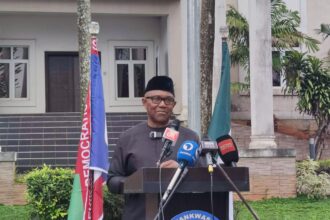
Speaking during the meeting, Kaduna State Chairman of the party, Mordecai Ibrahim, said the NDC was entering the political space with the objective of offering Nigerians what he called “genuine hope” after years of hardship under APC administrations.
According to him, the APC-led governments since 2015 had failed to improve the living conditions of Nigerians and had instead worsened economic hardship, insecurity and governance challenges across the country.
“We all know that the APC has dragged Nigeria and Nigerians 50 years backwards since it assumed power in 2015,” Ibrahim stated.
“Nigerians are indeed groaning today under President Bola Tinubu’s administration like the children of Israel groaned under Pharaoh’s slavery,” he added.
The party chairman argued that rising inflation, unemployment, insecurity and economic instability had deepened public frustration nationwide, creating an opportunity for alternative political movements to emerge.
He disclosed that despite not receiving widespread public attention in the past, the party had quietly built political structures across Kaduna State over the last several months.
According to him, the NDC had already established organisational structures in all 255 wards across the state and was preparing to formally unveil its state secretariat.
“We may not have been heard, but we have taken time to build our foundation to be solid and deeply rooted underground. Now it is time to announce our presence in the state,” Ibrahim said.
The chairman further revealed that the party had significantly increased its membership mobilisation targets ahead of the next election cycle.
He explained that the initial target of recruiting 500 members per ward had now been raised to 1,500 members per ward.
The new target, according to him, is aimed at helping the party register at least 1.5 million members across Kaduna State before October 31.
Ibrahim also announced new internal requirements for politicians seeking to join the NDC from other political parties.
According to him, defectors intending to contest elective offices on the platform of the party would first be required to formally resign from their previous political parties before becoming eligible.
The chairman expressed confidence that the party was positioning itself not only to take over power in Kaduna State but also to emerge victorious at the national level in the 2027 elections.
“With the calibre of aspirants we have gathered in the state, and our presidential candidate which is now obvious, our destination in NDC is Aso Rock Villa in 2027,” he stated.
The meeting also featured discussions on party unity, grassroots mobilisation and strategies for expanding political participation among youths and women.
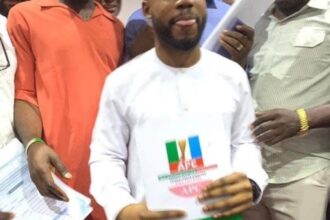
Speaking with journalists shortly after the meeting, one of the governorship aspirants of the party, Ibrahim Abdulkarim, explained that the gathering was organised to consolidate the party’s structures and prepare members for the coming elections.
He said the meeting also served as an opportunity for aspirants and party officials to interact and align their political goals with the broader interests of the party.
“What we are doing here today is to see ourselves, have a conversation with our aspirants and also put before us that the party is supreme and that we have to build the party for us to win the election, not only in Kaduna but everywhere,” Abdulkarim said.
The governorship aspirant, who described himself as an ICT expert, disclosed that the party already had more than 30,000 officials spread across Kaduna State.
He added that members had collectively agreed to prioritise the growth and stability of the party above individual ambitions.
Abdulkarim also spoke about ongoing political alignments ahead of the 2027 presidential election, claiming that the “Obidient Movement” had aligned with the NDC at the national level.
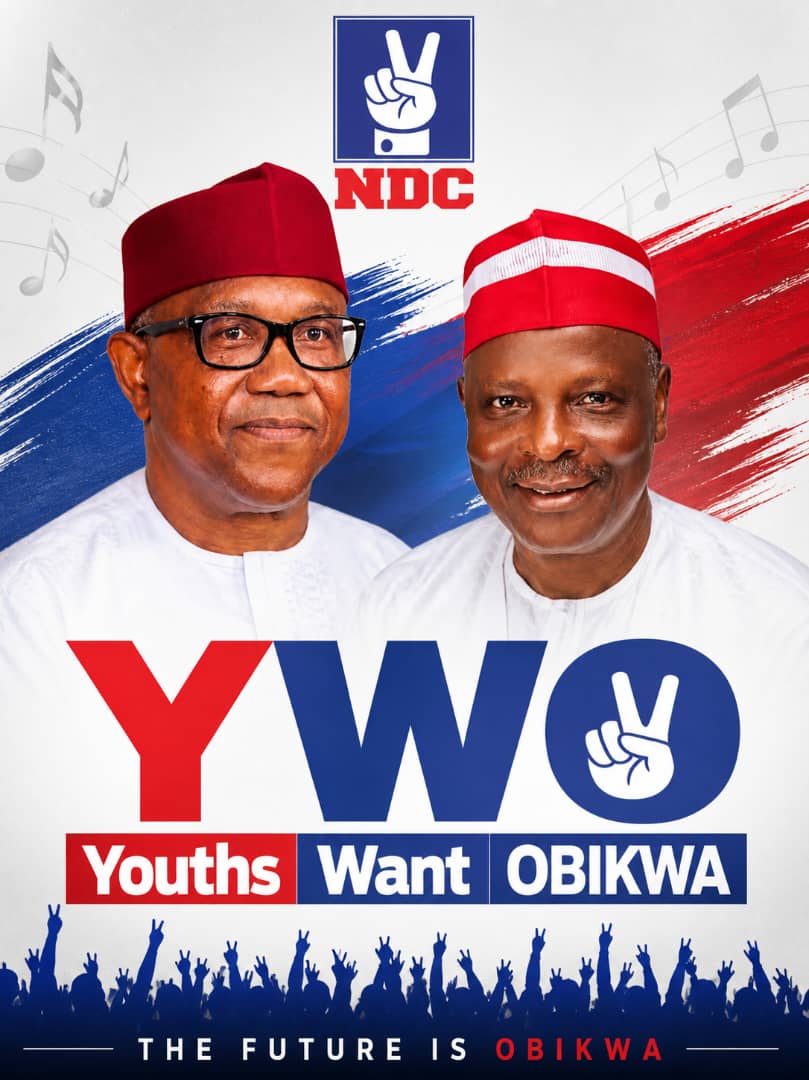
According to him, Peter Obi had already secured the party’s presidential ticket while discussions were ongoing regarding the selection of Kwankwaso as his running mate.
“Our principal, Mr Peter Obi, has already secured the ticket for NDC and hopefully his running mate will be Senator Rabiu Musa Kwankwaso,” he stated.
He argued that a political alliance involving Obi and Kwankwaso would appeal strongly to Nigerian youths and voters seeking a new direction for the country.
“At least if you have these two people, every young man and young woman in Nigeria will believe this is exactly the kind of combination we want — people who care about education and are trying to lift young people,” Abdulkarim added.
The aspirant also expressed concern over what he described as increasing religious division and political tension within Kaduna State.
He called on residents of the state to embrace unity and peaceful coexistence regardless of ethnic or religious differences.
“We want Kaduna to return to what it used to be. We believe the diversity God gave Kaduna is meant to give it an edge above other states,” he said.
Political observers say the endorsement of a possible Obi-Kwankwaso alliance reflects growing conversations among opposition groups seeking broader coalitions capable of challenging the APC in the next general election.
Both Obi and Kwankwaso emerged as influential political figures during the 2023 presidential election, attracting significant support among youths and voters dissatisfied with Nigeria’s traditional political establishment.
Analysts believe any future alliance between the two politicians could reshape opposition politics ahead of 2027, especially in Northern and Southern regions where both leaders maintain considerable political influence.
However, neither Obi nor Kwankwaso had officially confirmed any joint presidential arrangement with the NDC as of the time of filing this report.
The APC has also not responded to the comments made by NDC officials in Kaduna regarding the party’s plans for the 2027 elections.
Political stakeholders are expected to continue monitoring developments as opposition parties intensify consultations, coalition talks and grassroots mobilisation ahead of the next electoral cycle.