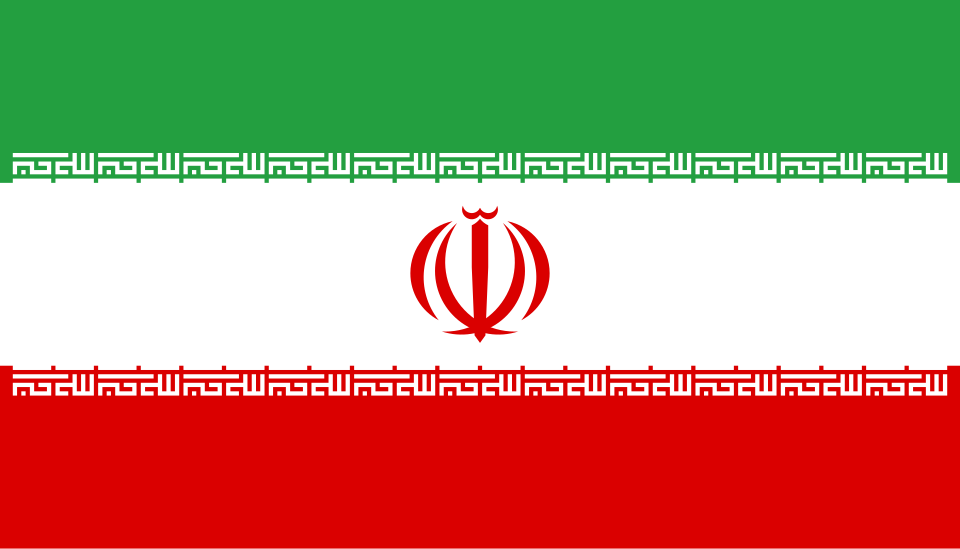
A major diplomatic dispute has erupted between Iran and the United States just days before the start of the 2026 FIFA World Cup, following allegations that Washington denied visas to several key members of Iran’s football delegation despite approving entry permits for the national team’s players.
The controversy has cast a shadow over preparations for the global football tournament and raised fresh concerns about politics interfering with international sporting events. Iranian officials have accused the United States of discriminatory treatment and violating its responsibilities as a World Cup host nation, while American authorities insist that all necessary visas for players and essential team personnel have been granted.
The dispute comes as Iran’s national team departs for Mexico to begin its final preparations ahead of the tournament, where all three of its group-stage matches are scheduled to take place in the United States.
For the past three weeks, the Iranian squad has been based in Antalya, Turkey, where players participated in intensive training sessions and a series of closed-door friendly matches. During that period, Iranian diplomats and football officials were engaged in negotiations aimed at securing visas for the delegation’s entry into the United States.
Those efforts appeared to yield results on June 5, when visas were approved for Iran’s players and some members of the technical staff. However, celebrations quickly turned to frustration after reports emerged that several senior officials and support personnel had been denied visas.
Among those reportedly excluded was the president of the Football Federation Islamic Republic of Iran (FFIRI), Mehdi Taj, one of the most senior figures in Iranian football administration.
Responding to the growing controversy, a spokesperson for the United States State Department maintained that Washington had fulfilled its obligations.
“The visas necessary for Iran to compete in the World Cup, including for athletes and necessary support staff, have been issued,” the official said in comments provided to several international media organizations on June 6.
The official, however, added a remark that immediately attracted attention and criticism from Tehran.
“We will not allow the Iranian team to abuse this system to sneak terrorists into the United States under false pretenses,” the statement said.
Iranian officials viewed the comment as inflammatory and offensive, arguing that it unfairly associated members of the national football delegation with security concerns.
Earlier on the same day, the Iranian Embassy in Turkey issued a strongly worded response to comments made by United States Ambassador to Turkey, Tom Barrack.
Barrack had praised American consular officials for processing the Iranian team’s visa applications and posted on social media that “sport transcends borders.”
The Iranian Embassy rejected that characterization, accusing the United States of engaging in deliberate discrimination.
According to the embassy, a significant number of officials attached to the Iranian delegation had not received visas despite being essential members of the team.
“These include managerial and executive staff, technical advisers, and others who are an integral part of any national football team,” the embassy stated.
Iranian diplomats argued that excluding such personnel would make it difficult for the team to operate effectively during the tournament and would place unnecessary pressure on players and coaches.
“You have now escalated the deliberate and discriminatory treatment against Iran’s national football team to its highest level,” the embassy declared.
“The United States government is effectively depriving Iran’s national team of its right to participate in the World Cup under normal conditions and without undue stress and pressure.”
Iran’s semi-official Tasnim News Agency later identified several officials who reportedly remained without visas.
They included Football Federation Executive Director Mehdi Kharati, Secretary-General Hedayat Mombini, and Media Director Mohsen Motamedkia.
According to the agency, the affected officials would accompany the team to Mexico while diplomatic efforts continue to secure permission for them to enter the United States before Iran’s matches begin.
The Football Federation of Iran has also vowed to pursue the matter through FIFA, arguing that the actions of the United States violate international sporting principles.
In a statement carried by Iranian state media, the federation accused Washington of making a political rather than administrative decision.
“The United States government, continuing its hostile actions against the national team, has made a non-sporting and completely political decision to refuse visas for key managerial and administrative members of the Iranian national football team,” the federation said.
The federation insisted that FIFA, as the governing body responsible for organizing the World Cup, must intervene to ensure equal treatment for all participating nations.
“This issue will definitely be pursued through FIFA,” the statement continued.
“FIFA has the responsibility to ensure that visas are issued for the managerial, executive, technical, and support staff whom the national team urgently requires.”
The dispute has also created uncertainty regarding the team’s logistical arrangements during the tournament.
Originally, Iran had planned to establish its World Cup base camp in Tucson, Arizona. However, concerns surrounding immigration procedures and visa approvals forced officials to abandon that plan.
Instead, the team decided to establish a temporary headquarters in Tijuana, Mexico, close to the United States border.
The Mexican city is expected to serve as Iran’s operational base throughout the group stage, allowing the squad to avoid extended stays on American territory.
Iran has been drawn into Group G and faces a demanding schedule. The team will open its World Cup campaign against New Zealand in Los Angeles on June 15. It will then face Belgium on June 21 before concluding the group stage against Egypt in Seattle on June 26.
However, conflicting reports have emerged regarding the conditions attached to the visas granted to Iranian players and staff.
Iran’s Ambassador to Mexico, Abolfazl Pasandideh, told journalists that the delegation had been informed that they must enter and leave the United States on the same day as each match.
“We can enter in the morning and we must leave the same day,” the envoy said.
If accurate, such restrictions would significantly complicate preparations and recovery periods between matches.
The ambassador’s comments appeared to contradict statements made by national team spokesman Amir Mahdi Alavi.
Speaking on Iranian state television, Alavi insisted that the team had received multiple-entry visas that would allow more flexible travel arrangements.
“The national team will arrive at the venue one day before the first match and two days before each subsequent match,” he said.
The conflicting accounts have fueled confusion about the exact terms governing Iran’s participation.
Under FIFA regulations, coaches are required to attend official pre-match press conferences at the venue of each game on the eve of competition. Players also participate in training sessions and media activities before matches.
Should restrictions limit the delegation’s ability to arrive in advance, questions could arise regarding compliance with FIFA’s tournament protocols.
As the World Cup approaches, the visa controversy has become one of the most politically sensitive issues surrounding the competition. It has reignited concerns about the challenges of hosting a global sporting event amid ongoing geopolitical tensions between participating nations.
For Iran, the issue is about more than football. Officials argue that equal access and fair treatment are fundamental principles of international sport. For the United States, the dispute reflects the complex balance between national security considerations and its obligations as a host nation.
With kickoff only days away, FIFA now faces mounting pressure to intervene and ensure that all qualified teams are able to compete under conditions that uphold the spirit of fairness, equality, and international cooperation that the World Cup is intended to represent.