The Iranian government has accused the United States of failing to uphold its obligations as one of the host nations of the 2026 FIFA World Cup after several officials associated with Iran’s national football team were reportedly denied entry visas ahead of the global tournament.
The accusation, made through a statement posted on social media by the Iranian Embassy in South Africa, has reignited concerns about the intersection of politics and sports as preparations intensify for the 2026 FIFA World Cup, which will be jointly hosted by the United States, Mexico, and Canada.
Iranian officials expressed frustration over what they described as the inability of the United States to guarantee smooth access for accredited members of participating teams, insisting that all countries qualified for the competition should enjoy equal treatment regardless of political differences.
In its statement, the embassy sharply criticized the United States and urged FIFA to intervene and ensure that every member of participating delegations receives the necessary travel documentation to attend the tournament.
“The incompetent FIFA World Cup host, USA, is failing to fulfill its responsibilities properly,” the embassy stated.
The Iranian mission further emphasized that teams attending the World Cup are participating under FIFA’s authority and therefore should not be subjected to restrictions that could undermine the integrity of the competition.
“We are guests of FIFA, and it is FIFA’s responsibility to ensure that visas for all members are issued,” the statement added.
The visa controversy has emerged as the latest challenge surrounding Iran’s participation in the 2026 World Cup, a tournament already overshadowed by growing geopolitical tensions involving Iran, the United States, and Israel.
The dispute comes only weeks after reports emerged that Mexico had agreed to host Iran’s national team during the competition after concerns arose regarding the squad’s ability to remain on American soil between matches.
According to earlier reports, U.S. authorities were reluctant to permit the Iranian delegation to spend extended periods in the country because of heightened diplomatic tensions between Washington and Tehran.
As a result, alternative arrangements were reportedly negotiated involving Mexico, one of the tournament’s co-hosts.
Mexican President Claudia Sheinbaum publicly confirmed that her government had agreed to accommodate the Iranian team between matches.
Speaking during a press conference, Sheinbaum disclosed that Mexican authorities were approached regarding the possibility of hosting Iran’s players and officials overnight while they participated in matches scheduled in the United States.
“The United States doesn’t want the Iranian team to spend the night,” Sheinbaum reportedly said.
“So they asked us, ‘Can we stay the night in Mexico?’ We said sure, no problem.”
The arrangement was widely interpreted as an attempt to avoid potential travel restrictions and logistical complications that could arise from the strained political relationship between the two countries.
Following discussions involving FIFA and tournament organizers, Iran’s Football Federation announced that the governing body had approved plans for the team to operate from the Mexican border city of Tijuana during the competition.
Under the arrangement, Tijuana is expected to serve as the team’s operational headquarters and recovery base between matches played in the United States.
The city’s proximity to the U.S. border is expected to facilitate easier travel for players and officials while minimizing diplomatic and administrative difficulties.
Iran is scheduled to compete in Group G of the tournament and will begin its World Cup campaign against New Zealand on June 15, 2026.
The team is also expected to play additional group-stage matches in major American cities, including Los Angeles and Seattle.
Before the revised plans were adopted, FIFA had originally assigned Tucson, Arizona, as Iran’s official World Cup base camp.
That arrangement would have allowed the team to remain within the United States throughout the group stage.
However, worsening relations between Tehran and Washington, combined with recent military confrontations involving Iran and Israel, created uncertainty about whether such an arrangement would remain feasible.
The broader geopolitical climate has increasingly become a source of concern for tournament organizers, sports administrators, and diplomatic observers.
Many analysts have warned that tensions between participating nations could create unprecedented challenges during the World Cup, particularly regarding visas, travel permissions, security arrangements, and diplomatic protocols.
For Iran, these concerns have intensified following a series of confrontations involving the country and Western powers.
The situation has also raised questions about FIFA’s ability to ensure that all qualified teams are able to participate under equal conditions regardless of international political disputes.
The governing body has long maintained that football should remain separate from politics, but the latest developments highlight the difficulties of preserving that principle in an increasingly polarized global environment.
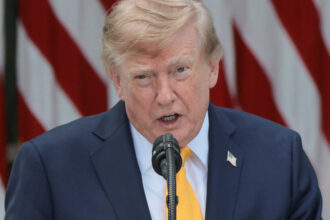
Earlier this year, concerns surrounding Iran’s participation escalated further after comments attributed to U.S. President Donald Trump generated international attention.
Writing on his Truth Social platform in March, Trump suggested that Iran’s national team should consider avoiding the World Cup because of security concerns.
“The Iran National Soccer Team is welcome to The World Cup,” Trump wrote.
“But I really don’t believe it is appropriate that they be there, for their own life and safety.”
The remarks sparked debate among football fans and political observers, with some interpreting them as a warning about possible security risks while others viewed them as an indication of the deepening tensions between Washington and Tehran.
Iranian officials did not publicly endorse Trump’s assessment, but concerns about player safety, travel restrictions, and diplomatic obstacles have remained prominent ever since.
The latest visa dispute is therefore likely to intensify scrutiny of FIFA’s preparations for the 2026 World Cup.
Observers argue that one of the tournament’s greatest tests may not involve events on the pitch but rather the ability of organizers to guarantee equal access, fair treatment, and smooth participation for all competing nations.
With the countdown to the World Cup continuing, pressure is expected to grow on FIFA, the United States, Mexico, and Canada to demonstrate that political disagreements will not interfere with the world’s most prestigious football tournament.
For Iran, the denial of visas to some team officials has become more than an administrative issue. It is now being presented as a test of whether host nations can fulfill their obligations to all participating countries and whether FIFA can uphold its commitment to ensuring that football remains a truly global and inclusive sport.