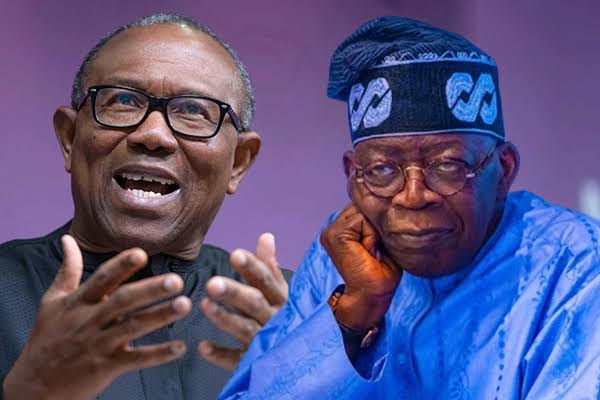
Presidential candidate of the Nigeria Democratic Congress (NDC), Peter Obi, has declared that he is prepared to risk his life to protect the votes of Nigerians during the 2027 presidential election, warning that no voter should be intimidated at polling units.
Obi made the declaration on Thursday at a town hall meeting in Port Harcourt, Rivers State, where he called on Nigerians to remain vigilant and collectively guard the electoral process against the irregularities he said characterised the 2023 general election.
Speaking at the event, tagged “Obi Talks Nigeria,” the former Anambra State governor said the 2027 election would require greater coordination among voters and political stakeholders to prevent attempts to manipulate the outcome of the polls.
According to Obi, voters should not allow themselves to be intimidated by individuals or groups at polling units, arguing that the numerical strength of voters should make such intimidation difficult.
“Nobody will intimidate us again at the polling booth,” Obi said.
He explained that polling units typically have only a handful of election officials serving considerably larger numbers of voters.
“If you get to any polling booth today, the highest number of officials you see is five. The average number of voters is 40 to 50. There is no way five people will intimidate 50 people,” he said.
Obi’s comments appeared to be a call for voters to remain organised, assertive and attentive throughout the electoral process, particularly during accreditation, voting, counting and the transmission of results.
The NDC presidential candidate also used strong language to underscore his determination to defend the electoral mandate of voters.
“This time all of us will rescue our country. Somebody said, ‘We are ready to die.’ Let me tell you, I’m ready to die too,” he said.
He, however, stressed that the objective should be to establish effective coordination among citizens so that intimidation and electoral malpractice could be resisted through collective vigilance.
“We will make sure we have coordination to ensure that such intimidation does not arise,” he added.
Obi also raised concerns about the electronic transmission of election results, particularly the Independent National Electoral Commission’s Result Viewing Portal (IReV), which became a major subject of controversy during the 2023 presidential election.
He alleged that attempts could again be made to exploit technological challenges during the 2027 election, but expressed confidence that preparations could be made to minimise the impact of any disruptions.
“Yes, they will try to manipulate the IReV. But let me tell you, it will not be easy this time,” Obi said.
“There will be so many IReVs this time. If there is a network glitch, we will give them another one that has no glitch,” he added.
The former governor argued that technical failures in electoral systems should not be allowed to undermine citizens’ ability to exercise their democratic rights.
“By allowing them to continue, that glitch will glitch our lives. That is what we are suffering today,” he said.
His remarks come as political parties and their candidates begin to intensify preparations for the 2027 general elections, with electoral integrity, voter participation, technology and the credibility of results expected to remain central issues in the political debate.
Obi urged Nigerians to recognise the importance of their votes and ensure that the electoral process reflects the wishes of the electorate.
Also speaking at the town hall meeting, NDC vice-presidential candidate Rabiu Musa Kwankwaso appealed to Nigerians to learn from previous elections and make what he described as the right choice in 2027.
Kwankwaso warned that the consequences of choosing ineffective leadership could be costly for both citizens and the country.
“I believe that Nigerians must not make mistakes again. This is the time to get it right,” he said.
He argued that political power and the number of elected officials controlled by a political party do not necessarily guarantee victory in a presidential election.
Kwankwaso cited the 2015 presidential election, when an incumbent president was defeated, as an example of how electoral outcomes can defy expectations based on political structures and the number of state governors controlled by a party.
“Jonathan was the president, the sitting president lost the election. I’ve given you an example, especially those who think because they have over 30 governors, they cannot lose the election. That was a very big mistake,” he said.
His comments were directed at political actors who may assume that control of a large number of states automatically translates into victory at the federal level.
The NDC vice-presidential candidate maintained that voters ultimately retain the power to determine the direction of the country through their ballots.
Both Obi and Kwankwaso therefore urged Nigerians to approach the 2027 election with greater awareness and responsibility, emphasising the importance of protecting the integrity of the voting process and making informed choices.
Obi’s remarks about being prepared to “die” for the protection of votes have already added a strong emotional dimension to the emerging 2027 political discourse. However, his broader message centred on voter mobilisation, coordination and resistance to intimidation rather than violence.
As preparations for the election gather momentum, the credibility of the electoral process is likely to remain one of the most consequential issues before political parties, election administrators, civil society organisations and the Nigerian electorate.
For Obi and the NDC, the 2027 contest is being framed as an opportunity for Nigerians to take greater ownership of the electoral process and ensure that their votes are properly protected and counted.
The former Anambra governor’s appeal ultimately places responsibility not only on electoral authorities and political parties but also on citizens, urging voters to remain vigilant, organised and determined to participate actively in shaping the country’s political future.