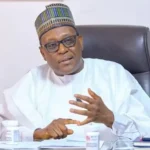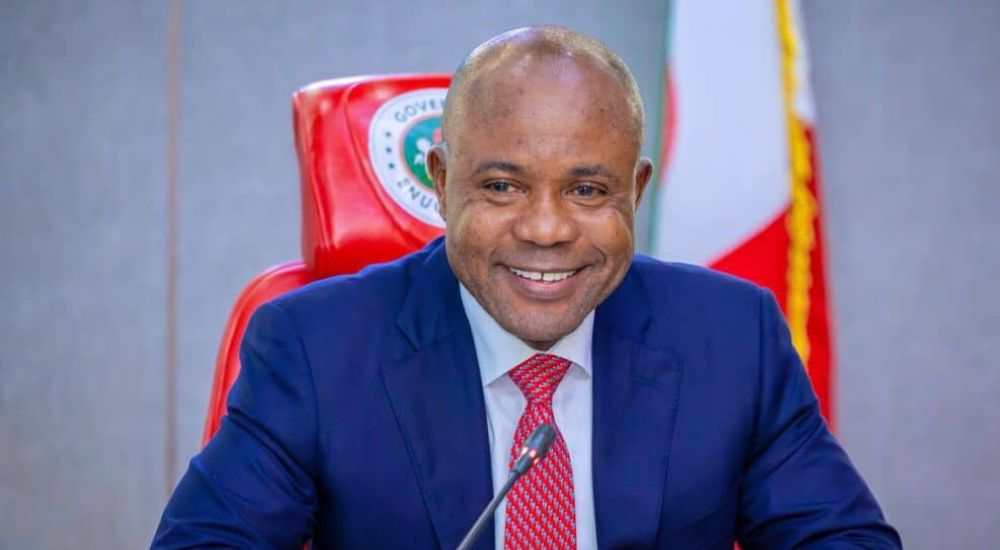
Mbah described the possibility of reinstating the subsidy as “undebatable and inconceivable”, arguing that reversing the policy could trigger further currency depreciation, increase poverty and undermine investor confidence.
The governor spoke on Wednesday during the “Meet the Candidates” town hall meeting organised by Afia TV in Enugu, where he also defended the Tinubu administration’s economic reforms and claimed that his government had delivered good governance across various sectors in Enugu State.
Tinubu announced the removal of the petrol subsidy during his inauguration on May 29, 2023, declaring that “fuel subsidy is gone”. The decision led to an immediate increase in petrol prices, with transportation costs and the prices of goods and services also rising.
In June 2023, the Federal Government, through the Central Bank of Nigeria, introduced foreign exchange reforms that allowed the naira to trade more freely in response to market forces, effectively ending the previous system of multiple exchange rates.
The currency subsequently depreciated sharply against the US dollar, while inflation and rising living costs placed additional pressure on households and businesses.
Although the government has defended the reforms as necessary to address economic distortions, improve public finances and attract investment, critics have continued to call for measures to ease the hardship experienced by Nigerians.
Speaking at the town hall, Mbah argued that reinstating the subsidy would impose greater economic costs on the country than those associated with its removal.
“If you reintroduce fuel subsidy today, we will lose ten times whatever we are currently trying to gain in terms of the removal of subsidy. The poverty rate that you are going to experience will be very high because the naira would be automatically devalued,” he said.
The governor maintained that Nigeria should move beyond debates about restoring the subsidy and concentrate instead on ensuring that the benefits of the reform translate into improved living conditions, employment opportunities and wealth creation.
“We cannot go back to subsidy. And I do not think it is in the interest of the country for us to even debate that,” he stated.
He further warned that discussions about reversing the policy could create uncertainty among prospective investors and discourage investment in critical sectors of the economy.
“Again, we should not even debate it because we do not want to send a signal to prospective investors that we are contemplating it. That would take us back. It is going to create panic in the system. It is going to get investors to pull back,” Mbah said.
According to him, the priority should be to encourage private capital to flow into the economy and ensure that the anticipated benefits of the reforms reach ordinary Nigerians.
He cited developments in the Nigerian stock market and what he described as improving macroeconomic indicators as evidence of growing investor interest in the country.
“You can see quite a lot of funds coming into our country, not just portfolio investments, but also direct investments. It is also going to strengthen because the macro indicators are right,” he said.
However, the governor’s optimism comes amid persistent concerns about the effects of higher energy and transportation costs on household budgets, small businesses and industrial production.
Mbah also defended the removal of the subsidy on the grounds that the previous arrangement disproportionately benefited wealthy Nigerians rather than the most vulnerable citizens.
He argued that government resources could be deployed more effectively through targeted interventions designed to support low-income households and encourage economic productivity.
“By the way, I do not think the subsidy we practised before the President removed it was even the right one for the country because even the people we were looking at benefiting from it were only insignificantly benefiting from it. It was largely beneficial to our wealthy folks,” he said.
The governor pointed to cash transfer programmes and a proposed initiative targeting 1,000 people in each ward across the country for seed capital as examples of efforts to direct support towards vulnerable Nigerians.
“But now, you can almost notice that the government is doing that in targeting the poor, using proceeds from subsidy removal. The government is aggressive on cash transfers. There is also the programme where the government is targeting 1,000 persons per ward across the entire country to be able to provide seed capital for them to become productive,” he added.
Mbah’s comments reinforce his backing for Tinubu’s economic reform agenda, even as the debate over the subsidy removal continues to shape public discussions about inflation, poverty, investment and the government’s responsibility to cushion the effects of rising living costs.
The central challenge, however, remains ensuring that the expected long-term gains from the reforms translate into tangible improvements in the purchasing power and welfare of ordinary Nigerians.