Zamfara State Governor, Dauda Lawal, has disclosed that he refused to pay a ₦300 million ransom demanded by kidnappers who abducted his brothers in 2019, insisting that yielding to the demands of criminal gangs only fuels further kidnappings and emboldens bandits across the country.
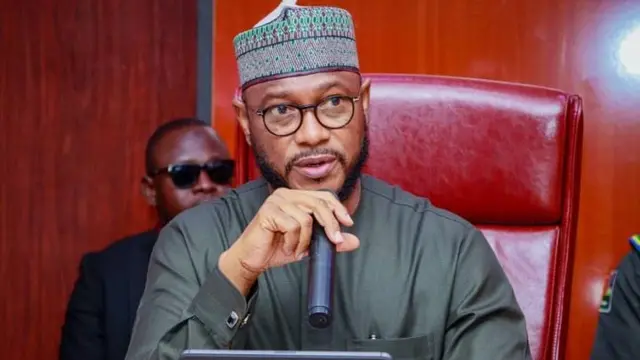
The governor made the revelation on Thursday while speaking at the ARISE News and THISDAY Townhall Conference in Abuja, where he also renewed his call for the establishment of state police as part of broader reforms aimed at addressing Nigeria’s worsening security challenges.
Sharing the personal experience, Lawal said the kidnappers demanded ₦300 million for the release of his brothers after abducting them in 2019. However, despite the emotional burden of the situation, he resolved not to negotiate with the criminals or pay any ransom.
“My own brothers were kidnapped in 2019, and these criminals were demanding at the time about ₦300 million. And I said, look, I’m not going to pay a dime. If you like, go and kill them,” the governor said.
According to him, his brothers remained in captivity for approximately three months before eventually regaining their freedom without any ransom being paid.
Lawal said the outcome strengthened his conviction that refusing to negotiate with kidnappers was the right approach, arguing that ransom payments only sustain criminal enterprises and encourage more abductions.
He maintained that once criminal groups realise that kidnapping no longer guarantees financial rewards, they would become discouraged from engaging in the crime.
“By the time we continue to pay ransom to these people, we are encouraging them to be kidnapping people more and more,” he said.
The governor stressed that his position had remained unchanged over the years and pledged never to negotiate with or financially reward criminal elements, irrespective of the circumstances.
“I will not negotiate, and I will not pay ransom to any criminal, no matter what happens,” Lawal declared.
His comments come at a time when kidnapping for ransom has become one of Nigeria’s most pressing security challenges, particularly across the North-West and North-Central regions, where armed bandit groups have repeatedly targeted communities, schools, highways and rural settlements.
Lawal used the occasion to argue strongly in favour of establishing state police, describing the current security architecture as inadequate for addressing the unique security realities facing individual states.
According to him, governors are frequently described as the chief security officers of their states but lack the constitutional authority to direct the operations of security agencies under their jurisdiction.
“In as much as I was called or I’m being called the chief security officer of the state, however, I don’t have the command and control structure to determine what happens or give instructions to some of these security officers,” he said.
The governor questioned the logic of holding state chief executives accountable for insecurity while denying them operational authority over the agencies responsible for maintaining law and order.
“Why is it difficult for people to understand that my primary responsibility is the protection of lives and property, and I don’t have that control? How do you hold me accountable?” he asked.
Lawal argued that the creation of state police would provide clearer lines of responsibility, enabling citizens to hold governors directly accountable for security outcomes while empowering state governments to make quicker operational decisions tailored to local realities.
He said decentralising policing would also improve funding, training and welfare for security personnel, areas he believes have suffered under the current centralised policing system.
According to the governor, the Nigeria Police Force continues to face significant operational challenges arising from inadequate funding, poor welfare packages, insufficient manpower and limited access to modern training and equipment.
He maintained that these deficiencies have affected the morale and effectiveness of officers in responding to increasingly sophisticated security threats.
To demonstrate his administration’s commitment to improving security despite constitutional limitations, Lawal disclosed that the Zamfara State Government has invested substantial resources in supporting security agencies operating within the state.
He revealed that his administration currently finances more than 30 per cent of security operations in Zamfara, providing logistics, mobility and operational support to federal security agencies combating banditry and violent crime.
According to him, the state has procured more than 500 operational vehicles for security agencies over the past three years to improve their mobility across difficult terrain and enable faster responses to security emergencies.
He also disclosed that his government recently supplied 35 Armoured Personnel Carriers (APCs) and Mine-Resistant Ambush Protected (MRAP) vehicles to strengthen ongoing military and security operations against armed groups operating in the state.
Beyond conventional equipment, the governor said Zamfara has embraced modern technology as part of its counter-insurgency strategy.
He explained that the state government has invested in both surveillance drones and attack drones to provide security agencies with enhanced intelligence gathering capabilities and operational support during missions.
“We bought drones, both surveillance drones and attack drones, to be able to aid the security forces in terms of fighting these criminals in their respective areas,” he said.
Lawal argued that modern technology has become indispensable in confronting today’s security challenges, particularly in vast rural areas where armed groups exploit difficult terrain to evade conventional security operations.
He maintained that strengthening security institutions through better funding, advanced technology, improved intelligence gathering, enhanced welfare and specialised training offers a far more sustainable solution than negotiating with criminal groups or paying ransoms.
The governor reiterated that governments at all levels must remain firm against rewarding criminality, warning that paying ransom creates financial incentives that encourage further kidnappings and expand the operational capacity of armed gangs.
His remarks add fresh momentum to the ongoing national conversation on security sector reforms, especially the push for state police, which has gained increasing support from governors, security experts and policy advocates.
Supporters of state policing argue that decentralising law enforcement would allow states to respond more effectively to local threats, improve intelligence gathering, strengthen community policing and enhance accountability in the fight against insecurity.
However, critics have continued to express concerns over possible political abuse of state police by governors, calling for constitutional safeguards and independent oversight mechanisms before any decentralisation of policing powers is implemented.
As Nigeria continues to grapple with persistent banditry, kidnapping and other violent crimes, Lawal’s remarks have reignited debate over the country’s security architecture and the urgent need for reforms that can deliver more effective protection for lives and property across the federation.