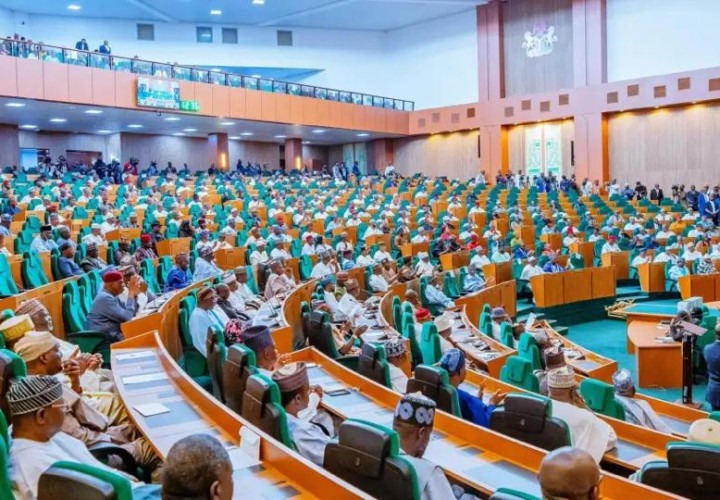
The House of Representatives has taken a historic step toward restructuring Nigeria’s security framework by passing the State Police Bill, paving the way for the decentralisation of the country’s policing system.
The landmark decision was reached during Thursday’s plenary session, presided over by Speaker Tajudeen Abbas, where an overwhelming majority of lawmakers voted in support of the proposal. Out of the 290 members present in the chamber, 289 voted in favour of the bill, while only one member opposed it. The Speaker did not participate in the voting process.
The passage of the bill comes against the backdrop of growing insecurity across the country, including persistent cases of terrorism, banditry, kidnapping, and violent attacks that have claimed thousands of lives and displaced many communities. The worsening security situation has intensified calls from various stakeholders for the establishment of state-controlled police forces as a means of improving security responses at the local level.
Before the commencement of voting, the plenary witnessed a brief but dramatic interruption as some lawmakers raised concerns about the procedure leading to the consideration of the bill.
A member representing a constituency in Kaduna State, Bashir Zubairu, drew the attention of the House to what he described as inadequate time for lawmakers to study the report prepared by the House Committee on Constitution Review.
Rising on a point of order, Zubairu argued that the document containing details of the proposed state police framework had only been distributed to members earlier in the day.
“Mr Speaker, this document was only made available to lawmakers in the chamber today, and many of us have not had sufficient time to go through its contents. We cannot adequately consider such an important matter without studying it properly,” he said.
However, the Speaker ruled him out of order, allowing proceedings to continue.
As deliberations progressed, Speaker Abbas carefully guided lawmakers through the various clauses of the proposed legislation. During the process, several members attempted to raise additional points of order, with repeated shouts echoing across the chamber. Nevertheless, the Speaker declined to entertain further interruptions and directed that the business of the day proceed.
Another challenge emerged shortly before voting commenced when Abbas informed lawmakers that the electronic voting system was not functioning properly.
To avoid delays, he announced that the exercise would be conducted manually, using attendance records and physical voting procedures to determine the outcome.
The announcement paved the way for what became one of the most decisive votes in recent legislative history.
When the voting concluded, the result showed near-unanimous support for the creation of state police. Of the 290 lawmakers present, 289 voted in favour of the bill, reflecting broad bipartisan support for the initiative.
The approval of the bill marks a significant milestone in the ongoing debate over Nigeria’s security architecture. Advocates of state policing have long argued that decentralising law enforcement would enable quicker responses to local security challenges, improve intelligence gathering, and strengthen accountability.
Supporters also contend that governors and local authorities are often better positioned to understand and address security threats within their states than a centrally controlled police structure.
However, critics have expressed concerns that state police could be abused by political leaders for partisan purposes or used to intimidate political opponents. These concerns have remained central to discussions surrounding the proposal over the years.
Despite the reservations, the overwhelming support recorded in the House suggests that lawmakers believe the benefits of state policing outweigh the potential risks, particularly in light of Nigeria’s current security challenges.
The passage of the State Police Bill by the House of Representatives is widely regarded as a major step toward constitutional and security reforms. The proposal is expected to generate further debate as it progresses through the remaining legislative and constitutional processes required before becoming law.
For many Nigerians, the vote represents a significant attempt to address the country’s long-standing security concerns through structural reform and a more decentralised approach to policing.