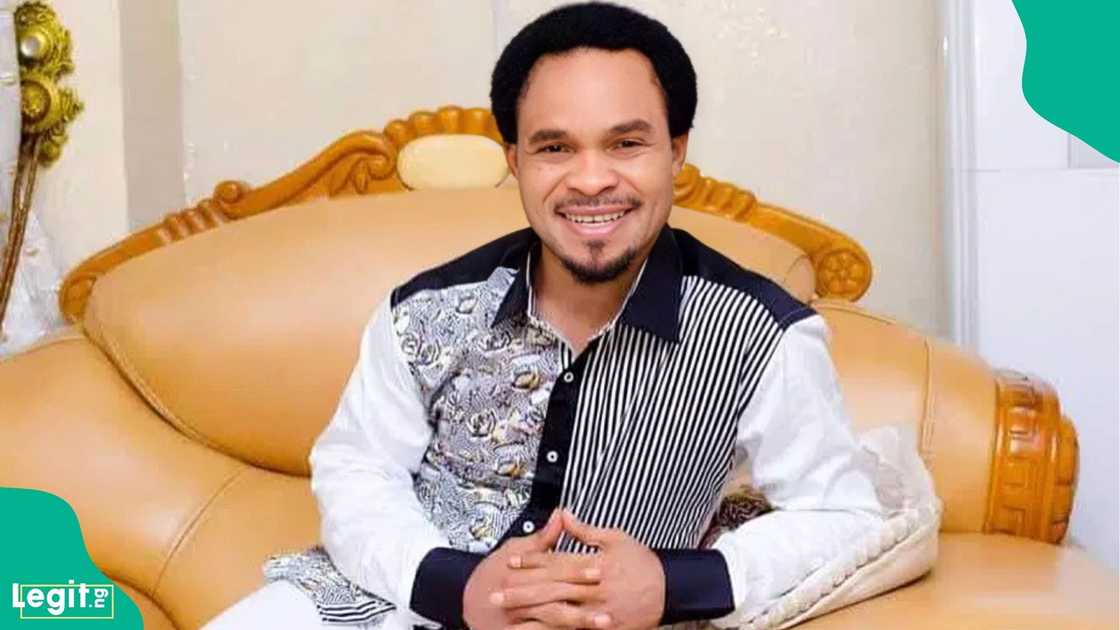
The controversial cleric made the disclosure during an appearance on the Honest Bunch Podcast, in an episode uploaded to YouTube on Monday.
Odumeje explained that his ministry was primarily focused on demonstrating spiritual power rather than teaching about tithes and financial contributions. He also criticised churches that, in his view, placed excessive emphasis on collecting money from worshippers without providing practical evidence of spiritual transformation.
According to him, some religious leaders devote considerable attention to preaching about tithing, leaving members under pressure to contribute financially to their churches.
“Those people that collect tithes and teach tithes every day when you come to church, they will be interested in making sure that they clear your pockets. And there is no practical evidence and miracles that you will see. The only thing is stories. That is not the kind of church I run,” he said.
The cleric maintained that his approach to ministry differed from that of churches where financial contributions featured prominently in sermons and religious activities.
Explaining what he described as the central purpose of his calling, Odumeje said his focus was on demonstrating spiritual power rather than teaching about giving and tithing.
“My mission on earth is demonstration of power. All the teaching of tithe and teaching of giving, I am not in that area,” he stated.
However, Odumeje clarified that his position should not be interpreted as a rejection of tithing as a religious practice. He said he did not consider the payment of tithes wrong, stressing that the decision should be made voluntarily by individual believers in accordance with their personal convictions and relationship with God.
“I don’t collect tithes. Nobody pays me tithes. I am not saying that tithe is bad. It’s a decision between you and God if you want to pay tithe. Tithe is real. But it is something that you must decide. Not something that somebody will be brainwashing you, forcing you,” he said.
He further condemned the practice of making worshippers believe that failure to pay tithes would prevent them from gaining access to heaven.
According to the cleric, religious leaders should not use fear or spiritual intimidation to compel members to make financial contributions, particularly by suggesting that their salvation depends on such payments.
“Give it to you that if you don’t do it, you will not go to heaven. That is not from God. So that is a decision between you and God,” he added.
Tithing remains a subject of debate among Christian denominations, with differing interpretations of biblical teachings on giving, church finances and the responsibilities of believers.
While some churches teach tithing as an important expression of faith and obedience to God, others emphasise voluntary giving and individual interpretation of scripture.
Odumeje’s comments have added to the continuing public discussion about financial practices in religious institutions, including the extent to which churches should emphasise contributions and how such teachings should be communicated to members.
The cleric, widely known for his dramatic preaching style and claims of spiritual power, has frequently attracted public attention through his statements, performances and religious activities.
His latest remarks present his ministry as one that prioritises spiritual demonstrations while leaving decisions about tithing to individual worshippers and their personal relationship with God.