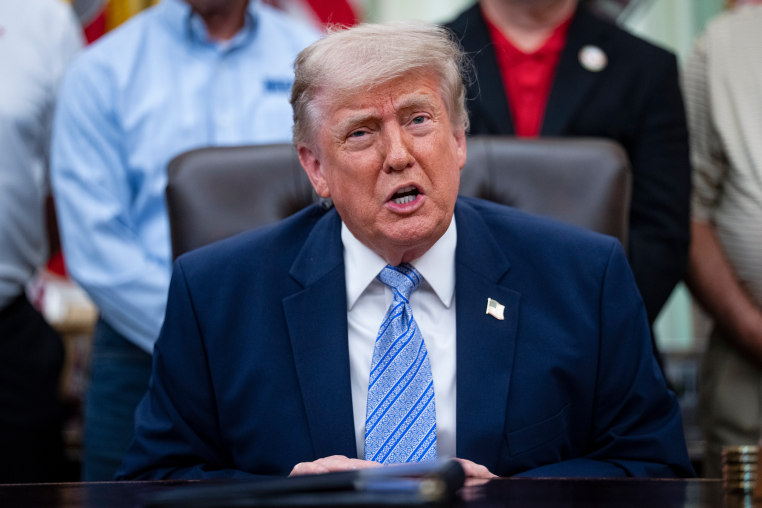
The United States Senate has approved a sweeping $70 billion immigration enforcement package, handing President Donald Trump a significant legislative victory as he advances one of the cornerstone policies of his administration. The funding measure, which is aimed at strengthening border security and expanding immigration enforcement operations, passed after a lengthy and contentious debate that exposed divisions within the Republican Party over several controversial aspects of Trump’s broader agenda.
The legislation provides funding for Immigration and Customs Enforcement (ICE) and the US Border Patrol for the remainder of Trump’s current term in office. Supporters of the bill argue that the funding is essential to restoring operational capacity to agencies responsible for enforcing immigration laws, securing the nation’s borders, and addressing illegal migration.
The Senate’s approval now sends the measure to the House of Representatives, where Republican leaders are expected to move quickly to secure passage and deliver the bill to President Trump for his signature.
The vote marks the culmination of months of political wrangling over immigration policy and federal funding priorities. The issue gained urgency earlier this year following a partial shutdown of the Department of Homeland Security (DHS), which resulted from a standoff between Republicans and Democrats over funding for immigration enforcement agencies.
Democratic lawmakers had refused to support additional funding for ICE and Border Patrol unless significant restrictions were placed on enforcement tactics. Among their demands were limitations on immigration raids in sensitive locations such as schools, churches, and hospitals, as well as prohibitions on federal officers wearing face coverings during operations.
Republicans rejected those conditions, arguing that law enforcement agencies needed flexibility to perform their duties effectively. Rather than negotiate further concessions, GOP lawmakers chose to pursue the funding package through the budget reconciliation process, a legislative mechanism that allows certain fiscal measures to pass the Senate with a simple majority vote rather than the usual 60-vote threshold required to overcome a filibuster.
The strategy enabled Republicans to bypass Democratic opposition, although maintaining unity within their own ranks proved challenging.
Before final passage, senators participated in a marathon amendment session commonly known in Washington as a “vote-a-rama.” During this process, lawmakers introduced and voted on numerous amendments designed to highlight political disagreements and force members to take positions on controversial issues.
The amendment debate brought renewed attention to several Trump administration proposals that have generated unease even among some Republican lawmakers.
One of the most contentious issues involved a proposed $1.8 billion “anti-weaponisation” compensation fund. The initiative was intended to provide financial compensation to individuals who claimed they had been unfairly targeted by federal law enforcement agencies or government investigations.
Critics argued that the fund could potentially benefit individuals convicted in connection with the January 6, 2021, attack on the US Capitol. The proposal sparked backlash from both Democrats and some Republicans, who warned that taxpayers should not be required to finance payments that could be viewed as rewarding criminal conduct.
The controversy became a significant obstacle to the immigration bill’s progress in recent weeks. Several Republican senators openly questioned the wisdom of including such a provision and warned that it would be difficult to defend politically.
North Carolina Senator Thom Tillis was among those who publicly expressed concern.
“When you’re explaining, you’re losing,” Tillis told reporters. “There’s no way to explain the $1.776 billion fund. The only way to explain it is to explain that you got rid of it.”
Responding to the growing criticism, Acting Attorney General Todd Blanche informed lawmakers that the administration would not proceed with the compensation fund. However, uncertainty persisted after President Trump continued to praise the proposal publicly, describing it as a positive initiative and suggesting that its future remained under consideration.
That ambiguity prompted several Republican lawmakers to seek amendments that would formally prohibit the fund from being revived later.
Another controversial issue that surfaced during the Senate debate involved a previously proposed allocation of $1 billion for enhanced security surrounding Trump’s planned White House ballroom project. Although the funding had already been removed from the final immigration package, opponents continued to cite it as an example of questionable spending priorities.
The amendment process also revealed broader concerns among Republicans about defending some of Trump’s more controversial initiatives ahead of the upcoming midterm elections. Many lawmakers are increasingly aware that voters remain focused on economic challenges, including inflation, housing affordability, and the rising cost of living.
Democrats used the debate to argue that Congress should prioritize those concerns rather than devote tens of billions of dollars to immigration enforcement.
Several Democratic senators proposed amendments that would have redirected portions of the funding toward housing assistance programs, social services, and measures designed to reduce living costs for American families.
They accused Republicans of placing Trump’s deportation agenda above pressing economic issues affecting millions of Americans.
Republicans countered that the immigration funding was necessary to restore operational capabilities after the earlier DHS funding dispute left ICE and Border Patrol facing significant resource constraints.
The earlier stopgap funding legislation approved by Congress had kept much of the Department of Homeland Security functioning through September 30. Agencies such as the Federal Emergency Management Agency (FEMA), the Coast Guard, the Transportation Security Administration (TSA), and the Secret Service continued to receive funding.
However, ICE and Border Patrol were excluded from that temporary arrangement, setting the stage for the separate legislative battle that concluded with Friday’s Senate vote.
The debate also touched on foreign policy issues. In a move viewed by some observers as a subtle rebuke of certain administration positions, several Republican senators joined Democrats in supporting efforts to advance additional sanctions against Russia over its ongoing invasion of Ukraine.
The proposal also included approximately $8 billion in military financing loans for Kyiv. Although separate from the immigration package, the vote underscored continuing divisions within the Republican Party over national security and foreign policy priorities.
Despite those disagreements, the immigration funding bill ultimately secured enough support to pass.
For President Trump, the legislation represents one of the most significant domestic policy victories of his current term. Immigration enforcement has long been a central pillar of his political platform, and the funding package is expected to strengthen federal efforts to implement his administration’s border security agenda.
At the same time, the contentious debate surrounding the bill highlights the challenges Republican leaders continue to face even while controlling Congress. Internal disagreements over some of Trump’s more controversial proposals suggest that maintaining party unity may remain difficult as lawmakers navigate an increasingly complex political landscape ahead of future elections.
With the bill now moving to the House of Representatives, attention will turn to whether Republican leaders can maintain momentum and secure final approval, delivering a major legislative achievement to the White House.