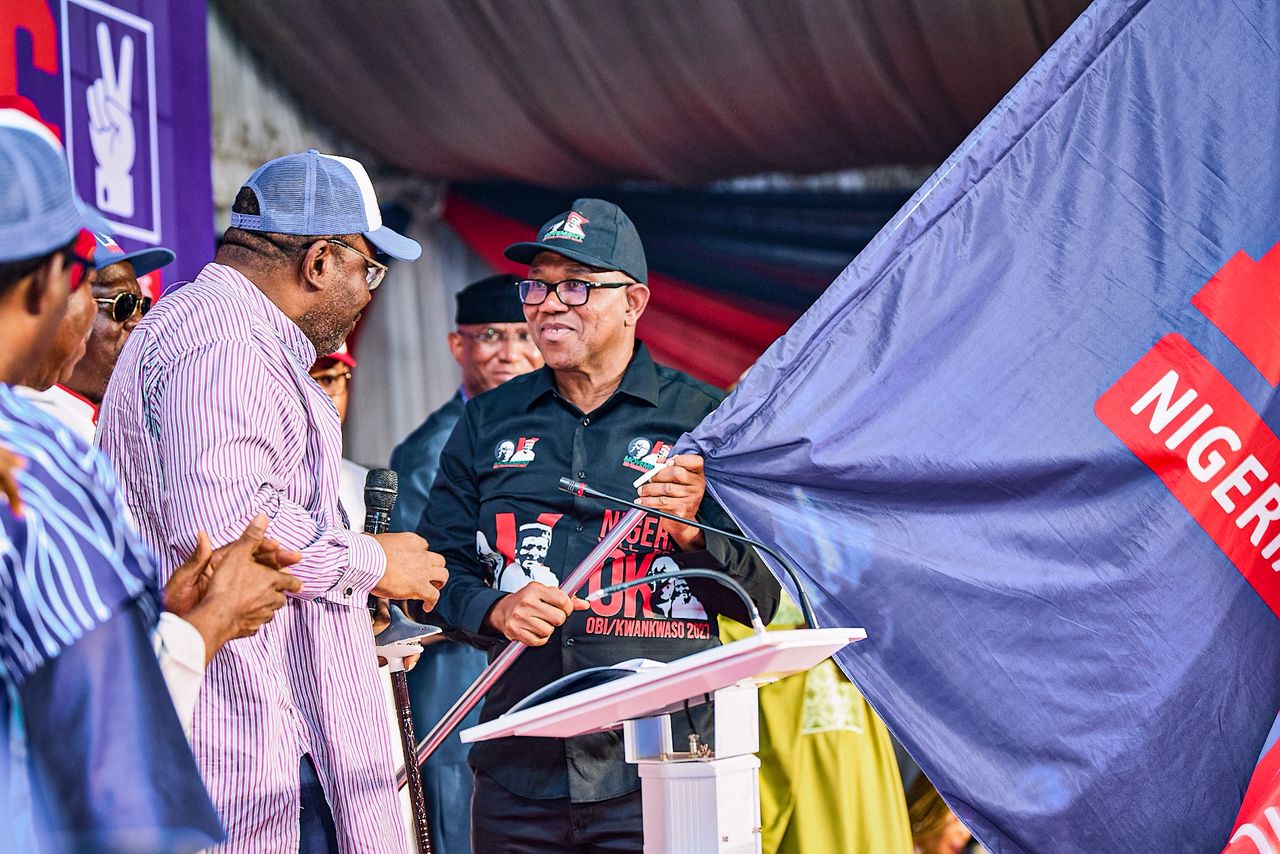
The presidential candidate of the Nigerian Democratic Congress (NDC), Mr. Peter Obi, has called on young Nigerians to resist attempts by politicians and interest groups to divide the country along ethnic and religious lines, drawing lessons from the events that followed the 2023 general elections.
In a message addressed to Nigerian youths, Obi reflected on the political atmosphere that emerged after the presidential election, particularly in Lagos State, where public conversations increasingly shifted away from governance and development to issues of ethnicity and identity.
According to him, one of the most important lessons from the 2023 elections is the danger of allowing political discussions to be hijacked by tribal sentiments and divisive narratives.
Obi noted that during the period between the presidential election and the governorship election in Lagos, many conversations that should have focused on competence, leadership, development, and the future of Nigeria were gradually transformed into debates centered on ethnic identity and suspicion among citizens.
He observed that many patriotic Nigerians unknowingly became participants in narratives designed to create division rather than promote national progress.
The former Anambra State governor warned that throughout history, politicians who lack compelling ideas, strong records of performance, or a clear vision for the future often resort to exploiting ethnic, religious, and regional differences as political tools.
According to him, such politicians understand that a divided population is easier to manipulate than a united one.
“Whenever politicians find it difficult to compete on the basis of ideas, character, competence, or vision, some choose the easier path of exploiting ethnic and religious divisions,” Obi said.
“Their calculation is simple. A people divided among themselves are easier to control than a people united around a common purpose.”
He expressed concern that similar efforts are beginning to emerge again ahead of future political contests, warning that some of these campaigns are now being carried out in more subtle and sophisticated ways.
Obi explained that misleading narratives are often carefully planted, amplified, and circulated through various channels, sometimes by people who genuinely believe they are defending a noble cause without realizing that they are advancing a broader agenda designed to create disunity.
He urged Nigerians, especially young people, to be vigilant and to critically examine the information they consume and share.
The NDC presidential candidate also spoke about the General Overseer of the Redeemed Christian Church of God (RCCG), Pastor Enoch Adeboye, whom he described as one of Nigeria’s most respected spiritual leaders.
Obi said Pastor Adeboye has consistently demonstrated qualities of peace, humility, wisdom, and national unity throughout his decades of ministry.
He noted that the respected cleric has devoted his life to preaching love, reconciliation, prayer, and peaceful coexistence among Nigerians, even in the face of provocation and criticism.
“Pastor Enoch Adeboye remains one of the foremost fathers of faith in our nation,” Obi stated.
“For many decades, he has consistently preached peace, love, prayer, reconciliation, and national unity. His responses to difficult situations have always reflected humility, restraint, wisdom, and grace.”
The former governor argued that it would be unfair for younger Nigerians to place responsibilities on the 84-year-old cleric that rightly belong to them.
According to Obi, the responsibility of building a better Nigeria rests primarily on the younger generation, who possess the energy, creativity, and numbers required to transform the country.
He said young people must take ownership of the national conversation by championing reforms, demanding accountability, and promoting positive change.
“At 84 years of age, it would be unfair for young and able-bodied Nigerians to transfer to Pastor Adeboye responsibilities that properly belong to them,” Obi said.
“The task of building a better Nigeria belongs largely to the younger generation. They must lead the conversations, champion reforms, and drive the transformation that our nation urgently needs.”
Obi further cautioned Nigerians against becoming instruments in the hands of individuals who secretly promote division while publicly preaching unity.
He stressed that many campaigns of hatred are often designed not only to attack specific individuals but also to manipulate those participating in such attacks.
According to him, the ultimate goal of those promoting division is to weaken the bonds of national unity and undermine the collective strength of the Nigerian people.
He therefore urged young Nigerians to reject politics of hatred and resist attempts to weaponize ethnicity, religion, or admiration for prominent leaders.
Obi advised citizens to verify information, question narratives, and rely on facts rather than emotions when engaging in political discussions.
“Do not allow anyone to recruit you into hatred,” he said.
“Do not allow anyone to weaponize your ethnicity, your faith, or your admiration for respected leaders. Question every narrative. Verify every claim. Follow the facts. Resist manipulation.”
He concluded by expressing confidence that Nigeria can achieve greatness if citizens choose unity over division and place the nation’s collective future above narrow interests.
According to Obi, the dream of a prosperous and united Nigeria remains achievable if Nigerians remain committed to peace, truth, and national cohesion.
“The Nigeria of our dreams can only be built by citizens who refuse to be divided, who choose unity over hatred, and who place our collective future above personal and sectional interests,” he said.
“A New Nigeria is Possible.”